
Travel
Tripadvisor: Reviews, Ratings & Travel Planning

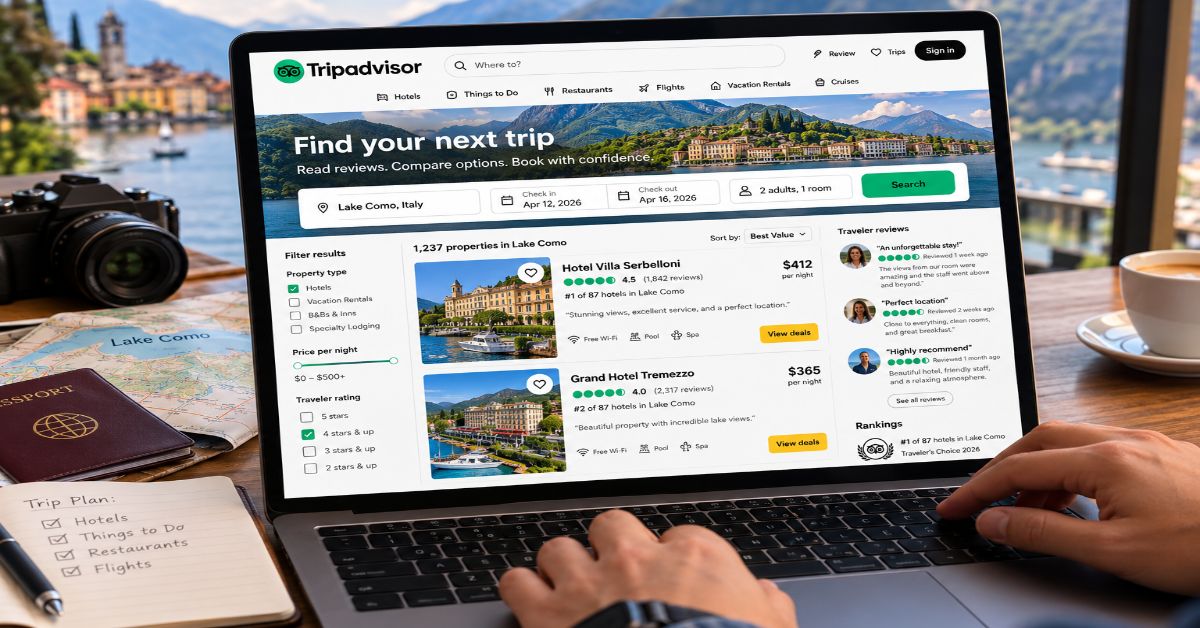
A hotel can look perfect in its photos and still leave you facing a noisy road, a long walk to public transport, or an unexpected fee. That is why travelers often check Tripadvisor before committing money to a trip. The platform brings together traveler reviews, ratings, destination information, and bookable experiences, helping people compare places to stay, restaurants, attractions, and activities in one research journey. If you want to know what Tripadvisor does and how to use it well, the short answer is this: treat it as a decision-support tool, not a guarantee. Read recent reviews, compare recurring details, confirm essential facts with the provider, and check the final booking terms before paying.
Tripadvisor is a travel guidance platform built around user contributions and listings for hotels, restaurants, attractions, and things to do. Its website and app can help with discovery, shortlisting, and in some cases booking experiences. The value is not simply the star or bubble score; it is the detail behind the score—what guests noticed, when they visited, what went wrong, and which features mattered to them.
This guide explains how to search Tripadvisor, interpret reviews and rankings, evaluate trustworthiness, compare it with other planning methods, and use it responsibly as a traveler or business owner. The focus is practical: how to turn a crowded page of opinions into a confident choice without assuming that every review tells the whole story.
What is Tripadvisor?
Tripadvisor is an online travel platform where people research destinations and travel-related businesses through listings, traveler reviews, ratings, photos, and planning content. Its main categories include accommodations, restaurants, attractions, and experiences. The official site describes a community containing more than a billion reviews and contributions, while also offering bookable activities in many destinations. Availability and features can vary by location and listing. (Source: https://www.tripadvisor.com/)
For travelers, Tripadvisor can answer several different questions: Which hotels are near a landmark? What do diners say about service and value? Is a museum suitable for children? Which guided tour has a schedule that fits a free afternoon? A single platform cannot resolve every detail, but it can help you build a shortlist before checking official sources.
The key distinction is between user-generated information and confirmed operational information. A review is a person’s account of an experience. A listing may also show business-supplied details, platform information, or booking options. Opening hours, prices, room amenities, access rules, and cancellation policies can change, so verify important details directly before you travel.
How do you use Tripadvisor to plan a trip?
1. Start with a specific search
Enter a destination and a category, then narrow the results around your actual needs. For a hotel, useful filters might include dates, price range, traveler rating, location, and facilities. For a restaurant, consider cuisine, meal type, price, and distance from where you will be. For an attraction or tour, check duration, accessibility, departure point, and whether advance booking is required.
2. Compare a shortlist, not every result
Choose three to five plausible options and compare them against the same criteria. A hotel near the center may cost more but save time and transport fares. A highly rated restaurant may be inconvenient if you have a tight schedule. A tour with a slightly lower score may provide a better departure time or clearer cancellation terms. The right choice depends on your priorities, not on ranking alone.
3. Read the review details
Open recent positive, mixed, and negative reviews. Look for details relevant to your trip: cleanliness, noise, queues, staff communication, food consistency, hidden charges, or the accuracy of advertised facilities. A review that says “great place” offers little decision value; a review explaining that the room faced a busy road is more actionable.
4. Verify the final facts
Before paying, confirm the exact address, dates, total price, taxes and fees, check-in or arrival rules, accessibility, and cancellation policy. When booking through another provider, make sure you understand who is responsible for customer service, refunds, and changes. Save the confirmation and contact details.
Which Tripadvisor features are most useful?
Different features serve different stages of planning. The following table maps common tools to the decisions they can support.
| Feature | Best use | What to double-check |
| Traveler reviews and ratings | Understand reported strengths and recurring problems | Review date, travel context, and whether details repeat across reviewers |
| Photos from travelers | Assess room condition, portions, views, queues, or layout | Photos may show a specific season, room type, or moment |
| Maps and location details | Estimate proximity to landmarks and transport | Actual walking route, traffic, terrain, and neighborhood conditions |
| Things to do and experience listings | Discover tours, activities, and bookable experiences | Operator, meeting point, inclusions, duration, and cancellation terms |
| Popularity rankings and awards | Identify places travelers frequently rate highly | Ranking date, category, and whether the award fits your needs |
How should you interpret Tripadvisor ratings and reviews?
A rating is a useful summary, but it compresses many different experiences into one number. Two properties with similar ratings can suit very different travelers. One may be quiet and basic, while another may be lively and full of amenities. Read the text to understand what the score means in context.
Look for patterns rather than isolated complaints
One complaint about slow service may reflect an unusually busy evening. If many recent reviewers independently mention the same issue, it deserves more attention. The same principle applies to praise: repeated comments about helpful staff, reliable cleanliness, or a convenient location are more informative than a single glowing description.
Prioritize recency and relevance
A review from last month may better reflect current staffing, renovations, menus, or maintenance than one from several years ago. However, older reviews can still reveal long-running issues or useful background. Match the review to your own situation: a family room review is more relevant to a family than a solo traveler’s account of a small standard room.
Tripadvisor says its Popularity Ranking considers review quality, recency, quantity, and consistency over time. It also explains that simply having more reviews does not automatically mean a business will rank above a competitor. Rankings can change, so a position should not be treated as a permanent certificate of quality. (Source: https://www.tripadvisor.com/business/en-gb/insights/resources/tripadvisor-popularity-ranking)
Separate subjective preferences from practical problems
A traveler may dislike a firm mattress, spicy food, or a busy atmosphere even when other guests enjoy those features. By contrast, repeated reports of inaccurate billing, unsafe conditions, or a facility being unavailable are practical concerns. Ask whether the complaint would matter to you and whether the business has clarified the issue.
Can Tripadvisor reviews be trusted?
Tripadvisor provides review rules and content-integrity processes, but no review platform can make every user account perfectly representative of every traveler. The company says submitted reviews are screened before publication and may be posted, rejected, or sent for additional moderation. It also requires reviewers to certify that they are describing their own experience, while noting that it does not require a receipt or proof of purchase for every review. (Source: https://www.tripadvisor.com/Trust-lRbpvspYMg9E.html)
That distinction matters. Screening and community rules can reduce abuse, but they do not mean that every posted claim has been independently verified as fact. A reviewer can be sincere and still be mistaken, have unusual expectations, or describe an experience that has since changed.
A practical credibility checklist
Use these checks before relying heavily on a review:
- Specificity: Does the reviewer describe concrete details rather than generic praise or insults?
- Context: Does the review mention dates, room type, party size, or circumstances that help explain the experience?
- Consistency: Do other independent reviews describe a similar pattern?
- Balance: Does the reviewer explain both strengths and weaknesses where appropriate?
- Response: Has the business answered a concern with a clear explanation or practical resolution?
- Relevance: Does the review address what matters for your own trip?
Be cautious with extreme language, repeated wording across multiple reviews, or claims that cannot be reconciled with the listing. These are signals to investigate, not proof that a review is fake. The fairest approach is to weigh several pieces of evidence instead of deciding from one comment.
Tripadvisor versus other travel research methods
Tripadvisor is most useful when you need traveler perspectives and discovery in one place. It should sit alongside, rather than replace, official hotel or attraction websites, maps, transport information, and booking terms. The comparison below describes the role each source can play; exact capabilities vary by destination and provider.
| Research source | Strength | Limitation | Best role |
| Tripadvisor | Reviews, traveler photos, and travel discovery | Opinions vary; listings and terms may change | Build and evaluate a shortlist |
| Official business website | Current policies, direct contact, and official details | May not show independent traveler perspectives | Verify amenities, hours, and rules |
| Maps and transport apps | Routes, distance, and navigation context | Travel time can vary with traffic and conditions | Check practical location and journey |
| Booking platform | Reservation details, prices, and transaction management | Terms and support depend on the provider | Confirm what you are purchasing |
| Local or specialist advice | Context for a particular interest or community | May be subjective or narrow in scope | Add destination-specific insight |
What are the advantages and limitations of Tripadvisor?
Advantages
The main advantage is breadth. Travelers can research lodging, dining, attractions, and experiences without starting from scratch for every category. Review text can surface practical details that polished marketing pages may not emphasize, such as noise at night, queues at peak hours, or whether staff can accommodate a particular request.
A second advantage is comparison. Looking at several listings side by side helps expose trade-offs in price, location, facilities, and traveler feedback. Photos can also help set realistic expectations, especially when they show ordinary rooms, entrances, seating, or surroundings rather than only professional promotional images.
Limitations
Reviews reflect individual experiences, and the people who choose to post may not represent every customer. A high score cannot guarantee that a property is right for your budget, accessibility needs, language preferences, or travel dates. Listings can also become outdated when businesses change ownership, renovate, adjust prices, or close.
A further limitation is that discovery and booking are not always the same process. Some listings may direct users to third-party providers or present multiple booking options. Check the identity of the seller, the total amount charged, and the terms that apply to the transaction before completing a purchase.
How can travelers make a better decision with Tripadvisor?
Use a repeatable method so that attractive photos or a single score do not dominate the decision.
- Write down your non-negotiables, such as step-free access, a private bathroom, vegetarian options, family suitability, or a specific arrival time.
- Filter the results to remove options that cannot meet those requirements.
- Compare three to five remaining listings using the same criteria.
- Read recent positive and negative reviews, then note recurring themes.
- Check the address on a map and estimate the real route to the places you plan to visit.
- Confirm current details with the provider, especially for accessibility, opening hours, and special requests.
- Review the final booking terms and total cost before payment.
For example, imagine you are choosing between two hotels for a three-night city break. Hotel A has a slightly higher rating but several recent reviews mention late-night street noise. Hotel B has a marginally lower score, yet reviewers repeatedly praise quiet rooms and easy public transport access. If restful sleep and transit matter more to you than a pool or restaurant, Hotel B may be the better fit. The example illustrates why a rating should start the investigation, not end it.
How should businesses use Tripadvisor?
For hotels, restaurants, attractions, and tour operators, a listing can influence how potential customers understand the business before they arrive. Owners should keep factual details accurate, monitor feedback, and respond constructively to concerns. A useful response identifies the issue, explains what can be shared responsibly, and describes a reasonable next step. Defensive replies or arguments with reviewers rarely help future customers understand what happened.
Businesses should invite genuine feedback without pressuring guests to leave only positive reviews. Do not fabricate reviews, impersonate customers, offer improper incentives, or ask staff and friends to pose as independent visitors. Tripadvisor’s review guidelines say reviews should be based on first-hand experience and include relevant, helpful information. (Source: https://www.tripadvisor.com/Trust-lvBd3L1aU38Y.html)
For ranking, the platform’s published guidance emphasizes quality, recency, quantity, and consistency. In practical terms, focus on delivering a dependable experience and making it easy for real customers to describe it accurately. A sudden push for volume cannot compensate for recurring operational problems, and ranking positions may shift as new reviews arrive.
A constructive review-response approach
A business can follow a simple sequence: acknowledge the customer’s concern, avoid exposing private information, clarify any factual misunderstanding politely, explain a concrete improvement where appropriate, and offer a private channel for resolving account-specific matters. Not every criticism requires a lengthy reply. The goal is to show future readers that the business takes feedback seriously.
Is Tripadvisor free to use?
Travelers can browse many Tripadvisor listings and reviews without paying a subscription fee. Some experiences can be booked through the platform or through external partners, and the price and terms depend on the particular product and seller. Before checkout, confirm whether the displayed price includes taxes, service charges, equipment, meals, transport, or other extras.
For businesses, available tools and commercial options may differ from the free public listing experience. Business owners should consult Tripadvisor’s current official business resources for the latest eligibility, advertising, and management options rather than relying on old pricing information or third-party summaries.
Conclusion
Tripadvisor can make travel planning more informed by bringing together traveler reviews, photos, ratings, destination discovery, and experience listings. Its strongest use is helping you identify patterns and compare realistic options. Its weakest use is treating a single rating, award, or angry review as conclusive proof.
Choose based on the details that matter to your trip, prioritize recent and relevant feedback, verify essential facts with the provider, and read the terms before booking. That approach turns Tripadvisor from a simple ranking page into one useful part of a careful travel decision.
Frequently asked questions about Tripadvisor
Is Tripadvisor a booking website or a review website?
It serves both purposes: travelers can research places through reviews and listings, and some hotels, tours, or activities offer booking paths through Tripadvisor or partner providers. Check who handles the reservation before paying.
Does a higher Tripadvisor rating always mean a better choice?
No. A higher rating can be a helpful signal, but location, price, recent feedback, facilities, and your personal needs may make a lower-rated option more suitable.
Can businesses remove a negative Tripadvisor review?
A business can report content it believes violates platform rules, but disagreement or dissatisfaction alone does not guarantee removal. Review decisions are governed by Tripadvisor’s policies and moderation processes.
How recent should Tripadvisor reviews be?
Start with reviews from the last few months when available, especially for service quality, maintenance, menus, and operating hours. Also scan older reviews for recurring issues that may persist over time.
Can I trust photos uploaded by Tripadvisor users?
Traveler photos can provide useful context, but they may represent a particular date, room category, weather condition, or moment. Compare several photos and confirm important features directly with the provider.
What should I do if a Tripadvisor listing has incorrect information?
Contact the business to verify the current details and use Tripadvisor’s available reporting or listing-correction options if the page appears inaccurate. Do not rely on potentially outdated information for time-sensitive plans.

A car-rental search can look simple until the quote, insurance rules, vehicle class, deposit, cancellation terms, and pickup counter all start speaking different languages. I searched the term “yernet” with that practical problem in mind, and the clearest match is YERENT, also styled YeRent, a car-rental price-comparison and personal-assistance service for rentals in Israel and overseas. If you are trying to find the company, understand what it actually does, or decide whether to request a quote, this guide gives you the useful answer first: YERENT acts as an intermediary that compares offers from rental providers and helps customers through the reservation process, while the actual rental terms come from the supplier that ultimately provides the vehicle.
That distinction matters more than the brand name. YERENT’s own Terms of Use describe the website as a service for comparing and receiving rental-car offers, and they state that the site itself is not the rental company responsible for the supplier’s service quality. The English homepage says the business has operated for 25 years, is led by founder and CEO Israel Yert, works across dozens of countries, and compares offers from both local and international rental companies.
In practice, I would treat Yernet as a human-assisted comparison channel rather than as a single fleet operator. The potential value is not merely finding a headline price. It is having someone help match the vehicle class to the trip, clarify what is included, and resolve reservation questions before or during the rental. The most important step, however, is still yours: verify the final supplier, insurance package, deposit, fuel policy, mileage, cancellation terms, and pickup requirements before you approve the booking.
What is Yernet, and what does the service actually do?
Yernet is most plausibly a branded search for YERENT or YeRent, a company that helps customers compare car-rental offers and arrange reservations in Israel and other countries. The company presents itself as a personal car-rental assistance service rather than a conventional rental fleet with one standardized set of vehicles and policies.
The official English homepage says YERENT compares prices from a broad range of providers, including smaller local companies and international brands. It also emphasizes access to a human rental agent who can guide a customer through the process. The Hebrew Terms of Use provide the more important operational detail: the site is used for comparing and receiving offers from car-rental companies, while payment and cancellation conditions depend on the rental company involved in the transaction.
This means the Yernet experience can involve three separate parties: you, YERENT as the comparison or assistance service, and the final rental supplier. That structure is common in travel distribution, but it creates a responsibility for the traveler to read the supplier-specific terms instead of assuming every booking follows one YERENT-wide policy.
Table 1 gives the service model in a compact form.
| Aspect | What the official information indicates | What the traveler should verify |
| Service type | Car-rental comparison and personal booking assistance | Whether the final reservation is prepaid, pay-at-counter, or otherwise structured |
| Geographic scope | Israel and overseas, with the homepage stating operation in dozens of countries | Whether the exact pickup location and supplier are available for your dates |
| Vehicle supply | Cars come from partner rental providers | Final supplier name, location, opening hours, and shuttle procedure |
| Vehicle promise | A category or group is typically booked, not a guaranteed exact model | Seats, luggage capacity, transmission, fuel type, and any essential feature |
| Payment | Follows the method of the rental company used for the deal | Currency, deposit, card requirements, taxes, local fees, and payment timing |
| Cancellation | Depends on the rental company and the specific booking | Deadline, cancellation fee, no-show rule, and refund method |
| Support | YERENT promotes personal guidance throughout the rental process | How to contact support outside normal hours and what issues it can resolve |
Is Yernet the same as YeRent or YERENT?
The spelling is a genuine source of confusion. The official domain is yerent.com and the brand is commonly displayed as YERENT or YeRent. At the same time, the English homepage itself uses “YERNET” in several sentences when referring to the company. That makes “yernet” a reasonable search variant even though “YERENT” appears to be the primary brand spelling.
For searchers, the safest identification check is the domain and company context rather than capitalization. If a result points to yerent.com and describes personal car-rental comparison in Israel and overseas, it is the service discussed here. If a page uses “Yernet” for an unrelated surname, person, or historical reference, it is a different entity.
Why the spelling matters when you book
Brand spelling matters when you receive a voucher, payment request, or support message. Before entering card details or sending documents, confirm that the communication matches the booking flow you initiated. Save the final quote, supplier confirmation, and voucher together so you can see which company is providing the car and which terms apply.
How does a Yernet car-rental booking work?
The exact workflow can vary by supplier, but YERENT’s published information supports a straightforward sequence. The site collects the trip details needed to produce a quote, representatives can then contact the customer to confirm the reservation, and payment follows the method required by the selected rental company.
A careful booking process looks like this:
Enter accurate pickup, drop-off, driver, and rental details when requesting an offer.
Compare the proposed vehicle group, not just the example model shown in the quote.
Identify the actual rental supplier and pickup location.
Check the full price, including mandatory taxes, local charges, insurance, and any extras you requested.
Confirm deposit and card rules, especially whether the main driver needs a physical credit card in their own name.
Read cancellation, modification, no-show, fuel, mileage, border-crossing, and additional-driver conditions.
Approve the offer only after the written terms match what you expect.
Keep the confirmation and voucher available offline for the pickup desk.
What information should you provide accurately?
YERENT’s Terms of Use stress that customers should provide correct information so a reservation can be processed without errors. In practical terms, the details that most often matter are the lead driver’s name, age, pickup and return times, flight information when relevant, destination, requested vehicle size, and special requirements such as an automatic transmission, child seat, or additional driver.
Do not round your arrival time optimistically. If your flight lands at 22:30 and the rental desk closes at 23:00, the difference between “landing time” and “counter arrival time” can decide whether the booking works. Allow time for immigration, bags, terminal transfers, and shuttle travel.
What vehicle can you expect when booking through Yernet?
One of the most useful statements on the official site is that rental companies organize vehicles into groups and normally do not promise one specific model. The car shown online is representative, and the customer may receive another model in the same category.
That is standard car-rental logic, but it is also where many bad expectations begin. “Hyundai i10 or similar” should be read as a class specification, not a promise of a Hyundai i10. A family group can include different makes and body styles. If luggage space, seven usable seats, an automatic gearbox, or another feature is essential, get that requirement confirmed in writing rather than relying on the sample image.
The following table summarizes vehicle groups described on YERENT’s English homepage. The site notes that codes and availability can vary by country.
| Group described by YERENT | Example codes shown | Example vehicles cited | Best fit based on the site description |
| Mini / intermediate | A, B, C, D | Hyundai i10 | One or two travelers, or a small family with limited luggage |
| Family vehicles | F, G, G1, FST | Nissan Sentra | Families or groups up to five, with standard or larger luggage needs |
| Premium / luxury | H, H1, I, J, F4, K, KL, L | Mazda 6, Mazda CX-5, Chevrolet Malibu, Mercedes E-Class | Travelers prioritizing space, comfort, or a higher vehicle class |
| Vans / minivans | N, O, O1, Q, QP, SUV8, S8 | Mitsubishi Outlander | Larger families or groups needing seven or more seats |
| Commercial / people carriers | R, M, MB, T | Renault Kangoo, Toyota Proace | Travelers needing a practical van-style vehicle or more cargo flexibility |
How should you choose the right Yernet vehicle class?
Choose by passengers plus luggage, not passengers alone. A seven-seat vehicle with every seat occupied may leave very little room for suitcases. A smaller car can be perfect for a city trip but uncomfortable on a long route with four adults and full-size bags.
I use a simple capacity test before accepting a class: count adults, children, large suitcases, cabin bags, strollers, and any equipment that cannot be compressed. Then ask whether the quoted class can handle that load with every required seat in use. If the answer depends on folding a seat you actually need, move up a class.
What should you check in a Yernet quote before paying?
A low daily rate is only one line in the real rental cost. The better comparison is the amount you are expected to pay across the entire trip, plus the amount temporarily blocked as a security deposit and the financial exposure left by the insurance package.
Before approving a Yernet quote, review these items in writing:
Final rental supplier and exact pickup point.
Rental period and how extra hours or late return are charged.
Base rental price, taxes, airport or location fees, and mandatory surcharges.
Included mileage and the price of excess kilometers or miles.
Fuel policy and refueling charge.
Collision and theft coverage, exclusions, excess or deductible, and optional protection.
Third-party liability terms where relevant to the destination.
Security deposit amount and accepted card type.
Additional-driver, young-driver, child-seat, GPS, toll, or one-way fees.
Cross-border and ferry restrictions if your route leaves the pickup country or region.
Cancellation, modification, late-arrival, and no-show rules.
Table 3 turns that review into a quick pre-booking check.
| Check | Why it matters | Good evidence to keep |
| Supplier identity | Determines who hands over the car and whose rental contract applies | Supplier name and reservation number |
| Total price | Prevents a cheap base rate from hiding mandatory charges | Written quote with inclusions and exclusions |
| Insurance and excess | Shows what damage risk remains with the renter | Coverage summary and deductible amount |
| Deposit and payment card | A booking can fail at the desk if card rules are not met | Deposit amount and accepted-card requirement |
| Vehicle class | Confirms realistic seating and luggage capacity | Group code plus essential features in writing |
| Pickup timing | Protects against desk closure or no-show treatment | Confirmed pickup time and after-hours procedure |
| Cancellation | Determines the cost of changing plans | Cancellation deadline and fee schedule |
Is Yernet a rental company or a broker-style service?
Based on its Terms of Use, the clearest description is a comparison and intermediary service. The Terms say the website provides price comparison among car-rental companies and does not take responsibility for the quality of service supplied by those rental companies. That is materially different from owning the fleet and being the counterparty that physically rents you the car.
This distinction should shape how you evaluate any problem. If the issue is a quote, reservation detail, or communication before pickup, YERENT may be the logical first contact. If the issue is vehicle condition, a counter charge, roadside assistance, or a return inspection, the rental supplier’s contract and procedures can be equally or more important.
What is the advantage of using a human-assisted comparison service?
The useful advantage is interpretation. Car-rental offers are difficult to compare when one quote includes insurance, another excludes a required local fee, and a third uses a different car group. A knowledgeable intermediary can help normalize those differences and ask the supplier questions a traveler might overlook.
The official site also publishes customer testimonials describing help with questions and, in one case, assistance with a voucher problem in Düsseldorf. Testimonials are not independent proof of how every future booking will go, but they illustrate the kind of service YERENT is trying to provide: human support around a reservation that is ultimately fulfilled by another rental company.
Is Yernet reliable, and how can you evaluate it yourself?
Reliability should not be reduced to a single review score. For a booking intermediary, I would judge the service using a document trail: does the quote clearly name the supplier, does the total price reconcile with the stated inclusions, are the cancellation rules available before payment, and does the voucher match the agreement?
YERENT’s website provides identifiable business information, a company contact page, Terms of Use, a privacy policy, and an accessibility statement. The homepage says the business has operated for 25 years and identifies Israel Yert as founder and CEO. Those are useful trust signals, but they do not replace transaction-level verification because the final rental conditions vary by supplier and country.
A practical reliability test before you commit
Send one detailed question before booking and judge the quality of the answer. For example, ask for the exact deposit, insurance excess, supplier name, and cancellation deadline in one message. A clear written response is more useful than a generic promise of a good deal because it can be compared directly with the voucher and counter contract later.
When does Yernet make the most sense?
Yernet is likely to be most useful when the trip has enough complexity to make human assistance valuable. That can include international travel, family groups, larger vehicles, unfamiliar insurance rules, multi-country routes, or travelers who prefer to compare several suppliers without managing every conversation themselves.
A direct booking may be simpler when you already have a preferred rental company, loyalty benefits, a corporate rate, or a credit-card insurance arrangement that requires booking directly with the supplier. The right choice is not “broker versus direct” in the abstract. It is whichever route gives you the clearest all-in cost and the strongest written terms for your particular trip.
Yernet versus booking directly with a rental supplier
Use Yernet when you value assisted comparison and help interpreting offers. Book directly when supplier loyalty benefits, direct member pricing, or a specific rental-company policy is more important. In both cases, compare the same variables: total price, coverage, deposit, vehicle class, cancellation, pickup logistics, and support.
Only compare like with like. Match insurance, taxes, additional drivers, mileage, and local fees before deciding which quote is cheaper.
How I verified the information in this Yernet guide
I based the factual parts of this guide on YERENT’s current official website, especially its English homepage and Terms of Use. The homepage describes the company’s history, service model, geographic reach, vehicle groups, and personal-assistance positioning. The Terms of Use clarify the intermediary role, registration requirements, payment process, and supplier-dependent cancellation conditions.
Prices and rental conditions can change by date, destination, supplier, driver profile, and vehicle class, so a current written quote remains the practical reference for a new booking.
Sources reviewed:
Conclusion: the key takeaway before using Yernet
The useful way to think about Yernet is not as a mystery rental-car brand but as a comparison and assistance layer between the traveler and the company that supplies the vehicle. That can be genuinely helpful when the quote is complex, the destination is unfamiliar, or you want a human contact to help you interpret options.
The booking is only as clear as its written details, though. Before paying, identify the supplier, confirm the total cost, understand the deposit and insurance exposure, verify the vehicle class, and save the cancellation terms. If those five pieces are clear, you can judge the offer on substance rather than on a headline price.
Frequently Asked Questions About Yernet
Is Yernet a legitimate spelling of the company name?
The primary brand on yerent.com is YERENT or YeRent, but the company’s English homepage also contains the spelling “YERNET” in several places. Searchers using “yernet” are therefore likely looking for the same car-rental comparison service.
Does Yernet guarantee a specific car model?
No. The official site explains that rental providers generally reserve a vehicle group rather than an exact model. The car shown is an example, and a different model in the same category may be supplied.
Can I cancel a Yernet car-rental booking?
Cancellation depends on the rental company and the terms of the specific deal. YERENT’s Terms of Use advise customers to verify the cancellation conditions and any handling or cancellation fee before finalizing the rental.
Who takes payment for a Yernet booking?
The published Terms of Use say payments follow the payment method of the rental company with which the transaction is made. A YERENT representative may contact the customer to confirm the booking and payment process, so the exact flow can vary by supplier.
Does Yernet rent cars only in Israel?
No. The official English homepage says YERENT handles rentals in Israel and overseas and operates with providers in dozens of countries. Availability still depends on the destination, dates, and partner suppliers.
What should I bring when picking up a car booked through Yernet?
Follow the final supplier’s requirements. Common essentials include the lead driver’s valid license, passport or accepted ID, booking voucher, and the required payment card. Check the supplier’s written rules before travel because age, license, deposit, and card requirements vary by country and rental company.
-

 Guide2 months ago
Voozon.com Guide: What It Is and How It Works
-

 General2 months ago
Spanking Stories: A Reader’s Guide to Themes, Tags and Safer Choices
-

 Technology2 months ago
techtrendery.com: Website Guide for 2026
-

 Technology2 months ago
Coomer.su Explained: Architecture, Data Flow, API Changes and Resilient Client Design
-

 General2 months ago
SABS Framework Description Paragraph: Practical Guide
-

 Technology3 months ago
Listcrawler: How List Crawlers Extract Structured Web Data
-

 Guide3 months ago
How to Run a Marathon: A Practical First-Marathon Guide
-

 General2 months ago
Socialmediagirls Explained: Safety, Privacy, Forum Structure, Leaks and Rules