Guide
How to Run a Marathon: A Practical First-Marathon Guide


The hardest part of a marathon often begins long before race morning. It starts when you look at 26.2 miles and wonder how your current running ability could possibly stretch that far. I prefer to think of marathon preparation as a series of manageable adaptations rather than one enormous physical challenge. Give yourself enough time, build gradually, practice the details that matter, and the distance becomes far less intimidating.
If you want to know how to run a marathon, the practical answer is straightforward: build a consistent running base, follow roughly 12 to 20 weeks of structured training, increase your workload gradually, complete regular long runs, recover properly, and practice your pacing, fueling, and hydration before race day. First-time runners should usually prioritize finishing healthy and strong rather than chasing an aggressive time.
The marathon itself is 26.2 miles, but preparing for one does not mean repeatedly running that distance in training. A sensible plan develops endurance over months, teaches you how your body responds to longer efforts, and leaves enough recovery between harder sessions for those adaptations to take place.
How Long Does It Take to Prepare for a Marathon?
Your preparation timeline depends heavily on where you are starting.
If you already have a basic running foundation, a focused marathon training plan commonly lasts around 12 to 16 weeks. Some runners benefit from an 18 to 20-week structure, particularly when they want more gradual progression or extra recovery weeks.
If you are newer to running, think beyond the formal marathon plan. Allowing at least three to six months of total preparation gives you time to establish basic consistency before marathon-specific training becomes demanding.
A useful starting benchmark is the ability to run continuously and comfortably for approximately 30 to 45 minutes. You do not need to be fast. You simply need enough basic endurance that the first weeks of a structured plan do not feel like a sudden jump in workload.
If you cannot yet run for that long, your first objective is not marathon training. Your first objective is building a running base.
That distinction matters because marathon preparation works best when each phase builds on something you have already developed.
What Should Your First Marathon Goal Be?
Before choosing workouts, decide what success will mean.
Finishing versus chasing a time
A first marathon can have two very different goals:
1. Finish the race comfortably and safely.
2. Reach a specific finishing time.
For most first-time marathon runners, finishing strong and healthy is the more useful target.
A time goal introduces another layer of training because you must develop not only endurance but also the ability to sustain a particular pace. There is nothing wrong with eventually pursuing a performance target, but your first marathon already gives you plenty to learn about pacing, nutrition, hydration, fatigue, recovery, and the mental demands of a long race.
Treating the first event as a learning experience can make your training decisions much simpler.
Set a realistic preparation timeline
Do not choose your marathon date solely because the event looks exciting.
Work backward from race day and ask whether you genuinely have enough time to build safely.
If you need several weeks just to establish consistent running, add those weeks before the formal plan. A marathon schedule should not require you to rush through the early stages merely because the calendar says race day is approaching.
Should You Get Medical Clearance Before Marathon Training?
Marathon training places much greater demands on your body than casual exercise.
If you have an existing health condition, are over 40, are new to vigorous exercise, or have another reason to be concerned about how your body might respond to increased training, consider getting medical clearance before substantially increasing your workload.
Medical clearance is only one part of staying safe.
You also need to pay attention to what happens during training.
General fatigue after a demanding week can be normal. Sharp pain deserves a different response. Do not make pushing through pain a badge of commitment. Address small problems early, respect recovery days, and adjust your training when your body gives you a clear reason to do so.
Consistency matters more than forcing one workout that your body is not ready to complete.
What Does a Good Marathon Training Week Look Like?
Most marathon plans are variations of the same basic structure.
You run easy mileage, complete a weekly long run, sometimes add a faster session, strengthen supporting muscles, and create enough recovery time for the training to work.
A typical week may contain:
- Three to five running sessions
- One progressively longer run
- One optional tempo or interval workout
- One or two strength-training sessions
- One or two rest or cross-training days
Cross-training can include activities such as cycling, swimming, using an elliptical, or yoga.
The exact arrangement can change, but the underlying principle remains consistent: not every day should be difficult.
Easy runs
Easy running should account for most of your weekly mileage.
An easy pace is conversational. You should be able to speak in full sentences rather than struggling to get out a few words.
These runs build volume without placing the same stress on your body as harder training.
They can feel almost suspiciously slow when you are motivated to improve, but that restraint is useful. If every training run becomes a test, fatigue can accumulate faster than fitness.
The weekly long run
One long run each week forms the backbone of marathon preparation.
Its purpose is not simply to accumulate miles. Long runs teach you how your body and mind respond to extended time on your feet.
They also give you an opportunity to practice the logistical side of marathon running, including hydration, carbohydrate intake, clothing, shoes, pacing, and mental focus.
Tempo runs or intervals
Faster sessions are optional but useful for runners who already tolerate regular mileage well.
A tempo session or interval workout can improve fitness and help you become more familiar with controlled faster running.
However, speed work should support your marathon preparation rather than dominate it.
If adding a hard session leaves you unable to recover for your long run, you may be doing too much.
Strength training
One or two strength sessions per week can complement your running.
Useful movements include:
- Squats
- Lunges
- Deadlift variations
- Calf raises
- Planks
- Side planks
- Hip-strengthening exercises
A session lasting approximately 20 to 40 minutes can be enough.
The goal is not to leave your legs exhausted for several days. Strength work should help support your running rather than interfere with it.
How Quickly Should You Increase Marathon Training?
Gradual progression is one of the most important ideas in marathon preparation.
A commonly used rough guideline is to avoid increasing weekly mileage or long-run distance by more than approximately 10 percent per week.
That number should be treated as a guide rather than a command. Your ability to absorb training depends on your existing fitness, recent workload, recovery, and individual response.
The more important lesson is simple: avoid sudden jumps.
Use a hard-and-easy pattern
Harder sessions should generally be followed by easy running or rest.
For example, you would not normally want to stack a demanding interval workout, a long run, and another intense workout on three consecutive days.
Spacing hard efforts gives your body time to recover.
Think of recovery as part of training rather than time away from training.
Build in down weeks
Every three to four weeks, consider reducing your total workload slightly.
This down week can provide physical and mental recovery before you begin another period of gradual progression.
Marathon preparation lasts long enough that constantly increasing distance without occasional relief can become difficult to sustain.
A small temporary reduction is not lost progress. It can help you absorb the work you have already completed.
How Fast Should You Run During Marathon Training?
Most of your training should feel easier than many new marathon runners expect.
Your easy runs should remain conversational. On a simple effort scale from 1 to 10, easy running may feel approximately like a 3 or 4.
Marathon pace is typically quicker than easy pace but slower than 10K pace. A rough effort level might be around 5 or 6 out of 10.
These numbers are not meant to replace awareness of your own body. Weather, fatigue, terrain, sleep, and training load can all change how the same pace feels.
Why time on your feet matters
Early in a marathon plan, do not become obsessed with exact pace.
Consistency and time on your feet matter more.
A runner who repeatedly turns easy sessions into races may accumulate fatigue while missing the purpose of those workouts. A runner who stays controlled can preserve energy for the sessions that genuinely need more effort.
The ability to run patiently in training also becomes valuable on race day.
How Long Should Your Marathon Long Runs Be?
Long runs gradually prepare you for the duration and fatigue of a marathon.
If you are relatively new, an early long run might last approximately 45 to 60 minutes. From there, the duration or distance can increase gradually as your fitness improves.
Many marathon programs eventually include peak long runs of approximately 16 to 20 miles.
You generally do not need to run the complete 26.2-mile marathon distance during training.
That surprises some first-time runners. They understandably want proof that they can cover the entire race distance before race day.
The problem is that a full marathon is not just another training run. It creates substantial fatigue and can require significant recovery. Marathon training instead develops fitness through accumulated weeks of running, progressively longer efforts, and repeated recovery.
Turn long runs into race rehearsals
Some of your long runs should test more than endurance.
Use them to answer practical questions:
- Which breakfast sits comfortably before a long run?
- How often can you take carbohydrates without stomach trouble?
- How much fluid feels appropriate?
- Do your socks cause blisters after several hours?
- Does your shirt or waistband begin to chafe?
- Can you maintain a conservative pace when you feel fresh?
- Does your planned race-day gear remain comfortable deep into a long session?
Finding those answers during training gives you fewer problems to solve on race morning.
What Should You Eat and Drink While Training for a Marathon?
Marathon nutrition has two sides: what you eat day to day and what you consume while running.
Everyday nutrition
Your normal diet should provide enough energy to support your increasing workload.
Aim for a balanced, nutrient-dense diet with enough carbohydrates to fuel training, protein to support recovery, and healthy fats.
Hydration also matters outside your workouts.
Do not treat drinking water as something you only need to think about immediately before or during a run. Staying generally well hydrated provides a better starting point for training.
How much should you drink during long runs?
A rough hydration guide is approximately 5 to 10 ounces, or 150 to 300 milliliters, every 15 to 20 minutes.
That range needs individual adjustment.
Heat, sweat rate, pace, body size, and stomach comfort can all affect what feels appropriate.
The most useful strategy is to experiment during training rather than choosing an untested hydration plan on race morning.
How many carbohydrates should you take during a marathon?
For marathon efforts around three hours or faster, a rough target can be approximately 30 to 60 grams of carbohydrates per hour.
For longer efforts, runners may use approximately 60 to 90 grams per hour if their digestive system tolerates that amount.
Common options include:
- Energy gels
- Sports drinks
- Chews
- Suitable real foods
Many runners use a gel approximately every 30 to 45 minutes, although the right schedule varies from person to person.
The crucial rule is to test your approach.
Do not wait until marathon day to discover that a particular gel, drink, food, or carbohydrate quantity disagrees with your stomach.
Your digestive system is part of your race preparation too.
What Gear Do You Need to Run a Marathon?
Marathon gear does not need to be complicated.
Comfort and familiarity matter more than assembling the most elaborate kit.
Running shoes
Choose running shoes that feel comfortable and suit your foot and stride.
If possible, visiting a running store for fitting assistance can help.
Whatever shoes you select, use them during training before race day. Do not arrive at the marathon in an untouched pair.
The same principle applies to the rest of your equipment.
Clothing
Wear breathable, moisture-wicking clothing that you have tested during longer runs.
Cotton is generally best avoided for prolonged running because moisture management becomes increasingly important as the distance grows.
Use your long runs to test the clothing combination you expect to wear in the race.
Small items that can make a big difference
Depending on your needs and race setup, useful equipment can include:
- Anti-chafe balm
- Comfortable running socks
- Blister-prevention tape
- A simple running watch
- A phone pacing app
- A handheld bottle
- A hydration belt for training
No item should appear on race morning without a reason.
Familiarity reduces uncertainty.
How Can You Reduce Injury Risk During Marathon Training?
There is no training plan that can guarantee you will remain injury-free.
You can, however, structure your preparation sensibly.
Strength training, gradual progression, rest, and attention to pain all contribute to a more sustainable approach.
Warm up before harder sessions
Before a harder workout, use approximately 5 to 10 minutes of brisk walking or easy jogging to transition into running.
Dynamic movement can also be useful before training.
After harder sessions, a short easy cool-down can help you shift gradually out of the workout.
Use mobility work sensibly
Light stretching or foam rolling after running can be included if it feels useful to you.
Mobility work should not become a substitute for managing your training load.
If your body is struggling because every week is excessively demanding, more stretching does not solve the underlying issue.
Respond to warning signs early
A minor niggle is easier to manage before it becomes a problem that changes several weeks of training.
Respect rest days and avoid running through sharp pain.
The objective is to reach race day prepared, not to win an argument with your training calendar.
What Happens During the Final Marathon Taper?
The final stage of marathon preparation is the taper.
During roughly the last one to three weeks before race day, training volume decreases so accumulated fatigue can fade.
Some light intensity can remain, but this is not the time to squeeze in extra hard workouts because you suddenly feel nervous about whether you have trained enough.
Your major fitness work has already been done.
Use the taper to arrive fresh.
Prioritize sleep, maintain solid everyday nutrition, and avoid introducing unfamiliar workouts or experimental foods.
One of the most difficult taper skills is trusting the work behind you instead of trying to create new fitness at the last minute.
How Should You Pace Your First Marathon?
A marathon rewards patience.
Starting too aggressively can make the later miles far more difficult than they need to be.
Start conservatively
Begin around your planned marathon pace or slightly slower.
During the first 5 to 10 kilometers, focus on control. The excitement of the start can make your normal pace feel unusually easy.
That is exactly when restraint matters most.
Do not chase runners around you simply because they move ahead.
Their strategy has nothing to do with yours.
Aim to reach halfway feeling controlled
A useful race-day mindset is to reach halfway feeling good rather than feeling as if you have already produced your best running.
If you still feel strong later in the race, you have room to maintain or gradually increase your effort.
This approach is closely related to the idea of a negative split, where the second half is run as fast as or faster than the first.
Whether or not you achieve a literal negative split, the underlying principle is valuable: save something for later.
Break the race into smaller pieces
Thinking constantly about 26.2 miles can become mentally exhausting.
Instead, divide the marathon into manageable segments.
You might focus on one 5K section at a time or use 5-mile blocks.
Your attention then stays on what you need to do now:
- Maintain your pace
- Take your next fuel
- Drink according to your plan
- Relax your shoulders
- Reach the next checkpoint
The finish line takes care of itself one segment at a time.
What Should You Do on Marathon Morning?
Race morning should contain as few surprises as possible.
Arrive at the start with plenty of time. Depending on the event, arriving approximately 60 to 90 minutes or more before the start can give you time for parking, bag drop, bathroom queues, and preparation.
Do not introduce a new breakfast, gel, drink, outfit, shoe, or pacing strategy simply because race day feels special.
The best race-day plan is usually the one you have already rehearsed.
Follow the fueling and hydration routine that worked during long runs.
Start conservatively.
Ignore the temptation to chase faster runners.
Trust the preparation that brought you to the start.
What Should You Do After Finishing a Marathon?
Finishing the marathon does not mean your body has finished dealing with it.
Expect substantial fatigue.
For at least several days, prioritize full rest or easy activity rather than immediately returning to normal training.
Rehydrate and eat balanced meals containing carbohydrates and protein.
Gentle movement, stretching, or massage can be used as tolerated.
Your recovery is not only physical.
Marathon preparation can occupy months of your schedule and attention. Once the race is over, give yourself some mental space before immediately replacing it with another demanding target.
A marathon is a major training cycle. Let the cycle end before deciding what comes next.
What Does a Simple First-Marathon Roadmap Look Like?
A straightforward preparation structure can be divided into several stages.
Weeks 1 to 4: Build consistency
Your main priorities are:
- Run three to four times per week
- Keep most running easy
- Gradually lengthen one weekly run
- Introduce basic strength work
- Establish a sustainable routine
The biggest win during this phase is consistency.
Weeks 5 to 12: Develop endurance
As your base becomes stronger:
- Increase your long-run distance gradually
- Maintain easy running as the majority of your training
- Continue strength training
- Add one optional tempo or interval session if you are recovering well
- Practice hydration and fueling during longer sessions
This phase should make longer running feel progressively more familiar.
Weeks 13 to 16 or later: Peak and taper
Depending on the total length of your plan, the later stage may extend toward weeks 18 to 20.
Your priorities become:
- Complete your peak long runs
- Rehearse race-day equipment and nutrition
- Avoid unnecessary training experiments
- Begin tapering approximately two to three weeks before the event
- Protect sleep and recovery
At this point, doing more is not automatically doing better.
Race day: Execute instead of experiment
When the marathon finally arrives:
1. Start conservatively.
2. Settle into your planned effort.
3. Fuel early and consistently.
4. Follow the hydration strategy you practiced.
5. Divide the race into manageable sections.
6. Assess how you feel after halfway.
7. Increase effort later only if you still feel strong.
Training prepares the tools. Race day is when you use them.
What If You Can Only Run 20 Minutes Right Now?
If you can currently run for approximately 20 minutes without stopping, you have begun building the foundation, but you may benefit from spending additional time developing your basic running capacity before starting demanding marathon-specific training.
Work gradually toward comfortable runs of approximately 30 to 45 minutes.
Once that duration feels manageable, a structured marathon plan becomes a more natural next step.
There is no advantage in rushing the transition.
The marathon rewards months of accumulated consistency far more than a dramatic first few weeks.
What If You Already Run About 15 Miles Per Week?
Running approximately 15 miles per week gives you a more established starting point.
You may be ready to move toward a focused marathon plan, provided the mileage feels comfortable and sustainable.
Your next priorities would include gradually increasing total volume, extending your weekly long run, maintaining mostly easy running, and introducing marathon-specific fueling practice.
The important point is that 15 miles per week is a starting base, not a reason to suddenly double your workload.
Build from it progressively.
What If You Are a Complete Beginner?
If you have never run before, do not treat the first week of a marathon plan as your first week of running.
Build basic running ability first.
The initial objective should be developing enough endurance to run comfortably for around 30 to 45 minutes.
Once you have a consistent running habit, you can begin thinking about the marathon-specific progression.
Giving yourself three to six months or more can make the process much more realistic than forcing your preparation into a short schedule.
Frequently Asked Questions About Running a Marathon
Do I need to run 26.2 miles before race day?
No. Many marathon plans peak with long runs around 16 to 20 miles. Your preparation comes from the complete training cycle rather than proving the entire race distance during one training run.
How many days per week should I run for marathon training?
A typical marathon schedule may contain three to five running days per week. The right number depends on your experience and ability to recover. Most of those runs should remain easy.
Should I run fast during every marathon workout?
No. Most training should be completed at an easy, conversational pace. Faster tempo or interval sessions can be included, but they are only one part of the overall plan.
How often should I take gels during a marathon?
Many runners take a gel approximately every 30 to 45 minutes, but individual needs vary. Practice during long runs and choose a schedule your stomach tolerates.
How early should I arrive on marathon morning?
Allow plenty of time for parking, bag drop, bathrooms, preparation, and getting to the start area. Arriving approximately 60 to 90 minutes or more before the race is often practical, depending on the event.
The Key to Running Your First Marathon
A marathon becomes manageable when you stop treating 26.2 miles as one giant task.
Build enough basic fitness to begin training safely. Give yourself months rather than weeks whenever possible. Run most miles easily, increase your workload gradually, complete consistent long runs, strength train, recover deliberately, and rehearse the nutrition and hydration strategy you will use on race day.
Then make patience part of your race strategy.
The opening miles should feel controlled. Your fueling should already be familiar. Your clothing and shoes should already be tested. Your plan should survive the excitement of the starting line.
You do not need one heroic workout to become marathon-ready. You need a long series of sensible ones.
That is what eventually turns 26.2 miles from an intimidating number into a finish line you are prepared to reach.

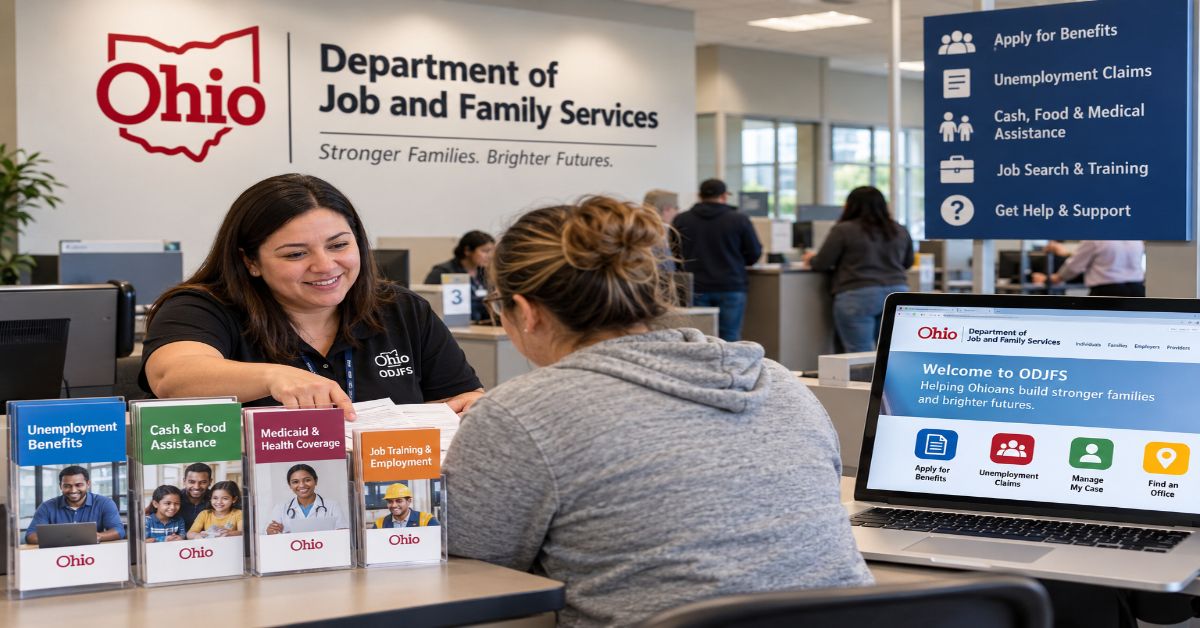
A lost job, a child-care bill, a food budget that no longer stretches, or a question about child support can turn a simple online search into a stressful task. Searching for ODJFS is often the first step toward finding help in Ohio, but the agency’s many programs do different jobs—and the right starting point depends on what you need. The Ohio Department of Job and Family Services (ODJFS) oversees or coordinates services that include unemployment insurance, food and cash assistance, child-care support, child support, workforce services, and certain family-safety programs.
The quickest route is to identify the problem first, then use the official page for that program. People applying for food, cash, medical, or child-care benefits will often start with Ohio Benefits, while someone managing unemployment insurance should use the dedicated unemployment service. For questions about an individual food or cash-assistance case, the county Department of Job and Family Services is usually the right contact—not a general state office.
This guide explains what ODJFS means, which services it connects people with, how to begin an application, what information to prepare, and how to avoid common delays and scams. It also clarifies an important distinction: ODJFS supervises programs, but many everyday applications and case questions are handled by county agencies or specialized online portals. That means choosing the correct route can save time and prevent your request from landing in the wrong queue.
ODJFS is an Ohio state agency, so its programs are intended for people and employers dealing with Ohio services. If you live outside Ohio, check your own state’s official agency before submitting personal information. For Ohio residents, the official starting points are the [ODJFS website](https://jfs.ohio.gov/) and the [Ohio Benefits portal](https://benefits.ohio.gov/home).
What Is ODJFS?
ODJFS stands for the Ohio Department of Job and Family Services. It is a state government department that oversees a range of employment, income-support, family, and child-related programs. Its website brings together program information, application links, forms, policy resources, and contact routes. The department also works with local county agencies, employers, workforce partners, and other public bodies to deliver services.
ODJFS is not a single benefit or a single application. It is the umbrella agency behind several different services, each with its own eligibility rules, deadlines, documentation requirements, and appeal processes. A person seeking unemployment compensation should not assume that the food-assistance office can resolve the claim; likewise, a general ODJFS contact form may not have access to a county case record.
For the official overview, visit the [ODJFS home page](https://jfs.ohio.gov/). It includes pathways to unemployment services, public assistance, child support and family services, job and workforce services, forms, and local agency information.
Which ODJFS Service Do You Need?
Use this quick comparison to choose a starting point. The correct office depends on the type of help or case you have.
| Need or question | Best starting point | What it helps with |
| Lost a job or had hours reduced | ODJFS Unemployment Services | File or manage an unemployment claim and review claim responsibilities. |
| Food assistance or SNAP | Ohio Benefits or county agency | Apply for food assistance and ask about a specific case. |
| Cash assistance for an eligible family | Ohio Benefits or county agency | Explore Ohio Works First and other applicable assistance. |
| Medical or child-care assistance | Ohio Benefits | Check potential eligibility and apply for available programs. |
| Child support question | ODJFS Child Support / local agency | Find program information and the appropriate case contact. |
| Job search, training, or career support | OhioMeansJobs and workforce services | Explore employment resources and local workforce help. |
| Need an in-person office | ODJFS Local Agencies Directory | Find the county office or relevant local service provider. |
How Do You Apply for ODJFS Benefits?
There is no universal ODJFS application that covers every program. The steps below are a practical starting sequence for public assistance; unemployment insurance has its own claim process and ongoing requirements.
1. Start with the official portal
For food, cash, medical, and early care and education assistance, visit [Ohio Benefits](https://benefits.ohio.gov/home). The portal allows users to sign in with OHID, explore eligibility, apply for programs, and access existing benefits. Follow the instructions shown for your specific program rather than relying on a third-party website or an old bookmarked form.
2. Identify the program and check the rules
Read the current eligibility information before you begin. Requirements may depend on factors such as household circumstances, income, work status, residency, or the program involved. A screening tool can help you decide whether to apply, but a screening result is not the same as an official eligibility decision.
3. Prepare information before submitting
Depending on the program, you may be asked for identity and contact details, household information, income or employment details, child-care information, or supporting records. The portal or county agency should tell you which documents are required. Do not upload extra sensitive information unless the official process requests it.
4. Submit and save your confirmation
After you submit an application or report a change, save the confirmation number, date, and any receipt shown. Keep copies of documents you provide. If the system asks you to complete an interview, upload verification, or respond by a deadline, make a note of the due date and follow the instructions in your account or official notice.
5. Follow up through the correct office
Most ODJFS public-assistance programs are administered locally. For a question about your food or cash case, contact your county Department of Job and Family Services. For unemployment insurance, use the dedicated unemployment contact route. Giving the correct office your case reference and a concise description of the issue can help the representative direct the inquiry.
For official application guidance, see the [Ohio Benefits portal](https://benefits.ohio.gov/home) and the [ODJFS Public Assistance page](https://jfs.ohio.gov/public-assistance).
ODJFS Unemployment: What Workers Should Know
Unemployment insurance provides temporary income support to eligible workers who lose work through no fault of their own or experience qualifying reductions in work. It does not replace every dollar of previous earnings, and being unemployed does not automatically guarantee eligibility. ODJFS reviews the facts of a claim under Ohio’s rules.
Eligibility is based on more than job loss
Ohio’s official explanation lists several requirements, including that the worker is unemployed through no fault of their own, is actively seeking work, and has sufficient recent work and earnings history. The published 2026 guidance states that qualifying workers generally need at least 20 weeks of work in the relevant 12–18 month period and average weekly earnings of at least $352 during those weeks. Rules and amounts can change, so check the official page before relying on a figure.
The state’s current guidance says eligible claimants may receive weekly benefits within a published range that depends on prior wages and other factors, for up to 26 weeks in a benefit year. These figures are not a personal estimate; an official determination is what establishes whether a claimant qualifies and how much may be payable.
Keep up with weekly requirements
Filing an initial claim is only one part of the process. Claimants may need to submit weekly claims, be able and available to work, complete required work-search activities, and keep records of those activities. Examples can include applying for a suitable job, sending a résumé to an employer, or attending an interview. Follow the instructions on your claim and keep documentation in case the agency asks for it.
Check notices carefully
Read monetary and nonmonetary determination notices carefully. A monetary notice addresses wage and employment information; a nonmonetary decision may address issues such as why employment ended or whether other eligibility requirements were met. If you believe a record is wrong or disagree with a decision, follow the review or appeal instructions and deadlines stated in the official notice.
Official reference: [ODJFS — How Unemployment Insurance Works](https://jfs.ohio.gov/unemployment-services/for-workers/how-unemployment-insurance-works).
Ohio Benefits: Food, Cash, Medical, and Child-Care Assistance
Ohio Benefits is the state’s self-service portal for several public assistance programs. It can help users check potential eligibility, apply for assistance, and manage existing benefits. Available programs include food assistance through SNAP, cash assistance through Ohio Works First, Medicaid, and early care and education or child-care assistance. The programs have different rules, and eligibility for one does not automatically mean eligibility for another.
Food assistance (SNAP)
The Supplemental Nutrition Assistance Program helps eligible households with limited income buy food. Applicants should use the official portal or their county agency to check current requirements and submit the information requested. If a case is pending, a notice requests verification, or benefits appear incorrect, the county office is generally the best contact for case-specific help.
Cash assistance
Ohio Works First is Ohio’s cash-assistance component of the federal Temporary Assistance for Needy Families program. It serves eligible families with children under program rules. Do not assume the program is an unrestricted grant: applicants should review eligibility, participation requirements, and the terms that apply to their circumstances.
Medical and child-care assistance
The portal also connects residents with Medicaid and early care and education assistance. For child-care support, the details of the family’s situation and the provider may matter. Use the portal’s current instructions and ask the county agency which documents are needed before submitting a large collection of records.
Official references: [Ohio Benefits](https://benefits.ohio.gov/home) and [ODJFS Public Assistance](https://jfs.ohio.gov/public-assistance).
Where Should You Contact ODJFS?
Different contact routes serve different purposes. This table helps prevent a common delay: contacting a general office that cannot access the case in question.
| Question type | Recommended contact route | Useful detail to have ready |
| Unemployment claim or payment | ODJFS Unemployment Services; individual claimant contact route | Claim reference, notice date, and a brief description of the issue. |
| Food or cash-assistance case | Your county Department of Job and Family Services | Case reference, recent notice, and the specific question. |
| General program information | ODJFS Help Center or official program page | Program name and what you need to understand. |
| Find a local office | ODJFS Local Agencies Directory | Ohio county where you need service. |
| Technical issue with an online account | The official portal’s help or sign-in route | Error message and the time it occurred; never send a password. |
ODJFS’s published contact guidance specifically notes that only the Office of Unemployment Insurance can respond to unemployment-benefit questions, while individual food and cash-assistance cases are handled by county departments. The Ohio Benefits help center lists 1-844-640-6446 (1-844-640-OHIO) for assistance with the portal and directs users to the local agency directory for county services.
Official references: [ODJFS Help Center](https://jfs.ohio.gov/help-center), [ODJFS Contact Us](https://jfs.ohio.gov/help-center/contact-us), and [Ohio Benefits Help Center](https://benefits.ohio.gov/help-center).
How to Avoid ODJFS Delays and Scams
A missing document, an outdated contact detail, or a missed deadline can slow a benefits case. A fake text message or website can create a more serious problem by stealing personal or benefit-card information. Use a few simple safeguards.
- Use official Ohio government domains. Start from jfs.ohio.gov or benefits.ohio.gov rather than an advertisement or a link sent by an unknown person.
- Check notices and deadlines. Read the full notice, note what is requested, and respond through the official channel named in the notice.
- Keep records. Save application confirmations, uploaded-document receipts, case notices, and notes from calls.
- Report changes accurately. If the program requires you to report a change in income, household, address, work, or child-care circumstances, follow its current reporting rules.
- Protect your account. Do not share passwords, one-time codes, or benefit-card PINs with callers or texters who contact you unexpectedly.
- Verify suspicious messages independently. Do not use the phone number or link in a message you suspect is fraudulent; navigate to the official website yourself.
- Ask for language or accessibility help. ODJFS and Ohio Benefits provide official information and service routes; ask the agency about available assistance if you need it.
Ohio Benefits has published scam warnings about criminals targeting benefit recipients with messages designed to obtain EBT card numbers and PINs. Treat an unexpected request for such details as a warning sign. Government agencies may need to verify information through approved procedures, but you should confirm the request using a contact route found independently on the official website.
See the official [Ohio Benefits portal](https://benefits.ohio.gov/home) for current notices and program updates.
A Practical Checklist Before You Apply or Call
Use this checklist to make your next step more efficient.
- Identify the program: unemployment, SNAP, cash, medical, child care, child support, or workforce services.
- Open the official ODJFS or Ohio Benefits page for that program.
- Review current eligibility requirements and any filing or response deadline.
- Gather only the documents the official instructions request.
- Record the submission date, confirmation number, and any follow-up task.
- Contact the right office for your issue, especially if you need help with an existing case.
- Keep your personal information secure and report suspected fraud through official channels.
Key Takeaway
ODJFS is the gateway to several important Ohio employment and family-support services, but each program has its own process. Use Ohio Benefits for relevant food, cash, medical, and child-care applications; use the dedicated unemployment system for unemployment claims; and contact the county agency for many case-specific public-assistance questions. Start with an official Ohio government website, follow the instructions for your program, keep your records, and verify any unexpected message before sharing personal information.
Frequently Asked Questions About ODJFS
What does ODJFS stand for?
ODJFS stands for the Ohio Department of Job and Family Services, a state agency overseeing or coordinating employment, public assistance, and family-related programs.
Is ODJFS the same as Ohio Benefits?
No. ODJFS is the state department; Ohio Benefits is an online portal used to check eligibility, apply for, and manage certain public assistance programs.
Can I apply for ODJFS benefits online?
Many public assistance applications can be started through Ohio Benefits. Unemployment insurance uses a separate ODJFS process, and some services may require county-agency follow-up.
Who should I contact about an ODJFS food-assistance case?
Contact the county Department of Job and Family Services that handles your case. The statewide department’s general offices may not have access to individual food-assistance records.
How do I check an unemployment claim?
Use the official ODJFS unemployment services page and its worker claim-management route. Keep your claim information and notices available, and follow any weekly filing requirements.
How can I tell whether an ODJFS message is real?
Do not trust a message solely because it uses a government logo. Avoid opening unexpected links or sharing passwords, one-time codes, EBT PINs, or card details. Visit the official website independently to verify the request.
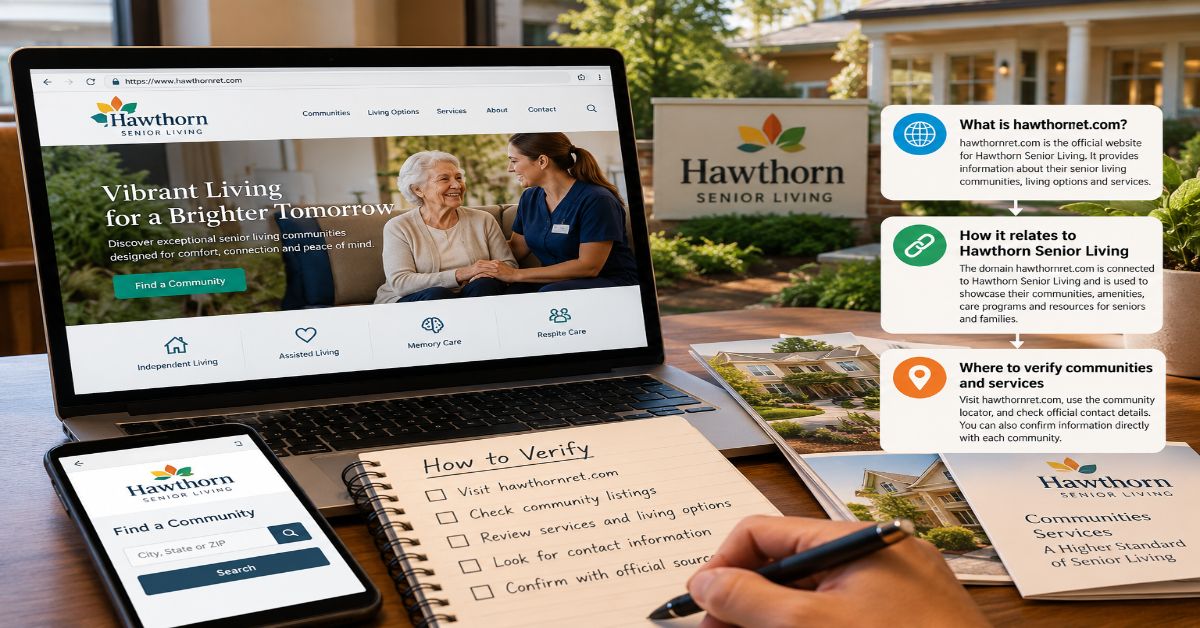
A domain can be a clue without being the whole story. If you type hawthornret.com into a search box, you may be looking for Hawthorn Senior Living, its communities, employment information, or a trustworthy route to the company’s current web presence. Public records associate hawthornret.com with Hawthorn-related retirement and senior-living entities, while Hawthorn’s current public website identifies its main site as SeniorLivingInStyle.com. That distinction matters because a person who follows an older domain reference can otherwise wonder whether they have reached the right organization.
The practical answer is straightforward: hawthornret.com is associated with Hawthorn Senior Living/Hawthorn Retirement Group, a senior-living organization headquartered in Vancouver, Washington. Hawthorn’s current public-facing site is SeniorLivingInStyle.com, where visitors can explore independent living, community information, resources, careers, and ways to contact the organization. Hawthorn’s published materials describe services such as chef-prepared meals, housekeeping, transportation, activities, and, depending on the community, assisted living or memory-care options.
For families, prospective residents, employees, and researchers, the useful question is therefore not simply “What is hawthornret.com?” It is “What organization does this domain point to, what can I verify about it, and where should I go next?” This guide answers those questions using the organization’s current website and other public records, while separating confirmed facts from details that can vary by community.
What is hawthornret.com connected to?
hawthornret.com is connected with Hawthorn Senior Living and the broader Hawthorn Retirement Group identity. A current Hawthorn terms page names Hawthorn Senior Living as the organization operating SeniorLivingInStyle.com and lists a corporate address at 9310 NE Vancouver Mall Drive, Suite 200, Vancouver, Washington 98662. The same page provides Privacy@hawthornret.com as a contact address, which is a direct indication that the hawthornret.com domain remains connected to the organization.
Public transportation and business records also associate hawthornret.com with multiple retirement-residence entities operating passenger vehicles for residents. Those records are useful corroboration, but they are not a substitute for the organization’s own current website when you need information about a particular community, service, price, or availability.
| Item | What can be verified | Why it matters |
| Domain | hawthornret.com | Associated with Hawthorn-related retirement and senior-living operations. |
| Current public website | SeniorLivingInStyle.com | The current site identifies itself as Hawthorn Senior Living’s website. |
| Corporate address | 9310 NE Vancouver Mall Drive, Suite 200, Vancouver, WA 98662 | Useful for verifying organization identity and correspondence. |
| Organization founded | 2000 | Hawthorn’s public company profile lists 2000 as its founding year. |
| Core focus | Senior living and retirement communities | The organization describes independent living plus assisted living and memory-care offerings in its broader portfolio. |
Why does Hawthorn use more than one web identity?
A common source of confusion is the difference between a corporate or legacy domain and a public-facing consumer website. Senior-living operators often have separate domains for corporate communication, employee email, community websites, marketing, and older web infrastructure. A domain used in an email address does not necessarily have to be the same domain used for the main public website.
Hawthorn’s current terms of service explicitly state that its website is located at SeniorLivingInStyle.com. At the same time, the same legal page gives Privacy@hawthornret.com as the privacy contact. That combination provides a practical verification pattern: hawthornret.com can remain an organizational email/domain identity even when the main consumer-facing website is branded differently.
What should you trust when a domain and website differ?
Use a simple three-part check before sharing personal information, making a payment, or relying on a contact detail:
Check whether the current website identifies the same organization by name and corporate address.
Check whether the domain appears in an official contact address or other first-party legal/privacy material.
For a specific community, verify the community’s own page, phone number, address, and contract details rather than assuming that corporate information applies everywhere.
What does Hawthorn Senior Living offer?
Hawthorn’s current website emphasizes independent living as a central offering. Its independent-living page describes communities designed to help older adults maintain independence and privacy while having access to social activities, dining, housekeeping, linen service, and transportation. The organization also operates communities with additional care options, but the exact combination of services depends on the location.
This distinction is important when researching senior living. “Independent living,” “assisted living,” and “memory care” are not interchangeable labels. Independent living generally targets older adults who can manage daily life without routine hands-on assistance. Assisted living adds support with activities of daily living and other needs. Memory care is designed around the needs of people living with Alzheimer’s disease, dementia, or other memory-related conditions.
| Living option | Typical purpose | What to verify locally |
| Independent living | Maintenance-free senior housing with lifestyle services and social opportunities. | Meals, housekeeping, transportation, activities, utilities, floor plans, age requirements. |
| Assisted living | Housing with additional support for daily activities and personal care. | Care levels, medication support, staffing, assessments, added fees, emergency response. |
| Memory care | Specialized residential support for people with memory-related conditions. | Security features, care plans, staffing, activities, medical coordination, pricing. |
What amenities can residents expect?
Hawthorn’s published independent-living materials describe a service model built around convenience and community rather than simply renting an apartment. The organization lists three chef-prepared meals each day, snacks and beverages, weekly housekeeping, linen service, transportation, and organized activities. Individual communities can publish more detailed amenity lists, and those local pages should be treated as the authoritative source for what is included at a particular property.
Dining and everyday convenience
Food is one of the most visible parts of Hawthorn’s model. The corporate independent-living page says residents receive three chef-prepared meals daily, with snacks and beverages available. Some community pages provide even more detail about dining, including chef-curated choices and accommodations for different nutritional needs. Families should still ask whether special diets, guest meals, private dining, or other food-related services carry additional charges.
Transportation and housekeeping
Transportation can be particularly valuable for residents who no longer want to manage every driving task themselves. Hawthorn describes transportation for appointments, shopping, and outings, while weekly housekeeping and linen service are presented as part of the independent-living experience. Ask each community about the transportation radius, scheduling rules, wheelchair accessibility, and whether trips outside a defined service area cost extra.
Activities and social connection
Hawthorn’s materials emphasize activities, events, fitness, lifelong learning, arts, and social connection. The company also publishes community stories showing examples of resident events. These offerings matter because the quality of a senior-living experience is not captured by an apartment floor plan alone. A prospective resident should ask to see a current activity calendar and, if possible, observe an ordinary weekday rather than only a sales-tour event.
Does Hawthorn provide care, or is it mainly independent living?
The answer depends on the community. Hawthorn’s public materials distinguish independent living from assisted living and memory care, and its company profile lists all three areas among its specialties. However, a community marketed primarily as independent living should not automatically be assumed to provide skilled nursing, 24-hour medical care, or every type of personal-care service.
Hawthorn’s independent-living FAQ states that health care services and assistance with activities of daily living are generally not offered directly in independent living unless they are provided by a third-party provider. That is an important detail for families planning several years ahead. If a resident’s needs are changing, ask exactly what services are available on-site, what comes from an outside provider, and what happens if the resident eventually needs a higher level of care.
How should you evaluate a Hawthorn community before moving in?
A polished website can tell you what a community offers; a visit and contract review tell you what living there will actually involve. Use the same checklist for any senior-living community, including Hawthorn properties.
Confirm the care category. Make sure the property is licensed and configured for the level of support the resident currently needs.
Request the complete monthly fee schedule. Separate base rent from care charges, community fees, transportation fees, guest meals, pet fees, and optional services.
Ask what is included every month. Confirm meals, utilities, housekeeping, Wi-Fi, cable, transportation, activities, and maintenance in writing.
Review the apartment and floor plan. Measure furniture, storage, bathroom access, kitchen facilities, and emergency features.
Observe the community during a normal day. Look at dining service, common areas, activity participation, cleanliness, and how staff interact with residents.
Ask what happens when needs change. Find out whether residents can move between care levels, whether outside home-care agencies are allowed, and how pricing changes.
Read the rental agreement carefully. Pay attention to notice periods, deposits, fee increases, refund rules, termination terms, and responsibilities after a resident moves out.
Verify the local contact details independently. Use the community’s official page and a second reliable public source when confirming phone numbers or addresses.
| Question to ask | Why it is important | What to record |
| What does the monthly fee include? | Headline prices can exclude services or one-time charges. | Included meals, utilities, housekeeping, transportation and activities. |
| What happens if care needs increase? | A resident’s needs can change after move-in. | Care assessment process, outside providers, transfer options and new fees. |
| How often can rates change? | A low initial price may not represent long-term cost. | Notice period, annual increases and circumstances triggering adjustments. |
| What are the emergency procedures? | Response arrangements vary by living option and property. | Call systems, monitoring, staffing and escalation process. |
| What is the cancellation or move-out policy? | Moving plans can change unexpectedly. | Notice requirement, deposits, refunds and final billing. |
What is the Hawthorn Resident Travel Program?
One distinctive feature promoted by Hawthorn is its Resident Travel Program. Hawthorn community pages describe a program that allows residents to stay in guest accommodations at other Hawthorn communities, with the corporate site describing stays of up to seven nights per visit. The program is designed to let residents travel while retaining access to a familiar senior-living environment.
The practical point is to confirm the current rules before planning a trip. Availability, guest-suite capacity, booking procedures, length-of-stay limits, and participating communities can change. A resident should ask the home community how reservations work and whether transportation, meals, or other services are handled differently while visiting another location.
Is hawthornret.com the same as SeniorLivingInStyle.com?
They are closely connected in the public record, but they should not be described as two unrelated businesses. Hawthorn’s current website identifies Hawthorn Senior Living as the organization behind SeniorLivingInStyle.com, while its terms page uses the hawthornret.com domain for the privacy contact. Third-party public records also list hawthornret.com as the website for multiple Hawthorn-related retirement-residence entities.
For a person trying to reach the organization today, SeniorLivingInStyle.com is the clearest current public-facing destination identified by Hawthorn itself. If an email or document uses an @hawthornret.com address, that domain is consistent with Hawthorn’s published corporate contact information, but you should still verify unexpected requests independently, especially when they involve money, passwords, identity documents, or sensitive resident information.
What should families know about pricing?
There is no single Hawthorn price that accurately represents every community. Senior-living costs depend on location, apartment size, services, care needs, and what the monthly package includes. Hawthorn’s own independent-living FAQ states that cost varies with geography, living-space size, amenities, dining, and community-specific services.
That makes price comparison more useful when it is done on an apples-to-apples basis. Instead of comparing two advertised monthly rates, compare the total recurring cost after adding the services the resident actually needs. A lower rent with separate meal, transportation, housekeeping, or care charges can have a different total cost from a higher all-inclusive rate.
A simple monthly-cost worksheet
Base monthly rent
Community or administrative fees
Care or assistance charges, if applicable
Medication management or other personal-care services
Transportation outside the included program
Guest meals or additional dining
Pet-related charges
Internet, cable, utilities, or other services not included
One-time move-in, community, or application fees
Expected annual or contractual rate increases
How can you verify a Hawthorn-related email or website reference?
If you received a message mentioning hawthornret.com, verification should be based on the context rather than the domain alone. A familiar-looking address is helpful, but it is not proof that a particular message is legitimate.
Check the sender’s full address, not only the display name.
Compare the sender’s claim with information published on the official Hawthorn website.
For a community-specific request, call the community using a phone number obtained independently from its official page.
Do not provide passwords, financial-account credentials, or identity documents merely because a message uses a familiar company domain.
If the request concerns a resident’s care, billing, or move-in paperwork, ask the community to confirm the request through an established contact channel.
What makes hawthornret.com useful as a search term?
The keyphrase is useful because it bridges an older or corporate web identity with a current consumer-facing brand. Someone may encounter hawthornret.com in an email signature, a public business record, a job listing, a community record, or a document and then search the domain to determine whether it is legitimate. The strongest answer is therefore entity-oriented: identify Hawthorn Senior Living, explain the relationship to SeniorLivingInStyle.com, and give the reader a verification path.
For search engines and answer engines, the important entities are Hawthorn Senior Living, Hawthorn Retirement Group, SeniorLivingInStyle.com, and the individual senior-living communities operating under the Hawthorn umbrella. For readers, the practical entities are even simpler: the corporate organization, the specific community, the services offered, and the contract that governs the resident’s stay.
Key takeaway
hawthornret.com is associated with Hawthorn Senior Living and Hawthorn-related retirement operations, while SeniorLivingInStyle.com is the current public-facing website identified by Hawthorn itself. If you are researching a Hawthorn community, use the corporate site to understand the organization and its living options, then verify the exact community’s services, pricing, care availability, and contract terms before making a decision.
The most useful approach is to treat the domain as an identity clue, not as the entire answer. Verify the organization, locate the specific community, compare the services actually included, and confirm important details directly with the property. That process gives families a much clearer picture than relying on a domain name or a headline monthly price alone.
FAQs
What is hawthornret.com?
hawthornret.com is a web domain associated with Hawthorn Senior Living and Hawthorn-related retirement-residence operations. Hawthorn’s current public-facing website is SeniorLivingInStyle.com, and its terms page lists a hawthornret.com email address for privacy inquiries.
Is hawthornret.com the official Hawthorn Senior Living website?
The current consumer-facing website identified by Hawthorn is SeniorLivingInStyle.com. hawthornret.com remains associated with the organization through published contact information and public business records, so the two domains should not be treated as unrelated entities.
Where is Hawthorn Senior Living headquartered?
Hawthorn Senior Living lists its corporate address as 9310 NE Vancouver Mall Drive, Suite 200, Vancouver, Washington 98662.
Does Hawthorn offer independent living?
Yes. Independent living is a major part of Hawthorn’s public offering. Its materials describe dining, housekeeping, transportation, activities, and community spaces designed for older adults who want to maintain independence.
Does every Hawthorn community offer assisted living or memory care?
No. Care offerings vary by community. Families should check the specific property’s official page and confirm licensing, care levels, staffing, and available services before assuming that a particular location provides assisted living or memory care.
How can I find the right Hawthorn community?
Start with Hawthorn’s current SeniorLivingInStyle.com site and use its community-finding tools. Then compare nearby properties based on location, living option, monthly costs, included services, care availability, apartment design, and the resident’s likely future needs.
Research notes and source basis
This article was prepared from publicly available information checked in October 2026. Key sources included Hawthorn Senior Living’s current website and terms of service, its independent-living information, Hawthorn’s public company profile, and public business/transportation records that associate hawthornret.com with retirement-residence entities. Community-level services and pricing can change, so readers should verify current details with the specific property.
Source: Hawthorn Senior Living, SeniorLivingInStyle.com — current site and independent-living information.
Source: Hawthorn Senior Living Terms of Service — identifies SeniorLivingInStyle.com as the site and lists Privacy@hawthornret.com.
Source: Hawthorn Senior Living public company profile — lists Vancouver, Washington headquarters, 2000 founding year, and senior-living specialties.
Source: Public FMCSA-related business records — associate hawthornret.com with multiple retirement-residence entities.
A work login should feel like a doorway, not a scavenger hunt. If you searched for “gmr okta,” you are most likely trying to reach the Global Medical Response employee sign-in, get into the Okta dashboard, complete a new-user setup, or recover access after a password or verification problem. The direct GMR Okt’a portal is hosted at gmr.okta.com, and the live portal currently requires JavaScript to load its sign-in experience.
The key answer is simple: GMR Okt’a is the organization’s Okta-based access point for authorized GMR users, and the primary portal is https://gmr.okta.com/app/UserHome. Use your GMR credentials and any configured multifactor authentication method, then select the work application you need from the Okta dashboard. If access fails, use GMR’s approved reset or account-unlock process rather than entering credentials into an unofficial login page.
This guide is written for the person who needs to get back to work, not for an identity-management engineer. It explains what the GMR Okta portal is, how to recognize the correct sign-in destination, what to expect during first-time registration and multifactor authentication, and how to troubleshoot common access problems without weakening account security. It also separates current, directly verifiable information from older GMR instructional material, because login procedures can change as an organization updates its identity system. The result is a practical reference for employees, new hires, and authorized users who need a clear path from “I need GMR access” to “I’m signed in.” clearly and securely today. confidently.
What is GMR Okta?
GMR Okta refers to the Okta authentication environment used by Global Medical Response (GMR) for employee access. Okta is an identity and access management platform: instead of maintaining a separate sign-in experience for every workplace service, an organization can use a central identity layer to authenticate users and provide access to approved applications.
For GMR users, the important entity is Global Medical Response, the emergency medical services organization whose current website describes a network of ground and air clinical teams and says it delivers care to more than five million patients annually. GMR’s corporate site also lists Human Resources at 866.267.9111.
The GMR Okta address is distinct from the many unrelated websites that use the letters “GMR.” That distinction matters because search results for this phrase include pages about GMR Group, GMR Transcription, and other organizations. For an employee trying to sign in to Global Medical Response, the relevant portal is the GMR-specific Okta subdomain, not a generic “GMR login” page.
What does the GMR Okta dashboard do?
The dashboard acts as a central launch point for applications assigned to an authenticated user. The exact tiles visible after sign-in depend on the user’s role, permissions, and the applications GMR has assigned to the account.
That means two GMR employees can see different application lists without either account being broken. A missing tile can be an access-assignment issue rather than a password problem. If you can authenticate successfully but an expected application is absent, the useful next step is to contact the appropriate GMR support or internal administrator rather than repeatedly changing your password.
How do you log in to GMR Okta?
For an authorized GMR user, the most direct route is to open the organization’s Okta portal at https://gmr.okta.com/app/UserHome. The live page currently displays a JavaScript requirement when accessed without the scripts needed by the portal, so a normal, updated browser with JavaScript enabled is important.
Use the following sequence to reduce mistakes:
Open the official GMR Okta address: https://gmr.okta.com/app/UserHome. Avoid using a search-result page as the login destination when you can use the organization’s direct Okta address.
Enter the GMR username and password issued or established for your account. Do not share the password, verification code, or recovery information with another person.
Complete the multifactor authentication step if your account is configured for it. GMR’s published employee materials specifically document multifactor authentication options as part of the Okta setup process.
After successful authentication, use the application dashboard to open the work service you need. If an expected application is not listed, treat that as an access or assignment question rather than automatically assuming your password is wrong.
The table below summarizes the login stages and the most useful action at each point.
| Stage | What you should see | If it fails |
| Portal | GMR-specific Okta sign-in page | Check the address and browser JavaScript settings |
| Credentials | GMR username/password prompt | Use the approved reset process; do not reuse an old password |
| Verification | Configured multifactor authentication challenge | Use the registered method or GMR support process |
| Dashboard | Applications assigned to your account | Ask about application access if a required tile is missing |
A useful security rule is to start from the known portal address rather than clicking an unfamiliar page that claims to provide a “GMR Okta login.” The existence of many third-party pages using the keyword is a reason to verify the domain, not a reason to trust the highest-looking search result.
What should new GMR employees expect from Okta registration?
GMR has published employee-facing instructional material covering first-time Okta login and registration, password reset, account unlock, multifactor authentication options, and the process for identifying a GMR username and temporary password. Those materials confirm that Okta is part of the employee access workflow, but the linked instructional documents date from 2022, so individual screens or enrollment steps may no longer look exactly the same.
For a new employee, the practical sequence is usually:
Receive the organization-provided account information through the approved onboarding channel.
Open the GMR Okta portal directly.
Complete the registration or activation steps shown for the account.
Enroll or confirm the available multifactor authentication method when prompted.
Sign in again and verify that the applications you need are present.
Do not assume that a generic Okta account is the same thing as a GMR employee account. Okta is the technology platform; GMR controls the organization-specific identity and application assignments.
Why does GMR Okta use multifactor authentication?
Multifactor authentication adds a second verification step beyond the password. The goal is to make a stolen or guessed password less useful by requiring another factor associated with the authorized user.
GMR’s own employee guidance includes a dedicated section for “Multifactor Authentication Options in Okta,” which confirms that MFA is part of the organization’s published Okta workflow. The exact choices available to an individual user can depend on the organization’s current configuration and the factors enrolled on that account.
If the verification prompt appears but the expected method is unavailable, avoid repeatedly guessing or attempting to bypass the challenge. Instead, use the account-recovery or support route provided by GMR. Security controls are most useful when the recovery process is also handled through trusted channels.
How do you fix common GMR Okta login problems?
Most login failures fall into a small number of categories. Identifying the stage where the process stops is faster than repeatedly trying the same password.
| Problem | Likely category | Practical next step |
| The portal does not load correctly | Browser/session issue | Use a current browser, enable JavaScript, refresh, and retry from the direct GMR Okta URL |
| Password is rejected | Credential issue | Check the username and password carefully; use the approved reset process if needed |
| Account is locked | Account-status issue | Use GMR’s account-unlock process or contact the designated support channel |
| MFA cannot be completed | Verification issue | Use the enrolled factor or follow the approved recovery process |
| Login succeeds but an app is missing | Authorization/access assignment | Contact the relevant GMR administrator or support team |
| A page asks for unusual information | Potential phishing/security issue | Stop and verify the domain through a trusted GMR source |
The GMR Okta page is blank or will not load
The live GMR Okta portal currently reports that JavaScript is required when the page is accessed without it. If the page is blank, incomplete, or stuck before the sign-in form, check that JavaScript is enabled and that your browser is current. A private/incognito window can also help identify whether an extension or stale session is interfering, although this should be treated as a troubleshooting step rather than a substitute for GMR’s official support process.
Your password does not work
First, verify that you are using the GMR account username and not a personal email or a different workplace credential. Check Caps Lock and avoid copying accidental spaces into the username or password field. If the credential remains rejected, use the GMR password-reset process rather than repeatedly attempting guesses.
GMR’s published employee material specifically provides a password-reset video and an account-unlock video, showing that these are recognized recovery paths. Because those documents are older, follow the current prompts presented by the live portal or your current internal instructions if they differ from the archived material.
Your account is locked
An account lock is different from a normal incorrect-password message. Once the identity system has placed restrictions on the account, additional login attempts are unlikely to solve the underlying problem. Use the designated GMR unlock procedure or contact the appropriate support team.
GMR’s employee guidance explicitly includes an account-unlock process. Its current corporate website lists Human Resources at 866.267.9111; employees should use the internal support route appropriate to their role when one is provided.
MFA is the problem
If your password is accepted but you cannot complete the second factor, the issue is authentication enrollment rather than the primary password. Confirm that you are using the factor registered to the GMR account. If the device, phone number, or authenticator method has changed, follow GMR’s approved recovery process instead of trying to create an unofficial workaround.
You can sign in, but an application is missing
A successful Okta login proves that authentication worked; it does not automatically prove that every application has been assigned to your account. Application visibility is commonly governed by role, group, or administrator assignment.
This is an important distinction for troubleshooting. Changing a password will not normally make an unassigned application appear. If the dashboard loads correctly but a required work application is absent, report the missing access through the appropriate GMR channel and identify the application, your role or department, and the time the issue began.
How can you tell whether a GMR Okta login page is legitimate?
For an employee login, domain verification is one of the simplest security checks. The verified GMR Okta portal is hosted under okta.com at gmr.okta.com. A page can look visually similar to Okta and still be unrelated, so the address bar matters more than the page design.
Confirm the host is gmr.okta.com before entering credentials.
Prefer typing or bookmarking the known portal address rather than following an unfamiliar login link.
Do not enter your GMR password into a page hosted on an unrelated domain.
Treat unexpected requests for recovery codes, passwords, or other authentication secrets as a security warning.
If an email or message tells you to “verify” your account, independently open the known GMR Okta address instead of relying on the message link.
The distinction is especially important because search results for “GMR Okta” include third-party login directories and pages that reproduce or redirect to the portal. Such pages may be useful for discovering that a portal exists, but they should not replace the official destination when entering sensitive credentials.
GMR Okta vs. other GMR login pages: what is the difference?
“GMR” is not unique on the web. There are multiple organizations and products that use the abbreviation, which can create confusing search results. The most important identification step is to match the employer or service you actually use with the domain you are visiting.
| Search phrase or portal | What it may refer to | Relevance to this guide |
| GMR Okta / gmr.okta.com | Global Medical Response employee Okta environment | Primary subject |
| GMR Group portal | Indian infrastructure and airport business | Different organization |
| GMR Transcription login | Transcription services | Different organization |
| GMR provider portals | Specific GMR/healthcare partner services | Separate access systems |
This distinction prevents a surprisingly common mistake: finding a result that contains “GMR” and assuming it is the employee portal you need. The domain is the decisive clue.
What information should you have ready before contacting support?
Good troubleshooting starts with useful facts. You do not need to send your password or authentication codes to support. Instead, prepare non-secret information that helps identify the problem:
Your name and the GMR department, location, or role used for identification.
The application or service you were trying to access.
Whether the GMR Okta login page opened normally.
The stage where the process failed: password, MFA, account lock, or application access.
The approximate time the issue occurred.
A screenshot of a non-sensitive error message, if permitted by your organization and with passwords, codes, patient information, and other confidential data excluded.
Never include your password, one-time verification code, recovery code, or other authentication secret in a support ticket, email, screenshot, or chat. A legitimate support process should not require you to disclose those secrets.
What is the safest way to use GMR Okta on a phone or shared computer?
The same identity-security principles apply regardless of device. On a personal phone or computer, use the current browser and keep the operating system and browser updated. On a shared or public computer, avoid saving the password and sign out completely when finished.
If you use a browser bookmark, bookmark the verified GMR Okta address rather than a third-party page. This reduces the chance that a future search result, advertisement, or copied link sends you to a look-alike site.
What should you do if GMR Okta is unavailable?
First determine whether the problem is local to your browser or broader. If the portal itself will not load, try a normal browser refresh and another supported browser. If the page loads but authentication fails, the issue is more likely account-specific.
Do not assume an outage simply because one application is unavailable after login. Okta authentication and an individual downstream application are separate components. If you can reach the dashboard but one application fails, report the application-specific error rather than describing the entire GMR Okta service as unavailable.
For organization-wide incidents, follow current GMR internal communications and support channels. The public GMR website is useful for corporate contact information, but employees should prioritize their current internal IT or help-desk instructions for operational incidents.
What can you verify from official GMR and Okta information?
Several details about the GMR Okta workflow can be checked directly rather than inferred from third-party login pages:
• The live GMR-specific Okta portal is at gmr.okta.com/app/UserHome.
• The live portal indicates that JavaScript is required for the web experience.
• GMR has published employee guidance covering new-user Okta registration, password reset, account unlock, multifactor authentication options, and GMR username/temporary-password information.
• GMR’s current corporate website identifies Global Medical Response and lists Human Resources at 866.267.9111.
• GMR’s site describes its operations as comprehensive emergency medical services delivered through ground and air clinical teams.
The strongest practice is to use the live portal for the actual sign-in experience and treat older instructional documents as procedural background. If the current portal presents different wording or enrollment screens, the live system and current internal instructions should take precedence.
Conclusion: use the verified GMR Okta route first
For most people searching “gmr okta,” the practical goal is simply to reach the correct Global Medical Response employee sign-in without wasting time on unrelated GMR websites. The verified destination is gmr.okta.com, and the authentication flow may include credentials plus multifactor verification.
When something goes wrong, identify the failure stage before changing anything: page loading, credentials, MFA, account status, or application assignment. That small distinction makes troubleshooting faster and avoids unnecessary password changes. Most importantly, protect the credential itself: use the verified domain, never disclose authentication secrets, and use GMR’s approved recovery or support channels when self-service access does not resolve the problem.
FAQs about GMR Okta
What is the official GMR Okta login address?
The GMR-specific Okta portal is https://gmr.okta.com/app/UserHome. The live page is hosted on the okta.com domain and is the direct destination for the GMR Okta environment.
Is GMR Okta the same as the GMR Group login?
No. “GMR” is used by multiple organizations. This guide refers to Global Medical Response and its gmr.okta.com employee portal, not the separate GMR Group infrastructure business.
Why does the GMR Okta page say JavaScript is required?
The current web portal depends on JavaScript for its interactive sign-in experience. If JavaScript is disabled, the page may not render the normal login interface.
What should I do if I forgot my GMR Okta password?
Use the current GMR/Okta password-reset process presented by the authorized portal or your current internal GMR instructions. Avoid repeated guesses and never give your password to another person.
What if I can log in but cannot see an application?
That usually points to an application-access or assignment issue rather than a failed authentication. Record the application name and contact the appropriate GMR administrator or support channel.
Does GMR Okta support multifactor authentication?
Yes. GMR’s published employee materials include specific guidance for multifactor authentication options in Okta. The exact methods available can depend on the account’s current configuration and enrollment.
Verification sources
The article was checked against the following sources for current portal and organizational details:
-

 Guide2 months ago
Voozon.com Guide: What It Is and How It Works
-

 General2 months ago
Spanking Stories: A Reader’s Guide to Themes, Tags and Safer Choices
-

 Technology2 months ago
techtrendery.com: Website Guide for 2026
-

 Technology3 months ago
Coomer.su Explained: Architecture, Data Flow, API Changes and Resilient Client Design
-

 General2 months ago
SABS Framework Description Paragraph: Practical Guide
-

 Technology3 months ago
Listcrawler: How List Crawlers Extract Structured Web Data
-

 General3 months ago
Socialmediagirls Explained: Safety, Privacy, Forum Structure, Leaks and Rules
-

 General3 months ago
OnlyFans Leaks: How They Happen and How to Reduce the Risk