
Guide
hawthornret.com: Hawthorn Senior Living Guide

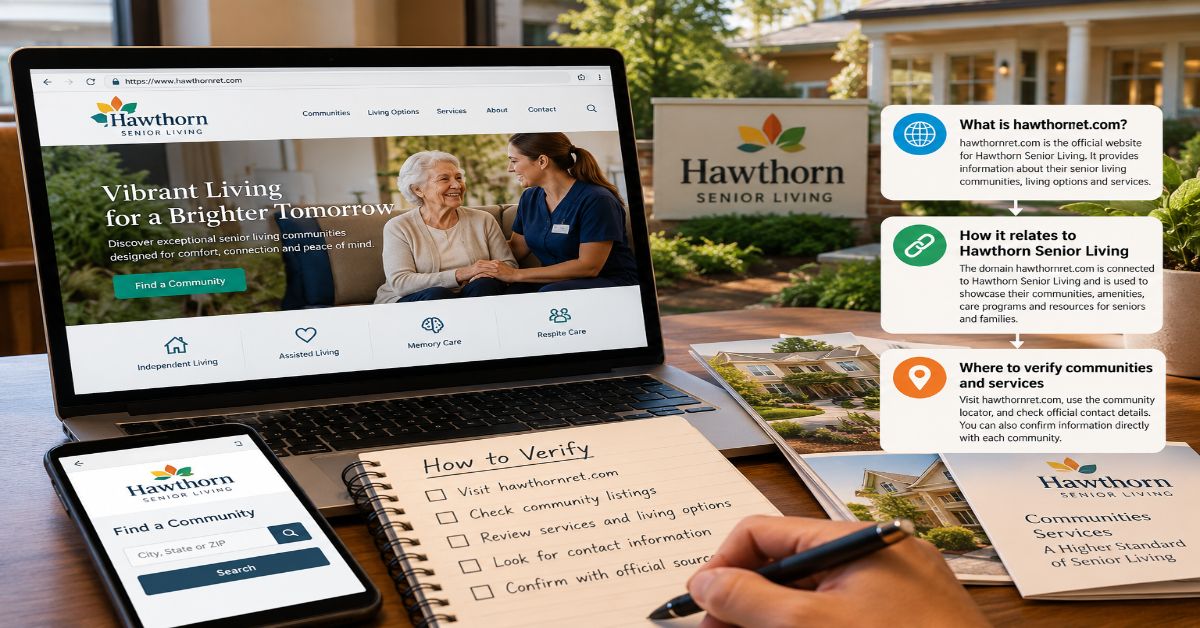
A domain can be a clue without being the whole story. If you type hawthornret.com into a search box, you may be looking for Hawthorn Senior Living, its communities, employment information, or a trustworthy route to the company’s current web presence. Public records associate hawthornret.com with Hawthorn-related retirement and senior-living entities, while Hawthorn’s current public website identifies its main site as SeniorLivingInStyle.com. That distinction matters because a person who follows an older domain reference can otherwise wonder whether they have reached the right organization.
The practical answer is straightforward: hawthornret.com is associated with Hawthorn Senior Living/Hawthorn Retirement Group, a senior-living organization headquartered in Vancouver, Washington. Hawthorn’s current public-facing site is SeniorLivingInStyle.com, where visitors can explore independent living, community information, resources, careers, and ways to contact the organization. Hawthorn’s published materials describe services such as chef-prepared meals, housekeeping, transportation, activities, and, depending on the community, assisted living or memory-care options.
For families, prospective residents, employees, and researchers, the useful question is therefore not simply “What is hawthornret.com?” It is “What organization does this domain point to, what can I verify about it, and where should I go next?” This guide answers those questions using the organization’s current website and other public records, while separating confirmed facts from details that can vary by community.
What is hawthornret.com connected to?
hawthornret.com is connected with Hawthorn Senior Living and the broader Hawthorn Retirement Group identity. A current Hawthorn terms page names Hawthorn Senior Living as the organization operating SeniorLivingInStyle.com and lists a corporate address at 9310 NE Vancouver Mall Drive, Suite 200, Vancouver, Washington 98662. The same page provides Privacy@hawthornret.com as a contact address, which is a direct indication that the hawthornret.com domain remains connected to the organization.
Public transportation and business records also associate hawthornret.com with multiple retirement-residence entities operating passenger vehicles for residents. Those records are useful corroboration, but they are not a substitute for the organization’s own current website when you need information about a particular community, service, price, or availability.
| Item | What can be verified | Why it matters |
| Domain | hawthornret.com | Associated with Hawthorn-related retirement and senior-living operations. |
| Current public website | SeniorLivingInStyle.com | The current site identifies itself as Hawthorn Senior Living’s website. |
| Corporate address | 9310 NE Vancouver Mall Drive, Suite 200, Vancouver, WA 98662 | Useful for verifying organization identity and correspondence. |
| Organization founded | 2000 | Hawthorn’s public company profile lists 2000 as its founding year. |
| Core focus | Senior living and retirement communities | The organization describes independent living plus assisted living and memory-care offerings in its broader portfolio. |
Why does Hawthorn use more than one web identity?
A common source of confusion is the difference between a corporate or legacy domain and a public-facing consumer website. Senior-living operators often have separate domains for corporate communication, employee email, community websites, marketing, and older web infrastructure. A domain used in an email address does not necessarily have to be the same domain used for the main public website.
Hawthorn’s current terms of service explicitly state that its website is located at SeniorLivingInStyle.com. At the same time, the same legal page gives Privacy@hawthornret.com as the privacy contact. That combination provides a practical verification pattern: hawthornret.com can remain an organizational email/domain identity even when the main consumer-facing website is branded differently.
What should you trust when a domain and website differ?
Use a simple three-part check before sharing personal information, making a payment, or relying on a contact detail:
Check whether the current website identifies the same organization by name and corporate address.
Check whether the domain appears in an official contact address or other first-party legal/privacy material.
For a specific community, verify the community’s own page, phone number, address, and contract details rather than assuming that corporate information applies everywhere.
What does Hawthorn Senior Living offer?
Hawthorn’s current website emphasizes independent living as a central offering. Its independent-living page describes communities designed to help older adults maintain independence and privacy while having access to social activities, dining, housekeeping, linen service, and transportation. The organization also operates communities with additional care options, but the exact combination of services depends on the location.
This distinction is important when researching senior living. “Independent living,” “assisted living,” and “memory care” are not interchangeable labels. Independent living generally targets older adults who can manage daily life without routine hands-on assistance. Assisted living adds support with activities of daily living and other needs. Memory care is designed around the needs of people living with Alzheimer’s disease, dementia, or other memory-related conditions.
| Living option | Typical purpose | What to verify locally |
| Independent living | Maintenance-free senior housing with lifestyle services and social opportunities. | Meals, housekeeping, transportation, activities, utilities, floor plans, age requirements. |
| Assisted living | Housing with additional support for daily activities and personal care. | Care levels, medication support, staffing, assessments, added fees, emergency response. |
| Memory care | Specialized residential support for people with memory-related conditions. | Security features, care plans, staffing, activities, medical coordination, pricing. |
What amenities can residents expect?
Hawthorn’s published independent-living materials describe a service model built around convenience and community rather than simply renting an apartment. The organization lists three chef-prepared meals each day, snacks and beverages, weekly housekeeping, linen service, transportation, and organized activities. Individual communities can publish more detailed amenity lists, and those local pages should be treated as the authoritative source for what is included at a particular property.
Dining and everyday convenience
Food is one of the most visible parts of Hawthorn’s model. The corporate independent-living page says residents receive three chef-prepared meals daily, with snacks and beverages available. Some community pages provide even more detail about dining, including chef-curated choices and accommodations for different nutritional needs. Families should still ask whether special diets, guest meals, private dining, or other food-related services carry additional charges.
Transportation and housekeeping
Transportation can be particularly valuable for residents who no longer want to manage every driving task themselves. Hawthorn describes transportation for appointments, shopping, and outings, while weekly housekeeping and linen service are presented as part of the independent-living experience. Ask each community about the transportation radius, scheduling rules, wheelchair accessibility, and whether trips outside a defined service area cost extra.
Activities and social connection
Hawthorn’s materials emphasize activities, events, fitness, lifelong learning, arts, and social connection. The company also publishes community stories showing examples of resident events. These offerings matter because the quality of a senior-living experience is not captured by an apartment floor plan alone. A prospective resident should ask to see a current activity calendar and, if possible, observe an ordinary weekday rather than only a sales-tour event.
Does Hawthorn provide care, or is it mainly independent living?
The answer depends on the community. Hawthorn’s public materials distinguish independent living from assisted living and memory care, and its company profile lists all three areas among its specialties. However, a community marketed primarily as independent living should not automatically be assumed to provide skilled nursing, 24-hour medical care, or every type of personal-care service.
Hawthorn’s independent-living FAQ states that health care services and assistance with activities of daily living are generally not offered directly in independent living unless they are provided by a third-party provider. That is an important detail for families planning several years ahead. If a resident’s needs are changing, ask exactly what services are available on-site, what comes from an outside provider, and what happens if the resident eventually needs a higher level of care.
How should you evaluate a Hawthorn community before moving in?
A polished website can tell you what a community offers; a visit and contract review tell you what living there will actually involve. Use the same checklist for any senior-living community, including Hawthorn properties.
Confirm the care category. Make sure the property is licensed and configured for the level of support the resident currently needs.
Request the complete monthly fee schedule. Separate base rent from care charges, community fees, transportation fees, guest meals, pet fees, and optional services.
Ask what is included every month. Confirm meals, utilities, housekeeping, Wi-Fi, cable, transportation, activities, and maintenance in writing.
Review the apartment and floor plan. Measure furniture, storage, bathroom access, kitchen facilities, and emergency features.
Observe the community during a normal day. Look at dining service, common areas, activity participation, cleanliness, and how staff interact with residents.
Ask what happens when needs change. Find out whether residents can move between care levels, whether outside home-care agencies are allowed, and how pricing changes.
Read the rental agreement carefully. Pay attention to notice periods, deposits, fee increases, refund rules, termination terms, and responsibilities after a resident moves out.
Verify the local contact details independently. Use the community’s official page and a second reliable public source when confirming phone numbers or addresses.
| Question to ask | Why it is important | What to record |
| What does the monthly fee include? | Headline prices can exclude services or one-time charges. | Included meals, utilities, housekeeping, transportation and activities. |
| What happens if care needs increase? | A resident’s needs can change after move-in. | Care assessment process, outside providers, transfer options and new fees. |
| How often can rates change? | A low initial price may not represent long-term cost. | Notice period, annual increases and circumstances triggering adjustments. |
| What are the emergency procedures? | Response arrangements vary by living option and property. | Call systems, monitoring, staffing and escalation process. |
| What is the cancellation or move-out policy? | Moving plans can change unexpectedly. | Notice requirement, deposits, refunds and final billing. |
What is the Hawthorn Resident Travel Program?
One distinctive feature promoted by Hawthorn is its Resident Travel Program. Hawthorn community pages describe a program that allows residents to stay in guest accommodations at other Hawthorn communities, with the corporate site describing stays of up to seven nights per visit. The program is designed to let residents travel while retaining access to a familiar senior-living environment.
The practical point is to confirm the current rules before planning a trip. Availability, guest-suite capacity, booking procedures, length-of-stay limits, and participating communities can change. A resident should ask the home community how reservations work and whether transportation, meals, or other services are handled differently while visiting another location.
Is hawthornret.com the same as SeniorLivingInStyle.com?
They are closely connected in the public record, but they should not be described as two unrelated businesses. Hawthorn’s current website identifies Hawthorn Senior Living as the organization behind SeniorLivingInStyle.com, while its terms page uses the hawthornret.com domain for the privacy contact. Third-party public records also list hawthornret.com as the website for multiple Hawthorn-related retirement-residence entities.
For a person trying to reach the organization today, SeniorLivingInStyle.com is the clearest current public-facing destination identified by Hawthorn itself. If an email or document uses an @hawthornret.com address, that domain is consistent with Hawthorn’s published corporate contact information, but you should still verify unexpected requests independently, especially when they involve money, passwords, identity documents, or sensitive resident information.
What should families know about pricing?
There is no single Hawthorn price that accurately represents every community. Senior-living costs depend on location, apartment size, services, care needs, and what the monthly package includes. Hawthorn’s own independent-living FAQ states that cost varies with geography, living-space size, amenities, dining, and community-specific services.
That makes price comparison more useful when it is done on an apples-to-apples basis. Instead of comparing two advertised monthly rates, compare the total recurring cost after adding the services the resident actually needs. A lower rent with separate meal, transportation, housekeeping, or care charges can have a different total cost from a higher all-inclusive rate.
A simple monthly-cost worksheet
Base monthly rent
Community or administrative fees
Care or assistance charges, if applicable
Medication management or other personal-care services
Transportation outside the included program
Guest meals or additional dining
Pet-related charges
Internet, cable, utilities, or other services not included
One-time move-in, community, or application fees
Expected annual or contractual rate increases
How can you verify a Hawthorn-related email or website reference?
If you received a message mentioning hawthornret.com, verification should be based on the context rather than the domain alone. A familiar-looking address is helpful, but it is not proof that a particular message is legitimate.
Check the sender’s full address, not only the display name.
Compare the sender’s claim with information published on the official Hawthorn website.
For a community-specific request, call the community using a phone number obtained independently from its official page.
Do not provide passwords, financial-account credentials, or identity documents merely because a message uses a familiar company domain.
If the request concerns a resident’s care, billing, or move-in paperwork, ask the community to confirm the request through an established contact channel.
What makes hawthornret.com useful as a search term?
The keyphrase is useful because it bridges an older or corporate web identity with a current consumer-facing brand. Someone may encounter hawthornret.com in an email signature, a public business record, a job listing, a community record, or a document and then search the domain to determine whether it is legitimate. The strongest answer is therefore entity-oriented: identify Hawthorn Senior Living, explain the relationship to SeniorLivingInStyle.com, and give the reader a verification path.
For search engines and answer engines, the important entities are Hawthorn Senior Living, Hawthorn Retirement Group, SeniorLivingInStyle.com, and the individual senior-living communities operating under the Hawthorn umbrella. For readers, the practical entities are even simpler: the corporate organization, the specific community, the services offered, and the contract that governs the resident’s stay.
Key takeaway
hawthornret.com is associated with Hawthorn Senior Living and Hawthorn-related retirement operations, while SeniorLivingInStyle.com is the current public-facing website identified by Hawthorn itself. If you are researching a Hawthorn community, use the corporate site to understand the organization and its living options, then verify the exact community’s services, pricing, care availability, and contract terms before making a decision.
The most useful approach is to treat the domain as an identity clue, not as the entire answer. Verify the organization, locate the specific community, compare the services actually included, and confirm important details directly with the property. That process gives families a much clearer picture than relying on a domain name or a headline monthly price alone.
FAQs
What is hawthornret.com?
hawthornret.com is a web domain associated with Hawthorn Senior Living and Hawthorn-related retirement-residence operations. Hawthorn’s current public-facing website is SeniorLivingInStyle.com, and its terms page lists a hawthornret.com email address for privacy inquiries.
Is hawthornret.com the official Hawthorn Senior Living website?
The current consumer-facing website identified by Hawthorn is SeniorLivingInStyle.com. hawthornret.com remains associated with the organization through published contact information and public business records, so the two domains should not be treated as unrelated entities.
Where is Hawthorn Senior Living headquartered?
Hawthorn Senior Living lists its corporate address as 9310 NE Vancouver Mall Drive, Suite 200, Vancouver, Washington 98662.
Does Hawthorn offer independent living?
Yes. Independent living is a major part of Hawthorn’s public offering. Its materials describe dining, housekeeping, transportation, activities, and community spaces designed for older adults who want to maintain independence.
Does every Hawthorn community offer assisted living or memory care?
No. Care offerings vary by community. Families should check the specific property’s official page and confirm licensing, care levels, staffing, and available services before assuming that a particular location provides assisted living or memory care.
How can I find the right Hawthorn community?
Start with Hawthorn’s current SeniorLivingInStyle.com site and use its community-finding tools. Then compare nearby properties based on location, living option, monthly costs, included services, care availability, apartment design, and the resident’s likely future needs.
Research notes and source basis
This article was prepared from publicly available information checked in October 2026. Key sources included Hawthorn Senior Living’s current website and terms of service, its independent-living information, Hawthorn’s public company profile, and public business/transportation records that associate hawthornret.com with retirement-residence entities. Community-level services and pricing can change, so readers should verify current details with the specific property.
Source: Hawthorn Senior Living, SeniorLivingInStyle.com — current site and independent-living information.
Source: Hawthorn Senior Living Terms of Service — identifies SeniorLivingInStyle.com as the site and lists Privacy@hawthornret.com.
Source: Hawthorn Senior Living public company profile — lists Vancouver, Washington headquarters, 2000 founding year, and senior-living specialties.
Source: Public FMCSA-related business records — associate hawthornret.com with multiple retirement-residence entities.
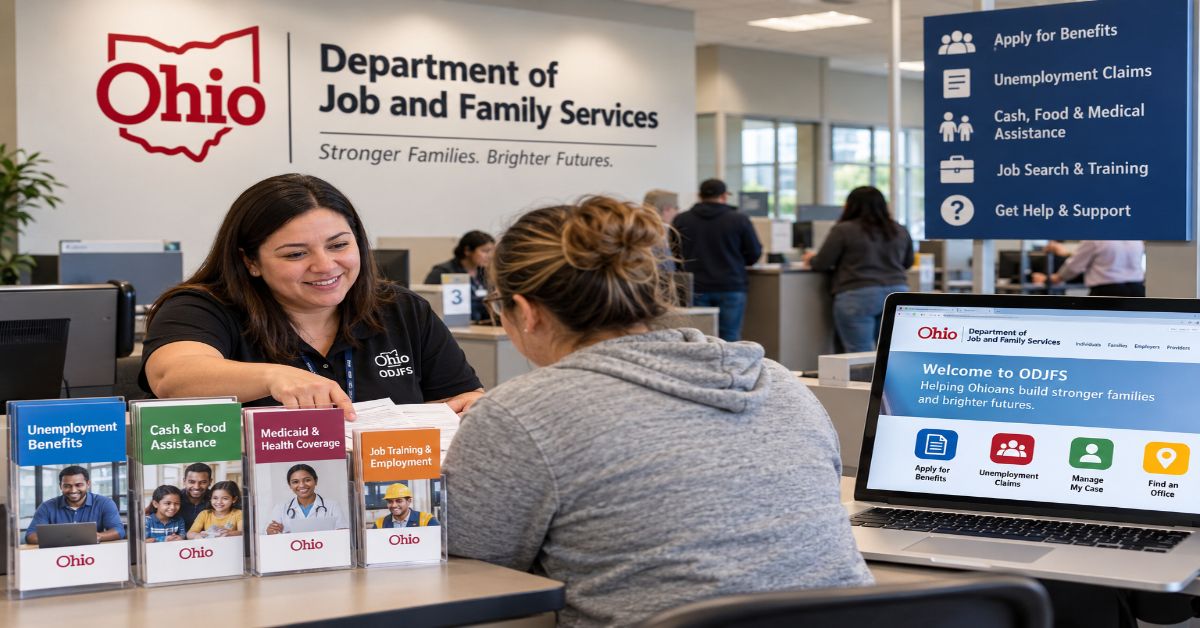
A lost job, a child-care bill, a food budget that no longer stretches, or a question about child support can turn a simple online search into a stressful task. Searching for ODJFS is often the first step toward finding help in Ohio, but the agency’s many programs do different jobs—and the right starting point depends on what you need. The Ohio Department of Job and Family Services (ODJFS) oversees or coordinates services that include unemployment insurance, food and cash assistance, child-care support, child support, workforce services, and certain family-safety programs.
The quickest route is to identify the problem first, then use the official page for that program. People applying for food, cash, medical, or child-care benefits will often start with Ohio Benefits, while someone managing unemployment insurance should use the dedicated unemployment service. For questions about an individual food or cash-assistance case, the county Department of Job and Family Services is usually the right contact—not a general state office.
This guide explains what ODJFS means, which services it connects people with, how to begin an application, what information to prepare, and how to avoid common delays and scams. It also clarifies an important distinction: ODJFS supervises programs, but many everyday applications and case questions are handled by county agencies or specialized online portals. That means choosing the correct route can save time and prevent your request from landing in the wrong queue.
ODJFS is an Ohio state agency, so its programs are intended for people and employers dealing with Ohio services. If you live outside Ohio, check your own state’s official agency before submitting personal information. For Ohio residents, the official starting points are the [ODJFS website](https://jfs.ohio.gov/) and the [Ohio Benefits portal](https://benefits.ohio.gov/home).
What Is ODJFS?
ODJFS stands for the Ohio Department of Job and Family Services. It is a state government department that oversees a range of employment, income-support, family, and child-related programs. Its website brings together program information, application links, forms, policy resources, and contact routes. The department also works with local county agencies, employers, workforce partners, and other public bodies to deliver services.
ODJFS is not a single benefit or a single application. It is the umbrella agency behind several different services, each with its own eligibility rules, deadlines, documentation requirements, and appeal processes. A person seeking unemployment compensation should not assume that the food-assistance office can resolve the claim; likewise, a general ODJFS contact form may not have access to a county case record.
For the official overview, visit the [ODJFS home page](https://jfs.ohio.gov/). It includes pathways to unemployment services, public assistance, child support and family services, job and workforce services, forms, and local agency information.
Which ODJFS Service Do You Need?
Use this quick comparison to choose a starting point. The correct office depends on the type of help or case you have.
| Need or question | Best starting point | What it helps with |
| Lost a job or had hours reduced | ODJFS Unemployment Services | File or manage an unemployment claim and review claim responsibilities. |
| Food assistance or SNAP | Ohio Benefits or county agency | Apply for food assistance and ask about a specific case. |
| Cash assistance for an eligible family | Ohio Benefits or county agency | Explore Ohio Works First and other applicable assistance. |
| Medical or child-care assistance | Ohio Benefits | Check potential eligibility and apply for available programs. |
| Child support question | ODJFS Child Support / local agency | Find program information and the appropriate case contact. |
| Job search, training, or career support | OhioMeansJobs and workforce services | Explore employment resources and local workforce help. |
| Need an in-person office | ODJFS Local Agencies Directory | Find the county office or relevant local service provider. |
How Do You Apply for ODJFS Benefits?
There is no universal ODJFS application that covers every program. The steps below are a practical starting sequence for public assistance; unemployment insurance has its own claim process and ongoing requirements.
1. Start with the official portal
For food, cash, medical, and early care and education assistance, visit [Ohio Benefits](https://benefits.ohio.gov/home). The portal allows users to sign in with OHID, explore eligibility, apply for programs, and access existing benefits. Follow the instructions shown for your specific program rather than relying on a third-party website or an old bookmarked form.
2. Identify the program and check the rules
Read the current eligibility information before you begin. Requirements may depend on factors such as household circumstances, income, work status, residency, or the program involved. A screening tool can help you decide whether to apply, but a screening result is not the same as an official eligibility decision.
3. Prepare information before submitting
Depending on the program, you may be asked for identity and contact details, household information, income or employment details, child-care information, or supporting records. The portal or county agency should tell you which documents are required. Do not upload extra sensitive information unless the official process requests it.
4. Submit and save your confirmation
After you submit an application or report a change, save the confirmation number, date, and any receipt shown. Keep copies of documents you provide. If the system asks you to complete an interview, upload verification, or respond by a deadline, make a note of the due date and follow the instructions in your account or official notice.
5. Follow up through the correct office
Most ODJFS public-assistance programs are administered locally. For a question about your food or cash case, contact your county Department of Job and Family Services. For unemployment insurance, use the dedicated unemployment contact route. Giving the correct office your case reference and a concise description of the issue can help the representative direct the inquiry.
For official application guidance, see the [Ohio Benefits portal](https://benefits.ohio.gov/home) and the [ODJFS Public Assistance page](https://jfs.ohio.gov/public-assistance).
ODJFS Unemployment: What Workers Should Know
Unemployment insurance provides temporary income support to eligible workers who lose work through no fault of their own or experience qualifying reductions in work. It does not replace every dollar of previous earnings, and being unemployed does not automatically guarantee eligibility. ODJFS reviews the facts of a claim under Ohio’s rules.
Eligibility is based on more than job loss
Ohio’s official explanation lists several requirements, including that the worker is unemployed through no fault of their own, is actively seeking work, and has sufficient recent work and earnings history. The published 2026 guidance states that qualifying workers generally need at least 20 weeks of work in the relevant 12–18 month period and average weekly earnings of at least $352 during those weeks. Rules and amounts can change, so check the official page before relying on a figure.
The state’s current guidance says eligible claimants may receive weekly benefits within a published range that depends on prior wages and other factors, for up to 26 weeks in a benefit year. These figures are not a personal estimate; an official determination is what establishes whether a claimant qualifies and how much may be payable.
Keep up with weekly requirements
Filing an initial claim is only one part of the process. Claimants may need to submit weekly claims, be able and available to work, complete required work-search activities, and keep records of those activities. Examples can include applying for a suitable job, sending a résumé to an employer, or attending an interview. Follow the instructions on your claim and keep documentation in case the agency asks for it.
Check notices carefully
Read monetary and nonmonetary determination notices carefully. A monetary notice addresses wage and employment information; a nonmonetary decision may address issues such as why employment ended or whether other eligibility requirements were met. If you believe a record is wrong or disagree with a decision, follow the review or appeal instructions and deadlines stated in the official notice.
Official reference: [ODJFS — How Unemployment Insurance Works](https://jfs.ohio.gov/unemployment-services/for-workers/how-unemployment-insurance-works).
Ohio Benefits: Food, Cash, Medical, and Child-Care Assistance
Ohio Benefits is the state’s self-service portal for several public assistance programs. It can help users check potential eligibility, apply for assistance, and manage existing benefits. Available programs include food assistance through SNAP, cash assistance through Ohio Works First, Medicaid, and early care and education or child-care assistance. The programs have different rules, and eligibility for one does not automatically mean eligibility for another.
Food assistance (SNAP)
The Supplemental Nutrition Assistance Program helps eligible households with limited income buy food. Applicants should use the official portal or their county agency to check current requirements and submit the information requested. If a case is pending, a notice requests verification, or benefits appear incorrect, the county office is generally the best contact for case-specific help.
Cash assistance
Ohio Works First is Ohio’s cash-assistance component of the federal Temporary Assistance for Needy Families program. It serves eligible families with children under program rules. Do not assume the program is an unrestricted grant: applicants should review eligibility, participation requirements, and the terms that apply to their circumstances.
Medical and child-care assistance
The portal also connects residents with Medicaid and early care and education assistance. For child-care support, the details of the family’s situation and the provider may matter. Use the portal’s current instructions and ask the county agency which documents are needed before submitting a large collection of records.
Official references: [Ohio Benefits](https://benefits.ohio.gov/home) and [ODJFS Public Assistance](https://jfs.ohio.gov/public-assistance).
Where Should You Contact ODJFS?
Different contact routes serve different purposes. This table helps prevent a common delay: contacting a general office that cannot access the case in question.
| Question type | Recommended contact route | Useful detail to have ready |
| Unemployment claim or payment | ODJFS Unemployment Services; individual claimant contact route | Claim reference, notice date, and a brief description of the issue. |
| Food or cash-assistance case | Your county Department of Job and Family Services | Case reference, recent notice, and the specific question. |
| General program information | ODJFS Help Center or official program page | Program name and what you need to understand. |
| Find a local office | ODJFS Local Agencies Directory | Ohio county where you need service. |
| Technical issue with an online account | The official portal’s help or sign-in route | Error message and the time it occurred; never send a password. |
ODJFS’s published contact guidance specifically notes that only the Office of Unemployment Insurance can respond to unemployment-benefit questions, while individual food and cash-assistance cases are handled by county departments. The Ohio Benefits help center lists 1-844-640-6446 (1-844-640-OHIO) for assistance with the portal and directs users to the local agency directory for county services.
Official references: [ODJFS Help Center](https://jfs.ohio.gov/help-center), [ODJFS Contact Us](https://jfs.ohio.gov/help-center/contact-us), and [Ohio Benefits Help Center](https://benefits.ohio.gov/help-center).
How to Avoid ODJFS Delays and Scams
A missing document, an outdated contact detail, or a missed deadline can slow a benefits case. A fake text message or website can create a more serious problem by stealing personal or benefit-card information. Use a few simple safeguards.
- Use official Ohio government domains. Start from jfs.ohio.gov or benefits.ohio.gov rather than an advertisement or a link sent by an unknown person.
- Check notices and deadlines. Read the full notice, note what is requested, and respond through the official channel named in the notice.
- Keep records. Save application confirmations, uploaded-document receipts, case notices, and notes from calls.
- Report changes accurately. If the program requires you to report a change in income, household, address, work, or child-care circumstances, follow its current reporting rules.
- Protect your account. Do not share passwords, one-time codes, or benefit-card PINs with callers or texters who contact you unexpectedly.
- Verify suspicious messages independently. Do not use the phone number or link in a message you suspect is fraudulent; navigate to the official website yourself.
- Ask for language or accessibility help. ODJFS and Ohio Benefits provide official information and service routes; ask the agency about available assistance if you need it.
Ohio Benefits has published scam warnings about criminals targeting benefit recipients with messages designed to obtain EBT card numbers and PINs. Treat an unexpected request for such details as a warning sign. Government agencies may need to verify information through approved procedures, but you should confirm the request using a contact route found independently on the official website.
See the official [Ohio Benefits portal](https://benefits.ohio.gov/home) for current notices and program updates.
A Practical Checklist Before You Apply or Call
Use this checklist to make your next step more efficient.
- Identify the program: unemployment, SNAP, cash, medical, child care, child support, or workforce services.
- Open the official ODJFS or Ohio Benefits page for that program.
- Review current eligibility requirements and any filing or response deadline.
- Gather only the documents the official instructions request.
- Record the submission date, confirmation number, and any follow-up task.
- Contact the right office for your issue, especially if you need help with an existing case.
- Keep your personal information secure and report suspected fraud through official channels.
Key Takeaway
ODJFS is the gateway to several important Ohio employment and family-support services, but each program has its own process. Use Ohio Benefits for relevant food, cash, medical, and child-care applications; use the dedicated unemployment system for unemployment claims; and contact the county agency for many case-specific public-assistance questions. Start with an official Ohio government website, follow the instructions for your program, keep your records, and verify any unexpected message before sharing personal information.
Frequently Asked Questions About ODJFS
What does ODJFS stand for?
ODJFS stands for the Ohio Department of Job and Family Services, a state agency overseeing or coordinating employment, public assistance, and family-related programs.
Is ODJFS the same as Ohio Benefits?
No. ODJFS is the state department; Ohio Benefits is an online portal used to check eligibility, apply for, and manage certain public assistance programs.
Can I apply for ODJFS benefits online?
Many public assistance applications can be started through Ohio Benefits. Unemployment insurance uses a separate ODJFS process, and some services may require county-agency follow-up.
Who should I contact about an ODJFS food-assistance case?
Contact the county Department of Job and Family Services that handles your case. The statewide department’s general offices may not have access to individual food-assistance records.
How do I check an unemployment claim?
Use the official ODJFS unemployment services page and its worker claim-management route. Keep your claim information and notices available, and follow any weekly filing requirements.
How can I tell whether an ODJFS message is real?
Do not trust a message solely because it uses a government logo. Avoid opening unexpected links or sharing passwords, one-time codes, EBT PINs, or card details. Visit the official website independently to verify the request.
A work login should feel like a doorway, not a scavenger hunt. If you searched for “gmr okta,” you are most likely trying to reach the Global Medical Response employee sign-in, get into the Okta dashboard, complete a new-user setup, or recover access after a password or verification problem. The direct GMR Okt’a portal is hosted at gmr.okta.com, and the live portal currently requires JavaScript to load its sign-in experience.
The key answer is simple: GMR Okt’a is the organization’s Okta-based access point for authorized GMR users, and the primary portal is https://gmr.okta.com/app/UserHome. Use your GMR credentials and any configured multifactor authentication method, then select the work application you need from the Okta dashboard. If access fails, use GMR’s approved reset or account-unlock process rather than entering credentials into an unofficial login page.
This guide is written for the person who needs to get back to work, not for an identity-management engineer. It explains what the GMR Okta portal is, how to recognize the correct sign-in destination, what to expect during first-time registration and multifactor authentication, and how to troubleshoot common access problems without weakening account security. It also separates current, directly verifiable information from older GMR instructional material, because login procedures can change as an organization updates its identity system. The result is a practical reference for employees, new hires, and authorized users who need a clear path from “I need GMR access” to “I’m signed in.” clearly and securely today. confidently.
What is GMR Okta?
GMR Okta refers to the Okta authentication environment used by Global Medical Response (GMR) for employee access. Okta is an identity and access management platform: instead of maintaining a separate sign-in experience for every workplace service, an organization can use a central identity layer to authenticate users and provide access to approved applications.
For GMR users, the important entity is Global Medical Response, the emergency medical services organization whose current website describes a network of ground and air clinical teams and says it delivers care to more than five million patients annually. GMR’s corporate site also lists Human Resources at 866.267.9111.
The GMR Okta address is distinct from the many unrelated websites that use the letters “GMR.” That distinction matters because search results for this phrase include pages about GMR Group, GMR Transcription, and other organizations. For an employee trying to sign in to Global Medical Response, the relevant portal is the GMR-specific Okta subdomain, not a generic “GMR login” page.
What does the GMR Okta dashboard do?
The dashboard acts as a central launch point for applications assigned to an authenticated user. The exact tiles visible after sign-in depend on the user’s role, permissions, and the applications GMR has assigned to the account.
That means two GMR employees can see different application lists without either account being broken. A missing tile can be an access-assignment issue rather than a password problem. If you can authenticate successfully but an expected application is absent, the useful next step is to contact the appropriate GMR support or internal administrator rather than repeatedly changing your password.
How do you log in to GMR Okta?
For an authorized GMR user, the most direct route is to open the organization’s Okta portal at https://gmr.okta.com/app/UserHome. The live page currently displays a JavaScript requirement when accessed without the scripts needed by the portal, so a normal, updated browser with JavaScript enabled is important.
Use the following sequence to reduce mistakes:
Open the official GMR Okta address: https://gmr.okta.com/app/UserHome. Avoid using a search-result page as the login destination when you can use the organization’s direct Okta address.
Enter the GMR username and password issued or established for your account. Do not share the password, verification code, or recovery information with another person.
Complete the multifactor authentication step if your account is configured for it. GMR’s published employee materials specifically document multifactor authentication options as part of the Okta setup process.
After successful authentication, use the application dashboard to open the work service you need. If an expected application is not listed, treat that as an access or assignment question rather than automatically assuming your password is wrong.
The table below summarizes the login stages and the most useful action at each point.
| Stage | What you should see | If it fails |
| Portal | GMR-specific Okta sign-in page | Check the address and browser JavaScript settings |
| Credentials | GMR username/password prompt | Use the approved reset process; do not reuse an old password |
| Verification | Configured multifactor authentication challenge | Use the registered method or GMR support process |
| Dashboard | Applications assigned to your account | Ask about application access if a required tile is missing |
A useful security rule is to start from the known portal address rather than clicking an unfamiliar page that claims to provide a “GMR Okta login.” The existence of many third-party pages using the keyword is a reason to verify the domain, not a reason to trust the highest-looking search result.
What should new GMR employees expect from Okta registration?
GMR has published employee-facing instructional material covering first-time Okta login and registration, password reset, account unlock, multifactor authentication options, and the process for identifying a GMR username and temporary password. Those materials confirm that Okta is part of the employee access workflow, but the linked instructional documents date from 2022, so individual screens or enrollment steps may no longer look exactly the same.
For a new employee, the practical sequence is usually:
Receive the organization-provided account information through the approved onboarding channel.
Open the GMR Okta portal directly.
Complete the registration or activation steps shown for the account.
Enroll or confirm the available multifactor authentication method when prompted.
Sign in again and verify that the applications you need are present.
Do not assume that a generic Okta account is the same thing as a GMR employee account. Okta is the technology platform; GMR controls the organization-specific identity and application assignments.
Why does GMR Okta use multifactor authentication?
Multifactor authentication adds a second verification step beyond the password. The goal is to make a stolen or guessed password less useful by requiring another factor associated with the authorized user.
GMR’s own employee guidance includes a dedicated section for “Multifactor Authentication Options in Okta,” which confirms that MFA is part of the organization’s published Okta workflow. The exact choices available to an individual user can depend on the organization’s current configuration and the factors enrolled on that account.
If the verification prompt appears but the expected method is unavailable, avoid repeatedly guessing or attempting to bypass the challenge. Instead, use the account-recovery or support route provided by GMR. Security controls are most useful when the recovery process is also handled through trusted channels.
How do you fix common GMR Okta login problems?
Most login failures fall into a small number of categories. Identifying the stage where the process stops is faster than repeatedly trying the same password.
| Problem | Likely category | Practical next step |
| The portal does not load correctly | Browser/session issue | Use a current browser, enable JavaScript, refresh, and retry from the direct GMR Okta URL |
| Password is rejected | Credential issue | Check the username and password carefully; use the approved reset process if needed |
| Account is locked | Account-status issue | Use GMR’s account-unlock process or contact the designated support channel |
| MFA cannot be completed | Verification issue | Use the enrolled factor or follow the approved recovery process |
| Login succeeds but an app is missing | Authorization/access assignment | Contact the relevant GMR administrator or support team |
| A page asks for unusual information | Potential phishing/security issue | Stop and verify the domain through a trusted GMR source |
The GMR Okta page is blank or will not load
The live GMR Okta portal currently reports that JavaScript is required when the page is accessed without it. If the page is blank, incomplete, or stuck before the sign-in form, check that JavaScript is enabled and that your browser is current. A private/incognito window can also help identify whether an extension or stale session is interfering, although this should be treated as a troubleshooting step rather than a substitute for GMR’s official support process.
Your password does not work
First, verify that you are using the GMR account username and not a personal email or a different workplace credential. Check Caps Lock and avoid copying accidental spaces into the username or password field. If the credential remains rejected, use the GMR password-reset process rather than repeatedly attempting guesses.
GMR’s published employee material specifically provides a password-reset video and an account-unlock video, showing that these are recognized recovery paths. Because those documents are older, follow the current prompts presented by the live portal or your current internal instructions if they differ from the archived material.
Your account is locked
An account lock is different from a normal incorrect-password message. Once the identity system has placed restrictions on the account, additional login attempts are unlikely to solve the underlying problem. Use the designated GMR unlock procedure or contact the appropriate support team.
GMR’s employee guidance explicitly includes an account-unlock process. Its current corporate website lists Human Resources at 866.267.9111; employees should use the internal support route appropriate to their role when one is provided.
MFA is the problem
If your password is accepted but you cannot complete the second factor, the issue is authentication enrollment rather than the primary password. Confirm that you are using the factor registered to the GMR account. If the device, phone number, or authenticator method has changed, follow GMR’s approved recovery process instead of trying to create an unofficial workaround.
You can sign in, but an application is missing
A successful Okta login proves that authentication worked; it does not automatically prove that every application has been assigned to your account. Application visibility is commonly governed by role, group, or administrator assignment.
This is an important distinction for troubleshooting. Changing a password will not normally make an unassigned application appear. If the dashboard loads correctly but a required work application is absent, report the missing access through the appropriate GMR channel and identify the application, your role or department, and the time the issue began.
How can you tell whether a GMR Okta login page is legitimate?
For an employee login, domain verification is one of the simplest security checks. The verified GMR Okta portal is hosted under okta.com at gmr.okta.com. A page can look visually similar to Okta and still be unrelated, so the address bar matters more than the page design.
Confirm the host is gmr.okta.com before entering credentials.
Prefer typing or bookmarking the known portal address rather than following an unfamiliar login link.
Do not enter your GMR password into a page hosted on an unrelated domain.
Treat unexpected requests for recovery codes, passwords, or other authentication secrets as a security warning.
If an email or message tells you to “verify” your account, independently open the known GMR Okta address instead of relying on the message link.
The distinction is especially important because search results for “GMR Okta” include third-party login directories and pages that reproduce or redirect to the portal. Such pages may be useful for discovering that a portal exists, but they should not replace the official destination when entering sensitive credentials.
GMR Okta vs. other GMR login pages: what is the difference?
“GMR” is not unique on the web. There are multiple organizations and products that use the abbreviation, which can create confusing search results. The most important identification step is to match the employer or service you actually use with the domain you are visiting.
| Search phrase or portal | What it may refer to | Relevance to this guide |
| GMR Okta / gmr.okta.com | Global Medical Response employee Okta environment | Primary subject |
| GMR Group portal | Indian infrastructure and airport business | Different organization |
| GMR Transcription login | Transcription services | Different organization |
| GMR provider portals | Specific GMR/healthcare partner services | Separate access systems |
This distinction prevents a surprisingly common mistake: finding a result that contains “GMR” and assuming it is the employee portal you need. The domain is the decisive clue.
What information should you have ready before contacting support?
Good troubleshooting starts with useful facts. You do not need to send your password or authentication codes to support. Instead, prepare non-secret information that helps identify the problem:
Your name and the GMR department, location, or role used for identification.
The application or service you were trying to access.
Whether the GMR Okta login page opened normally.
The stage where the process failed: password, MFA, account lock, or application access.
The approximate time the issue occurred.
A screenshot of a non-sensitive error message, if permitted by your organization and with passwords, codes, patient information, and other confidential data excluded.
Never include your password, one-time verification code, recovery code, or other authentication secret in a support ticket, email, screenshot, or chat. A legitimate support process should not require you to disclose those secrets.
What is the safest way to use GMR Okta on a phone or shared computer?
The same identity-security principles apply regardless of device. On a personal phone or computer, use the current browser and keep the operating system and browser updated. On a shared or public computer, avoid saving the password and sign out completely when finished.
If you use a browser bookmark, bookmark the verified GMR Okta address rather than a third-party page. This reduces the chance that a future search result, advertisement, or copied link sends you to a look-alike site.
What should you do if GMR Okta is unavailable?
First determine whether the problem is local to your browser or broader. If the portal itself will not load, try a normal browser refresh and another supported browser. If the page loads but authentication fails, the issue is more likely account-specific.
Do not assume an outage simply because one application is unavailable after login. Okta authentication and an individual downstream application are separate components. If you can reach the dashboard but one application fails, report the application-specific error rather than describing the entire GMR Okta service as unavailable.
For organization-wide incidents, follow current GMR internal communications and support channels. The public GMR website is useful for corporate contact information, but employees should prioritize their current internal IT or help-desk instructions for operational incidents.
What can you verify from official GMR and Okta information?
Several details about the GMR Okta workflow can be checked directly rather than inferred from third-party login pages:
• The live GMR-specific Okta portal is at gmr.okta.com/app/UserHome.
• The live portal indicates that JavaScript is required for the web experience.
• GMR has published employee guidance covering new-user Okta registration, password reset, account unlock, multifactor authentication options, and GMR username/temporary-password information.
• GMR’s current corporate website identifies Global Medical Response and lists Human Resources at 866.267.9111.
• GMR’s site describes its operations as comprehensive emergency medical services delivered through ground and air clinical teams.
The strongest practice is to use the live portal for the actual sign-in experience and treat older instructional documents as procedural background. If the current portal presents different wording or enrollment screens, the live system and current internal instructions should take precedence.
Conclusion: use the verified GMR Okta route first
For most people searching “gmr okta,” the practical goal is simply to reach the correct Global Medical Response employee sign-in without wasting time on unrelated GMR websites. The verified destination is gmr.okta.com, and the authentication flow may include credentials plus multifactor verification.
When something goes wrong, identify the failure stage before changing anything: page loading, credentials, MFA, account status, or application assignment. That small distinction makes troubleshooting faster and avoids unnecessary password changes. Most importantly, protect the credential itself: use the verified domain, never disclose authentication secrets, and use GMR’s approved recovery or support channels when self-service access does not resolve the problem.
FAQs about GMR Okta
What is the official GMR Okta login address?
The GMR-specific Okta portal is https://gmr.okta.com/app/UserHome. The live page is hosted on the okta.com domain and is the direct destination for the GMR Okta environment.
Is GMR Okta the same as the GMR Group login?
No. “GMR” is used by multiple organizations. This guide refers to Global Medical Response and its gmr.okta.com employee portal, not the separate GMR Group infrastructure business.
Why does the GMR Okta page say JavaScript is required?
The current web portal depends on JavaScript for its interactive sign-in experience. If JavaScript is disabled, the page may not render the normal login interface.
What should I do if I forgot my GMR Okta password?
Use the current GMR/Okta password-reset process presented by the authorized portal or your current internal GMR instructions. Avoid repeated guesses and never give your password to another person.
What if I can log in but cannot see an application?
That usually points to an application-access or assignment issue rather than a failed authentication. Record the application name and contact the appropriate GMR administrator or support channel.
Does GMR Okta support multifactor authentication?
Yes. GMR’s published employee materials include specific guidance for multifactor authentication options in Okta. The exact methods available can depend on the account’s current configuration and enrollment.
Verification sources
The article was checked against the following sources for current portal and organizational details:

Search intent: Navigational with informational intent. The phrase “real clear” most strongly points to the RealClear media family, especially RealClearPolitics (RCP), so this guide explains what the platform is, how its content and polling tools work, and how to use it responsibly.
A search for “real clear” can lead to a deceptively simple question: what exactly is RealClear, and which part of the network are you looking for? In practice, the name most commonly points readers toward RealClearPolitics, the flagship property of RealClear Media Group, along with a broader collection of RealClear sites covering subjects such as markets, science, defense, energy, world affairs, history, and policy. RealClearPolitics was founded in 2000 by John McIntyre and Tom Bevan as an online clearinghouse for U.S. political news, policy information, and elections.
The most useful way to understand RealClear is not simply as a news publisher. Its core model combines editorial curation, links to reporting and commentary from other publications, original reporting and analysis, videos and podcasts, and election polling data. Its best-known data feature is the RealClearPolitics Poll Average, which combines selected polls into an average rather than asking readers to interpret every survey separately.
That distinction matters when you use the site. A headline, an aggregated link, an opinion column, an original report, and a polling average are different kinds of information and should be read differently. RealClear itself says it distinguishes straight news reporting from opinion and aims to present a range of viewpoints. At the same time, outside assessments of its political orientation can differ from the organization’s own description of its editorial approach.
This guide explains what “real clear” refers to, what you can find there, how its polling tools work at a high level, what account options exist, and how to evaluate material from the platform alongside primary sources and other reporting.
What is Real Clear?
“Real Clear” is best understood as shorthand for the RealClear media ecosystem, with RealClearPolitics serving as its flagship political and elections publication. The organization says RealClearPolitics began in 2000 when founders John McIntyre and Tom Bevan wanted a digital clearinghouse that would bring together important political news and information from across the expanding web. The company later expanded into specialized RealClear verticals and additional forms of original content.
The distinction between the umbrella and the individual site is useful. If you are searching for election coverage, polling averages, campaign reporting, political commentary, or congressional and White House news, RealClearPolitics is the relevant destination. If your interest is a narrower subject, another RealClear vertical may be more appropriate.
RealClear Media Group currently describes RealClearPolitics as its flagship brand and says the broader group includes 14 other RealClear brands. Those verticals extend the same general curation model into areas such as defense, markets, science, energy, world affairs, history, policy, and investigations. The exact selection and presentation of content can change, so readers should treat the current site navigation as the authoritative guide to which verticals are active.
What can you find on RealClearPolitics?
RealClearPolitics is useful partly because several information formats sit next to one another. Understanding the format before interpreting the claim is one of the simplest ways to use the site well.
| Content type | What it provides | How to read it |
| Curated news links | Links to reporting from outside publications | Open the original source for full context |
| Opinion and commentary | Arguments, analysis, and columns | Treat claims and conclusions as the author’s viewpoint |
| Original reporting | Reporting produced by RealClear staff | Check the byline, evidence, and cited sources |
| Polling data | Individual surveys and aggregated averages | Check pollster, field dates, sample, and methodology |
| Video and podcasts | Interviews, discussions, and commentary | Distinguish reporting from commentary in the program |
This mix is one reason a reader can move quickly from a headline to an opinion column and then to polling data without leaving the same site. It is also why source literacy matters: the fact that two items appear on the same platform does not make them equivalent evidence.
How does the RealClear polling average work?
The RealClearPolitics Poll Average is one of the features most closely associated with the brand. RealClear explains that the average grew out of the founders’ effort to make sense of the growing number of election polls. In a 2024 RealClear discussion of its methodology, Tom Bevan described the average as a straight average of the polls that RealClear includes, while emphasizing that judgment still occurs in deciding which polls qualify for inclusion.
That means the phrase “poll average” should not be interpreted as “a prediction of the election.” An average summarizes a selected collection of surveys. It does not remove sampling error, differences in likely-voter models, questionnaire wording, field dates, or other methodological differences among pollsters.
RealClear also publishes individual polls and maintains polling-related tools such as its pollster scorecard and polling archives. For readers comparing surveys, those resources can help establish the underlying data rather than relying on a single headline number.
| Polling item | Question to ask | Why it matters |
| Field dates | When was the survey conducted? | Older polls may describe an earlier information environment |
| Sample | Who was surveyed? | Adults, registered voters, and likely voters are different populations |
| Margin of error | What uncertainty is reported? | Small differences may fall within sampling uncertainty |
| Pollster | Who conducted the survey? | Methods and historical performance vary by pollster |
| Average inclusion | Which polls are included? | An average reflects the selection rules as well as the arithmetic |
For a high-stakes election claim, the safest workflow is to inspect the underlying poll and methodology rather than treating the average as a self-explanatory fact. This is especially important when several polls are close together and the difference between candidates or options is small.
Is RealClearPolitics a news site or a political commentary site?
It is both a publisher and an aggregator. RealClearPolitics says its daily operation combines editorial curation with original reporting and analysis. Its pages can therefore contain links to external journalism, original RealClear reporting, guest essays, columns, videos, and polling information.
RealClear’s own editorial principles say the organization distinguishes straight news reporting from opinion and seeks to present viewpoints across the ideological spectrum. That is an important description of its stated editorial policy, but it is not a substitute for evaluating individual articles. A reader should still identify who wrote a piece, whether it is labeled news or opinion, what evidence is supplied, and whether the claims can be checked against primary documents.
Independent observers have also characterized RealClearPolitics differently from the organization’s own description of its editorial approach. For example, Media Bias/Fact Check’s July 2026 assessment described a right-center orientation based on source selection while also noting that the site carries material from multiple perspectives. Because such assessments involve methodology and judgment, they are best treated as external evaluations rather than as undisputed facts about every article on the site.
How should you use Real Clear for election research?
RealClearPolitics can be particularly useful as a starting point for discovering the information landscape around an election. A disciplined workflow prevents a convenient aggregator from becoming the only source you consult.
Start with the race or issue page to identify the major current stories and available polling.
Separate reporting, opinion, video commentary, and polling before drawing conclusions.
Open the original publication behind an aggregated headline when the claim matters.
For polling, record the pollster, field dates, population, sample size, and reported margin of error.
Compare polling with official election results when studying past performance.
For policy claims, prefer primary documents such as legislation, government releases, court opinions, agency data, or official transcripts.
If two sources disagree, trace both claims to their underlying evidence rather than choosing based only on headline language.
What are the main RealClear verticals?
The broader RealClear network extends beyond politics. RealClear Media Group says it operates a set of specialized brands, allowing readers to move from the flagship politics site to topic-specific coverage. Examples documented by the organization include RealClearDefense, RealClearMarkets, RealClearScience, RealClearEnergy, RealClearWorld, RealClearHistory, RealClearPolicy, RealClearEducation, and RealClearInvestigations.
The practical benefit is specialization: a reader researching a defense issue can look for a defense-focused vertical, while someone studying financial markets can use a markets-focused site. But specialization does not change the basic rule for source evaluation. A vertical can contain aggregation, original work, and opinion, so the individual item still determines how much evidentiary weight it deserves.
| If you want to research… | Relevant RealClear area | Useful starting material |
| U.S. elections and campaigns | RealClearPolitics | Race pages, polling, reporting, commentary |
| Domestic policy | RealClearPolicy | Curated policy analysis and research |
| Global affairs | RealClearWorld | International news and commentary |
| Markets and finance | RealClearMarkets | Market news, analysis, and commentary |
| Science and technology | RealClearScience | Science reporting and curated analysis |
| Defense and national security | RealClearDefense | Defense news and analysis |
Do you need an account to use RealClearPolitics?
The site’s FAQ states that registration is required to submit comments to the RealClearPolitics reader forum. The same FAQ says a free commenting account and a paid ad-free account provide access across the RealClear sites listed by the organization. Registration therefore matters most for participation and account features, rather than simply identifying what RealClearPolitics is.
If your goal is only to read an article or inspect publicly available polling pages, the exact access requirements can vary by page and site configuration. For current account rules, the official FAQ and registration flow are the most reliable references because platform policies can change.
What makes Real Clear different from a single newspaper?
The key difference is the breadth of its aggregation model. A conventional newspaper generally publishes a defined editorial product under one newsroom identity. RealClearPolitics combines material produced by its own staff with selected links, opinion pieces, multimedia, and data tools. The result is closer to an information hub than a single-source newspaper homepage.
That model has a practical advantage and a practical limitation. The advantage is discovery: one page can expose a reader to reporting and arguments that originated in many publications. The limitation is that the reader has to do more classification. A link to an outside newspaper is not the same as a RealClear staff report, and a columnist’s argument is not the same thing as a poll result.
This is why the most reliable reading habit is to treat RealClear as a map of the information environment rather than assuming every item represents one uniform editorial voice.
How can you check whether a RealClear claim is reliable?
Reliability is easier to assess when you move from the claim to the evidence. A short checklist works well:
Identify the author and publication date.
Determine whether the item is news, opinion, analysis, video commentary, or an external link.
Find the original document, dataset, interview, poll, court filing, legislation, or government source behind the claim.
Check whether numbers use the same population, date range, and definitions across sources.
For polling, inspect the pollster and methodology instead of comparing topline percentages alone.
Look for corrections or updates if the story is older or has developed over time.
Why the “real clear” search can be confusing
The phrase itself is broader than the name of one website. Someone typing “real clear” may be trying to find RealClearPolitics, a particular RealClear vertical, a polling page, a story, or the organization behind the network. Search engines can also surface results for unrelated uses of the words “real” and “clear.”
For that reason, the strongest navigational signal is usually the subject that follows the brand. “RealClearPolitics” points toward U.S. political news and elections. “RealClearMarkets” points toward markets. “RealClearScience” points toward science. Using the full brand name reduces the risk of landing on a similarly worded but unrelated result.
What should readers keep in mind about political coverage?
Political information deserves a higher standard of source checking because reporting, polling, commentary, and campaign messaging can all appear close together in a fast-moving news cycle. RealClearPolitics states that it aims to present multiple viewpoints and distinguish reporting from opinion. Readers can strengthen that process by adding primary sources and independent reporting to the mix.
A useful rule is to match the source to the question. If the question is “What did a candidate say?”, seek the full speech, transcript, or official statement. If it is “What does a bill do?”, read the bill or legislative summary. If it is “What do voters currently say?”, inspect the relevant surveys and their methodologies. If it is “What happened?”, compare reported facts across credible outlets and, where possible, check the underlying record.
This approach does not require treating every source as equally reliable. It requires making the reason for trusting a claim explicit: who produced it, what evidence supports it, how current it is, and whether the source is reporting a fact or making an argument.
Sources and verification notes
This article was researched against current RealClear pages available in September 2026, with emphasis on the organization’s About page, FAQ, polling pages, and RealClear Media Group materials. External characterization of editorial orientation is included only as an attributed assessment, not as a statement that every RealClear article has the same viewpoint.
Key sources:
• RealClearPolitics About RCP: https://www.realclearpolitics.com/about.html
• RealClearPolitics FAQ: https://www.realclearpolitics.com/faq/
• RealClearPolitics polling averages: https://www.realclearpolitics.com/stream/?topic=polling_averages
• RealClear Media Group About: https://www.realclearmediagroup.com/about/
• Media Bias/Fact Check assessment: https://mediabiasfactcheck.com/real-clear-politics/
Because political coverage and website features change quickly, readers should verify current polling, election information, account rules, and editorial pages directly on the relevant RealClear site before relying on them for a time-sensitive decision.
Conclusion
If “real clear” brought you here because you were trying to identify the website, the clearest answer is RealClearPolitics and the wider RealClear media network. Its distinctive combination of curated links, original journalism, commentary, multimedia, and polling tools makes it useful for discovering what is being discussed and for locating election data.
The strongest way to use it is as part of a source-checking workflow. Read the item type, follow important claims to their original evidence, inspect polling methodology, and compare consequential facts with primary documents and other reputable reporting. That turns RealClear from a place to skim headlines into a structured starting point for deeper research.
Frequently Asked Questions About Real Clear
What does “real clear” usually refer to?
In a news-search context, it most commonly refers to RealClearPolitics or the broader RealClear media network. RealClearPolitics is the flagship political and elections site within RealClear Media Group.
Is RealClearPolitics the same as RealClear Media Group?
No. RealClearPolitics is the flagship publication, while RealClear Media Group is the broader organization that operates RealClearPolitics and specialized RealClear brands.
What is the RCP Poll Average?
It is RealClearPolitics’ aggregation of selected public opinion polls. RealClear describes its core approach as a straight average of included polls, while the selection of which polls qualify involves editorial or methodological judgment.
Can I use RealClearPolitics to research an election?
Yes. It provides race coverage, individual polls, polling averages, reporting, commentary, and election-related data. For important claims, use those materials alongside primary election records and the original polling sources.
Does RealClearPolitics publish original journalism?
Yes. RealClear says its staff produces original reporting and analysis in addition to curating external stories and publishing contributor and columnist material.
Do I need a RealClearPolitics account to comment?
Yes. The site’s FAQ says registration is required to submit comments to its reader forum. Account and ad-free access policies can change, so the current FAQ is the appropriate place to confirm them.
-

 Guide2 months ago
Voozon.com Guide: What It Is and How It Works
-

 General2 months ago
Spanking Stories: A Reader’s Guide to Themes, Tags and Safer Choices
-

 Technology2 months ago
techtrendery.com: Website Guide for 2026
-

 Technology2 months ago
Coomer.su Explained: Architecture, Data Flow, API Changes and Resilient Client Design
-

 General2 months ago
SABS Framework Description Paragraph: Practical Guide
-

 Technology3 months ago
Listcrawler: How List Crawlers Extract Structured Web Data
-

 Guide3 months ago
How to Run a Marathon: A Practical First-Marathon Guide
-

 General2 months ago
Socialmediagirls Explained: Safety, Privacy, Forum Structure, Leaks and Rules