
General
Master Data Management: Practical MDM Guide

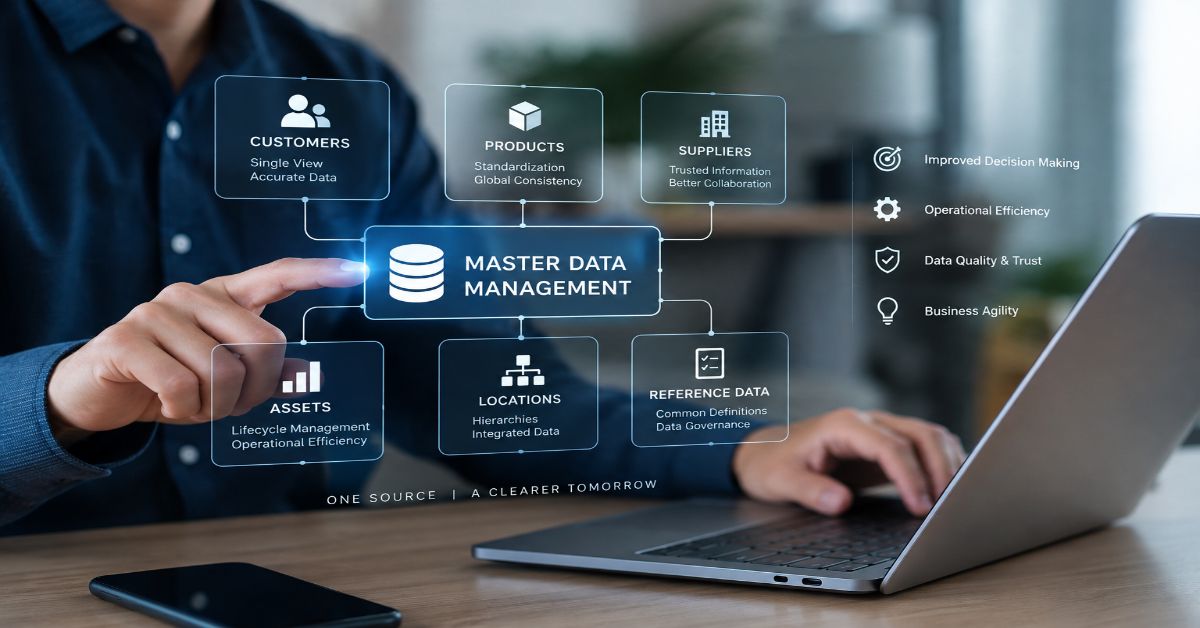
A customer changes an address in the CRM, finance still invoices the old address from the ERP, support has a third spelling of the company name, and the analytics team quietly counts all three records as separate customers. I have found that this kind of conflict is the clearest way to understand why master data management matters: the problem is not a lack of data, but a lack of agreement about which data the business should trust. Master data management, or MDM, is the coordinated set of governance rules, data models, matching processes, stewardship workflows, and technology used to create and maintain trusted records for core business entities such as customers, products, suppliers, employees, and locations. In practical terms, it gives applications and teams an authoritative view of those entities so that the same customer, product, or supplier is not interpreted differently in every system. That does not always mean forcing all data into one database. A registry-style MDM program can keep records in source systems and link them into a unified view, while a centralized approach can make the MDM hub the system of record. The useful question is therefore not, “Where should all our data live?” It is, “Who is allowed to define each critical attribute, how do we resolve conflicts, and how do trusted changes reach every system that needs them?” This guide answers that question from both a business and technical perspective. It explains what counts as master data, how golden records are built, the main MDM architecture styles, how MDM differs from data governance and data warehousing, where it creates value, how to implement it in manageable phases, and which metrics reveal whether the program is actually improving operations rather than simply creating another data platform.
What Is Master Data Management, and What Problem Does It Solve?
Master data management is an enterprise discipline for keeping the most important business entities consistent, identifiable, governed, and reusable across systems. It combines business ownership with technical controls such as standardization, validation, matching, merging, hierarchy management, versioning, and distribution. The output is trusted master data that operational applications, analytics platforms, and AI systems can reference with less ambiguity.
The core problem MDM solves is identity inconsistency. A single real-world entity can appear differently across sales, finance, procurement, ecommerce, service, and legacy applications. One system may identify a company by tax ID, another by account number, and another by an email domain. MDM connects those representations and establishes a controlled way to decide which values are authoritative.
What counts as master data?
Master data describes durable business entities that are reused across many processes. It is different from a transaction, which records an event, and from metadata, which describes data itself. The same organization may master different domains depending on its business model, but customer, product, supplier, employee, asset, and location data are common examples.
This table separates master data from the data types it is most often confused with.
| Data type | What it represents | Example |
| Master data | Reusable business entities | Customer, product, supplier, location |
| Transactional data | Events and business activity | Order, payment, shipment, claim |
| Reference data | Controlled codes and classifications | Country code, currency, status |
| Metadata | Information that describes data | Field definition, schema, lineage |
What is a golden record in master data management?
A golden record is the trusted representation of an entity after relevant source records have been matched, standardized, reconciled, and governed. It is better to think of it as an authoritative view than as a magical perfect row. In some MDM architectures, the golden record is physically stored in a hub. In others, it is assembled from linked source records when needed.
A strong golden record also preserves provenance. If the legal name came from the ERP, the phone number came from the CRM, and the shipping address came from an ecommerce platform, the MDM system should be able to show where those values originated and why each value won. That auditability is what turns consolidation into governance.
How Does Master Data Management Work?
An MDM program works by converting conflicting source records into governed entities, then making those trusted entities available to the rest of the organization. The exact technology varies, but the operating flow is remarkably consistent.
Define the business domain and entity model. Decide what a customer, product, supplier, location, or other mastered entity actually means, including identifiers, required attributes, relationships, and lifecycle states.
Connect and profile source systems. Inspect how each system represents the entity, which fields are complete, where formats differ, and which sources are authoritative for specific attributes.
Standardize and validate values. Normalize addresses, names, phone numbers, codes, units, and other fields so records can be compared reliably.
Match and resolve entity identity. Use deterministic rules, probabilistic matching, machine learning, or a combination to decide which records represent the same real-world entity.
Apply survivorship and stewardship rules. Select the trusted value for each attribute automatically when rules are clear, and route uncertain conflicts to a data steward.
Publish or synchronize trusted data. Deliver the mastered entity to analytics platforms, APIs, operational systems, data products, or source applications according to the chosen architecture.
Monitor quality and exceptions. Track duplicates, unresolved matches, rule failures, stale data, and downstream synchronization so the master stays trustworthy as source systems change.
Why do survivorship rules matter?
Survivorship rules decide which value wins when sources disagree. A weak program sets one source as authoritative for the entire record. A better program can assign authority at the attribute level. For example, finance may own the legal company name and tax identifier, sales may own relationship status, and a verified address service may supply a standardized postal address.
This attribute-level approach is one of the most practical ways to prevent endless ownership debates. It recognizes that no single application is necessarily best at every field. The rule should also specify what happens when the preferred source is missing, stale, invalid, or contradicted by stronger evidence.
What Are the Main Master Data Management Architecture Styles?
MDM architecture is often described through four implementation styles: registry, consolidation, coexistence, and centralized. These styles differ mainly in where master data is stored, where updates are authored, and whether trusted changes are written back to source systems.
The comparison below shows the practical trade-offs among the four common MDM styles.
| MDM style | Where master data lives | Write-back to sources | Best fit |
| Registry | Primarily in source systems; hub stores links/indexes | No | Fast identity unification with low source disruption |
| Consolidation | Copied and mastered in a central hub | Usually no | Analytics, reporting, downstream trusted views |
| Coexistence | Hub plus operational source systems | Yes, bidirectional | Established systems that must stay operational |
| Centralized | MDM hub is the authoritative system of record | Hub publishes outward | High-control authoring and transformation programs |
How do you choose the right MDM style?
Choose based on operational impact, governance maturity, and the business use case. Registry is useful when you need a unified identity quickly without changing source applications. Consolidation works well when trusted data is mainly needed for reporting, analytics, or downstream consumption. Coexistence is suited to organizations that must keep established operational systems but want mastered values synchronized back to them. Centralized MDM fits situations where the organization can make one hub the controlled authoring point for master data.
The choice does not have to be enterprise-wide. A company can use centralized product mastering for a digital commerce catalog, coexistence for customer data across CRM and billing, and consolidation for supplier analytics. Treating architecture as domain-specific can reduce unnecessary disruption.
How Is MDM Different From Data Governance, Data Quality, and a Data Warehouse?
MDM overlaps with several data disciplines, which is why programs often become confusing. The cleanest distinction is to ask what each discipline is trying to control.
This table shows how MDM fits beside related data capabilities.
| Discipline | Primary question | Typical output |
| Master data management | Which entity and attribute values should the organization trust? | Golden records, entity links, hierarchies, mastered feeds |
| Data governance | Who can define, own, approve, and use data? | Policies, ownership, standards, decision rights |
| Data quality | Does data meet agreed rules for fitness and validity? | Quality rules, scores, exceptions, remediation |
| Data warehouse/lakehouse | How should data be stored and prepared for analytics? | Historical, analytical, and curated datasets |
These capabilities should reinforce one another. Data governance sets ownership and policy. Data quality defines and monitors acceptable values. MDM applies those controls to shared business entities. A warehouse or lakehouse can then consume mastered dimensions for analysis. None of these components fully replaces the others.
What Business Problems Can Master Data Management Solve?
MDM is most valuable where one entity crosses multiple systems and inconsistency has a measurable operational cost. The strongest business cases are usually tied to a process failure rather than a general desire for cleaner data.
Customer and account consistency
A mastered customer view can connect duplicate accounts across CRM, billing, service, ecommerce, and marketing systems. That improves account hierarchy reporting, reduces duplicate outreach, and gives service teams a clearer view of the customer relationship. For business-to-business organizations, legal entity and parent-child relationships can be as important as basic deduplication.
Product and catalog consistency
Product MDM can standardize identifiers, names, classifications, units, dimensions, packaging attributes, and relationships between products. The result is especially useful when the same item must appear consistently in ERP, procurement, ecommerce, marketplaces, catalogs, and analytics.
Supplier and procurement control
Supplier mastering helps organizations identify when the same supplier exists under multiple vendor numbers, business units, or spellings. A consolidated supplier identity can improve spend analysis, onboarding controls, contract visibility, and the management of supplier hierarchies.
Trusted context for analytics and AI
Analytics and AI do not become reliable merely because more data is available. They need stable entity identity. If three source records for the same customer are treated as three people, a model can learn from duplicated behavior and a dashboard can overstate customer counts. MDM provides governed entity resolution and relationships that can make downstream data products more consistent.
How Do You Implement MDM Without Creating a Multi-Year Data Project?
The safest way to implement MDM is to start with one business outcome, one domain, and a limited set of source systems. A program that begins with “master every important entity across the enterprise” usually creates too many dependencies before it has proved value.
Start with a business outcome, not a single-source-of-truth slogan
Choose a problem that can be measured. Examples include reducing duplicate customer records that trigger repeated outreach, improving product completeness before marketplace publication, consolidating supplier identities for spend analysis, or establishing a legal-entity hierarchy for risk reporting. The outcome determines which attributes, sources, and workflows belong in the first release.
Define attribute-level authority before selecting matching rules
Create a source-to-attribute matrix. For each critical field, record the preferred source, validation rule, fallback source, freshness expectation, and owner. This simple artifact often reveals that teams disagree less about the entity as a whole than they do about a handful of high-value fields.
Separate automatic matches from review cases
Not every match should require a human, and not every uncertain match should be automated. Design confidence bands. High-confidence matches can be linked or merged automatically. Borderline cases can enter a stewardship queue. High-risk conflicts, such as two legal entities sharing a similar name but different identifiers, can require explicit approval.
Build stewardship into normal operating work
A stewardship queue is useful only if someone is responsible for resolving it. Define who reviews exceptions, how quickly they should be handled, what evidence is acceptable, and how decisions are audited. Stewardship should be a business process with service expectations, not an undefined task assigned to whoever notices a data problem.
Publish mastered data through stable interfaces
Downstream consumers should not need to understand every source system. Provide mastered data through governed APIs, event streams, batch feeds, or curated data products. Stable interfaces make it easier to replace or add source applications without forcing every consumer to rebuild its identity logic.
How Should You Measure Master Data Management Success?
MDM metrics should show both data quality and business impact. Avoid celebrating the number of records loaded into a hub. A large hub can still be full of unresolved duplicates and stale values.
Duplicate rate: the share of records believed to represent entities that already exist. Track it by domain and source, not just as one enterprise average.
Match precision and recall: precision shows how often declared matches are correct; recall shows how many true matches the process finds. Improving one can reduce the other, so both matter for entity resolution.
Stewardship exception backlog: count unresolved cases and measure their age. A growing backlog signals that rules, staffing, or upstream quality need attention.
Attribute completeness and validity: measure required fields and rule compliance for the attributes that matter to the use case.
Propagation latency: measure how long an approved master-data change takes to reach dependent systems or data products.
Business outcome metrics: tie the program to measures such as returned shipments, duplicate outreach, supplier consolidation, product publication errors, reconciliation effort, or reporting disputes.
Set targets from your own baseline rather than borrowing arbitrary industry percentages. The correct threshold depends on domain risk. A marketing preference field and a legal entity identifier should not have the same tolerance for error.
What Are the Most Common MDM Failure Modes?
Most failed MDM efforts are not caused by weak matching software. They fail because the organization has not made the operating decisions that the software is expected to enforce.
Buying a platform before defining ownership. Technology cannot decide which team has authority to approve a customer legal name or product classification.
Trying to master every domain at once. Each domain has different identifiers, relationships, stewards, and business rules. A narrow first domain usually produces faster learning.
Treating the golden record as a data dump. A trusted record needs provenance, survivorship logic, quality controls, and lifecycle rules, not just merged columns.
Using exact matching only. Real data contains abbreviations, transposed names, formatting differences, reused contact details, and incomplete identifiers. Matching should reflect domain-specific risk.
Ignoring source-system behavior. If a source keeps creating duplicates or overwriting mastered values, the hub becomes a cleanup loop instead of a control point.
Measuring technical throughput instead of business change. Record counts, pipeline runs, and API calls are operational measures, but they do not prove that MDM improved the process that funded it.
Is Master Data Management Still Relevant for Cloud, Data Products, and AI?
Yes. Modern cloud architectures change where data is processed and how it is delivered, but they do not remove the need to identify real-world entities consistently. Data lakes, lakehouses, data fabrics, and data meshes can distribute ownership and computation while still depending on common identifiers, governed reference values, and reliable relationships.
MDM can also support a data-product model by providing reusable customer, product, supplier, or location entities as governed products rather than forcing each analytical team to rebuild matching logic. For AI systems, the same principle matters: a model can only reason over customers, products, suppliers, or assets correctly if the underlying identity links are trustworthy.
The modern design question is therefore not whether MDM should compete with newer data architecture patterns. It is where entity mastering belongs in that architecture, which domains require central control, and which domains can be mastered through federated stewardship and shared standards.
Key Takeaway
Master data management works when it becomes a repeatable way to settle data authority. The strongest programs define the entity, assign ownership at the attribute level, resolve identity with explicit rules, preserve provenance, route uncertain cases to accountable stewards, and distribute trusted changes through stable interfaces. Start with a business process where inconsistency is already costly, prove that mastering the data improves that process, and expand from evidence rather than from ambition.
Frequently Asked Questions About Master Data Management
Is master data management the same as a database?
No. A database stores data, while MDM defines how critical business entities are identified, governed, reconciled, and shared. An MDM solution may use a database, but the discipline also requires ownership rules, matching logic, stewardship, quality controls, and distribution processes.
Who should own an MDM program?
Ownership should be shared. Business domain owners decide meaning and authority, data stewards handle governed exceptions, data or enterprise architects design integration patterns, and platform teams operate the technology. A central data office can coordinate the model, but domain accountability should remain explicit.
Can MDM work without replacing CRM or ERP systems?
Yes. Registry, consolidation, and coexistence styles are specifically useful when existing operational systems remain in place. MDM can link, cleanse, govern, and synchronize records while CRM, ERP, ecommerce, or service applications continue to perform their operational roles.
Do smaller organizations need master data management?
Not always as a dedicated platform. A smaller organization may solve the same problem with clear source-of-record rules, controlled identifiers, validation, and lightweight stewardship. A formal MDM platform becomes more valuable as the number of systems, domains, legal entities, channels, and integration points grows.
What is the difference between MDM and a customer data platform?
MDM focuses on governed, authoritative identity and attributes for reusable business entities. A customer data platform typically focuses on assembling customer profiles and behavioral data for activation, segmentation, and marketing use cases. The two can complement each other, with MDM supplying trusted identity to the customer data platform.
Does reference data belong in an MDM program?
Often, yes, although reference data management can also be operated separately. Codes such as country, currency, status, product classification, or organizational hierarchies frequently support master-data consistency, so governing them alongside MDM can reduce downstream mapping and interpretation errors.

A domain name can look like a casino, a comparison site, or a login destination, and that ambiguity matters when real money is involved. I reviewed escasinoes.com directly on September 16, 2026, including its homepage, About Us page, Privacy Policy, casino-review archive, and selected recent articles, to answer the practical question behind the search: what is this site, what does it actually publish, and how should a reader use it?
escasinoes.com is best understood as an English-language online casino information blog. It publishes casino reviews, game explainers, promotion guides, gambling-industry articles, and related content rather than presenting itself as the operator of a single online casino. Its About Us page says the site aims to help readers evaluate online gaming options, and it also states that some links may be affiliate links. That makes the site useful as a research starting point, but not as a substitute for checking an operator’s licence, terms, legal availability, payment rules, and responsible-gambling controls yourself.
What makes this distinction important is that casino content can mix education, recommendations, advertising, and affiliate relationships on the same page. A reader searching the exact domain is therefore likely trying to navigate to the site, confirm whether it is legitimate, understand what it offers, or decide how much weight to give its recommendations. This guide focuses on those needs. It also separates observable facts about the current website from claims the site makes about itself, so you can make your own assessment without assuming that a review blog has independently verified every operator or promotion it mentions.
What is escasinoes.com?
escasinoes.com is a casino-content and review website, not a casino operator based on the public pages reviewed for this article. The site covers casino reviews, slots and games, promotions, technology, industry trends, and beginner-oriented guidance, while its About Us page says some outbound links may generate affiliate commissions.
That means the safest way to use escasinoes.com is as a discovery and education layer. You can use it to learn terminology, find questions to investigate, and compare topics, then verify any casino-specific claim at the operator’s official site and with the regulator that applies in your jurisdiction before depositing money.
The current site structure gives a quick picture of what escasinoes.com is designed to cover.
| Site area | What it is for | Current observation |
| Homepage | Recent casino and gambling articles | Showed posts dated September 9, 12, and 14, 2026 during review |
| Casino Reviews | Operator and beginner-oriented review content | Archive contained a low-deposit beginner article plus related links |
| Casino Bonuses | Intended home for bonus content | Archive displayed “Oops! Nothing here” when checked |
| Game Providers | Intended home for provider coverage | Archive displayed “Oops! Nothing here” when checked |
| About Us | Editorial scope and transparency statements | Contains responsible-play language and an affiliate disclosure |
| Privacy Policy | Data and cookie information | Includes several passages still labeled “Suggested text” |
Is escasinoes.com a casino or an information site?
The distinction is practical. A casino operator normally takes deposits, provides betting or gaming accounts, publishes its operating company and licensing details, and supplies the rules that govern wagering, withdrawals, identity checks, disputes, and player protections. escasinoes.com, by contrast, presents editorial pages and category archives about those subjects.
The site’s homepage currently links to Blog, Casino Bonuses, Casino Reviews, Game Providers, Game Tags, and Slots & Games. It also features articles on mobile casino games, cascading reels, casino promotions, cashless transactions, digital identity, 5G, and other gambling or technology topics. That breadth is consistent with a publishing site rather than a single gaming product.
The About Us page makes the editorial role explicit. It describes the site as a source of online-casino information, reviews, guides, bonus updates, game reviews, and industry news. It also says online casinos should be viewed as entertainment rather than a way to make money. Those are the site’s own statements, so they should be read as descriptions of its intended editorial approach rather than as independent certification of quality.
Pages checked for this distinction: homepage, About Us, and Privacy Policy.
What did I find on escasinoes.com during a live review?
A hands-on review of the site shows both active publishing and some unfinished or thin areas. The homepage displayed articles dated September 9, September 12, and September 14, 2026, which indicates recent publishing activity at the time of review. The Casino Reviews archive contained a beginner-focused low-deposit article and links to additional content.
At the same time, the Casino Bonuses and Game Providers archive pages displayed an “Oops! Nothing here” message when checked. This matters because a menu label can suggest broader coverage than the archive currently contains. Readers should judge the depth of a category by opening it, not by assuming that every navigation item is fully populated.
The Privacy Policy also contains several passages beginning with “Suggested text,” which is standard wording commonly left in a default WordPress privacy-policy template. That does not prove anything about the safety of the site or any casino it discusses, but it is a concrete reason to read legal and privacy pages carefully rather than treating their presence alone as a trust signal.
How does escasinoes.com disclose affiliate links?
The About Us page states that some links may be affiliate links and that the site can earn a commission when users sign up through recommendations. That disclosure is important because a financial relationship can create an incentive to feature certain operators or offers.
Affiliate publishing is not inherently unreliable. The useful question is whether the commercial relationship is disclosed clearly enough for a reader to understand it before acting. In the United States, for example, Federal Trade Commission guidance says material affiliate relationships should be disclosed clearly and conspicuously. Even outside the United States, that principle is a sensible reading habit: identify who benefits from a click, then evaluate the recommendation on its evidence, not on the strength of its wording.
What can you find on escasinoes.com?
The site currently mixes practical guides with broader casino-industry material. The strongest way to use that mix is to match each content type to the decision you are actually trying to make.
How useful are escasinoes.com casino reviews?
Casino review content is most useful when it gives you a checklist, not a verdict. One escasinoes.com article aimed at beginners tells readers to consider licensing, game selection, payment methods, customer support, and user reviews. Those are sensible categories, but any named casino, deposit threshold, bonus, or payment option can change after publication.
For that reason, treat a review page as a snapshot. Check the publication or update date, then confirm current minimum deposits, withdrawal conditions, identity requirements, supported countries, and bonus terms on the operator’s own website before creating an account.
What does escasinoes.com cover about games and technology?
The site also publishes explainers about mobile casino games, slots, blackjack, roulette, baccarat, cascading reels, and casino technology. This type of content can help a new reader understand game categories and vocabulary before encountering promotional material.
The limitation is that an explainer can become risky if it implies that a game can be made reliably profitable through timing, systems, or casual strategy claims. Casino games with a house edge are designed so the operator has a mathematical advantage over repeated play. Strategy can affect decisions in some games, but it does not remove the need to understand the rules, payout table, house edge, and spending limits.
How should you read casino promotion content?
Promotion coverage deserves extra scrutiny because the headline number is rarely the whole offer. A recent escasinoes.com article on casino promotions correctly directs attention to wagering requirements, eligible games, maximum promotional amounts, expiration periods, payment restrictions, opt-in steps, and free-spin conditions.
That is the right framework. A 100 percent match, for example, says nothing by itself about how much must be deposited, how much must be wagered, which games count, when the offer expires, or whether winnings from promotional funds can be withdrawn immediately. The current terms published by the casino should always control your decision.
This table shows how to turn each content type into a safer research task.
| Content type | Useful for | Verify before acting |
| Casino reviews | Creating a shortlist and learning comparison criteria | Licence, legal availability, current payments, withdrawals, and operator terms |
| Bonus guides | Understanding offer structures and terminology | Wagering rules, eligible games, expiry, opt-in steps, maximum bet, and withdrawal conditions |
| Game explainers | Learning rules, vocabulary, and game categories | Official rules, payout table, house edge or RTP information, and personal spending limits |
| Industry and technology articles | Following trends such as mobile play, identity, or cashless systems | Whether the feature is actually available in your country and at the operator you plan to use |
How should you evaluate recommendations found on escasinoes.com?
A casino-content site can help organize your research, but the critical checks happen outside the review article. I use the following sequence because it separates editorial claims from facts that can be verified independently.
A compact verification checklist makes the difference between reading a review and relying on one.
| Check | Independent place to verify | Why it matters |
| Operator licence | Official gambling regulator register | Confirms the legal company, status, and often approved domain or trading name |
| Legal availability and age | Local law and operator eligibility terms | A casino can be licensed elsewhere but unavailable or unlawful for your location |
| Bonus terms | Current operator promotion page and full terms | Headline values do not show wagering, game, timing, or withdrawal restrictions |
| Withdrawals and verification | Operator banking, KYC, and withdrawal policies | Processing methods, identity checks, limits, and fees can change |
| Player controls | Operator account or safer-gambling help centre | Shows whether deposit, loss, time, cooling-off, or self-exclusion tools are available |
| Commercial relationship | Disclosure on the review or publisher page | Helps you distinguish independent evidence from monetized recommendations |
Verify the casino licence independently
First, identify the legal company behind the casino and verify its licence with the regulator that applies where you live. Do not rely only on a logo in a footer or on a review site’s statement that an operator is “licensed.”
For Great Britain, the UK Gambling Commission tells consumers to check the operator’s licensed status and provides a public business register searchable by business name, trading name, domain, or account number. Other regulated markets have their own registers. The key habit is the same: go to the regulator, search the operator, and confirm that the domain you intend to use is covered by the licence.
Compare live terms, not old snapshots
Second, read the current operator terms before depositing. Focus on minimum and maximum deposits, withdrawal methods, identity verification, restricted countries, dormant-account rules, bonus conditions, maximum-bet rules during a promotion, and any fees.
This is where review articles age fastest. A review can remain online while an operator changes a payment provider, bonus code, minimum deposit, or withdrawal process. If the review and the operator disagree, use the operator’s current published terms and save a copy or screenshot of any offer you choose to claim.
Check responsible-gambling limits
Third, look for practical spending controls. Deposit, loss, time, and session tools vary by operator and jurisdiction, but the principle is to decide limits before play rather than after a losing session.
In Great Britain, current Gambling Commission standards require online operators to provide customer-led financial-limit facilities, and further gross deposit-limit rules are scheduled to take effect on September 30, 2026. The Commission publishes the applicable technical standards and implementation dates. The exact rules elsewhere differ, so check the protections that apply to your market. A useful review should tell you where the controls are, but you should confirm them inside the operator account or help centre.
Treat privacy and security as separate checks
Fourth, separate website security from operator trust. HTTPS protects data in transit, but it does not prove that a casino is fairly run, licensed for your location, financially sound, or suitable for you. Likewise, a polished review site does not validate every external destination it links to.
Before sharing identity documents or payment details, confirm the exact domain, legal operator, privacy notice, support channels, and regulator. Be cautious with cloned sites, lookalike domains, and offers that push you to bypass normal verification or local restrictions.
What are the strengths and limitations of escasinoes.com?
Based on the pages reviewed, escasinoes.com has several useful features, but it also has limitations a careful reader should keep in view.
Where the site adds value
One positive feature is topical breadth. The site is not limited to lists of casino brands; it also publishes explanatory material on games, promotions, mobile use, digital identity, cashless transactions, and industry technology. That can help readers build context before comparing offers.
Another useful feature is the affiliate disclosure on the About Us page and the explicit statement that gambling should be treated as entertainment rather than a way to make money. The homepage also showed recent publication dates during this review, so the site is not simply an abandoned archive.
Finally, some newer articles take a more analytical approach to promotions by encouraging readers to examine wagering conditions, eligible games, deadlines, and activation rules. That is more useful than judging an offer by its headline bonus alone.
Where readers should verify more carefully
The main limitation is uneven depth. Some category pages were empty when checked, while other sections contained active content. Readers should therefore verify that a category has enough material to support the impression created by the navigation.
A second limitation is that older or evergreen casino articles can contain time-sensitive details. The beginner low-deposit article, for example, names specific casinos and deposit amounts as of its March 24, 2026 publication date. Those figures should not be assumed current months later without checking the operators directly.
A third limitation is presentation of trust information. The About Us page contains an affiliate disclosure, but a reader should still look for clear disclosure close to any page that makes a commercial recommendation. The Privacy Policy’s remaining “Suggested text” wording also suggests that parts of the site’s legal documentation could be more carefully customized. None of these points proves that a recommendation is wrong, but they are valid reasons to verify rather than simply accept.
Who is escasinoes.com most useful for?
escasinoes.com is most useful for readers who want a broad introduction to casino topics and are prepared to do a second layer of verification. Beginners can use its explainers to learn the vocabulary of bonuses, slots, mobile casino play, and review criteria. More experienced readers may find industry and technology articles useful for keeping track of themes such as cashless payments or digital identity.
It is less suitable as a single source for a high-stakes decision. No review blog should replace the operator’s current terms, the regulator’s public register, or your own legal and financial checks. If you are trying to answer “Can I safely deposit here today?”, the correct process requires more than reading one article, whether that article appears on escasinoes.com or anywhere else.
Key takeaway
The most useful way to read escasinoes.com is as an editorial research hub, not as the final authority on where to gamble. Its current content can help you understand casino games, promotions, review criteria, and industry topics, and the site is transparent on its About Us page that affiliate links may be part of its business model.
The decisive checks still belong to the reader. Verify the operator and domain with the relevant regulator, read current terms, confirm legal availability and age requirements, inspect withdrawal and identity rules, and set financial limits before playing. That approach gives you the value of a casino guide without outsourcing the decisions that matter most.
Frequently Asked Questions About escasinoes.com
Is escasinoes.com an online casino?
No. Based on the public pages reviewed, escasinoes.com functions as a casino information and publishing site. It covers reviews, games, promotions, and industry topics, but the pages reviewed do not present escasinoes.com itself as the operator taking casino wagers.
Does escasinoes.com take deposits or process withdrawals?
The editorial pages reviewed do not describe escasinoes.com as a gambling operator that accepts deposits or handles casino withdrawals. If an article links to a third-party casino, any account, deposit, verification, or withdrawal process belongs to that external operator and should be checked separately.
Does escasinoes.com disclose affiliate relationships?
Yes. Its About Us page states that some links may be affiliate links and that the site may earn a commission when users sign up through recommendations. Readers should still look for clear disclosure on the specific page they are using, especially when it contains a commercial recommendation.
Can I trust casino recommendations on escasinoes.com?
Use them as research leads rather than guarantees. A recommendation can help you identify an operator or feature to investigate, but you should independently confirm licensing, legal availability, current terms, payments, withdrawal rules, and responsible-gambling tools before depositing.
How do I verify a casino licence mentioned in an article?
Find the operator’s legal company name and licence number, then search the official register of the regulator that applies to your jurisdiction. For Great Britain, the UK Gambling Commission public register can be searched by business name, trading name, domain, or account number.
Is escasinoes.com content updated regularly?
The homepage showed several articles dated in September 2026 when reviewed on September 16, 2026, so there was recent publishing activity. Update frequency can vary by category, and some archive pages were empty at the time of review, so always check the date on the specific article you are reading.

A denied apartment application, a higher-than-expected auto loan rate, or a mortgage preapproval that comes back weaker than expected can turn a credit problem into an urgent one. If you are searching for credit repair Huntington Beach services, the real question is not simply who promises the fastest score increase. It is who can help you identify legitimate reporting errors, explain what can and cannot change, and keep you away from tactics that create a bigger financial problem.
The short answer is this: credit repair is the process of reviewing your credit reports, disputing information that is inaccurate or incomplete, and improving the habits that affect your credit profile over time. A legitimate Huntington Beach credit repair provider may organize that work for you, but no company can legally erase accurate, current negative information just because it hurts your score.
I approach credit repair as a documentation problem first and a score problem second. That distinction matters because a credit score is an output of information in your credit files, not a separate record that can be “cleaned” by itself. The safest path starts with all three reports, a line-by-line review, evidence for every dispute, and realistic expectations about timing. It also means checking whether a paid provider follows federal rules and California’s requirements for credit services organizations.
This guide explains how credit repair works, which errors are worth disputing, what timelines to expect, how to compare do-it-yourself repair with paid help, and what Huntington Beach consumers should verify before signing a contract. It is consumer education, not individualized legal advice, but it gives you a practical framework for making a better decision before you pay anyone.
What Does Credit Repair in Huntington Beach Actually Do?
Credit repair does not create a new credit identity and it does not delete truthful history on demand. Its legitimate purpose is narrower: find inaccurate, incomplete, duplicated, mixed, obsolete, or identity-theft-related information and use the dispute rights available under federal law to correct the record.
The three nationwide credit reporting companies are Equifax, Experian, and TransUnion. Because the information supplied to each bureau can differ, an account can be wrong on one report and correct on another. That is why a serious review uses all three reports rather than a single app screenshot or one score.
The Federal Trade Commission states that consumers can obtain reports from each nationwide bureau once a week for free through AnnualCreditReport.com. Pulling your own report is a soft inquiry and does not hurt your credit scores.
A credit repair company may help you identify potential errors, prepare disputes, track responses, and organize documentation. You can also perform those actions yourself at little or no cost. The value of a paid service therefore depends on the quality of its analysis, documentation, communication, and compliance, not on access to a secret method.
Which Credit Report Problems Can Legitimately Be Disputed?
The strongest disputes are specific and documentable. The Consumer Financial Protection Bureau identifies common errors such as accounts belonging to someone with a similar name, closed accounts shown as open, incorrect late-payment reporting, wrong balances, duplicate debts, incorrect account dates, and accounts created through identity theft.
The table below separates common credit-report issues from problems that usually require time or better credit behavior rather than a dispute.
| Credit report item | Is a dispute appropriate? | Useful supporting evidence |
| Account is not yours | Yes | Identity documents, account statements, identity-theft report if applicable |
| Payment marked late but paid on time | Yes | Bank records, lender statements, payment confirmation |
| Same debt appears twice | Yes | Copies of both tradelines and account records |
| Balance or credit limit is wrong | Yes | Recent statement or creditor letter |
| Accurate late payment | Usually no | Focus on future on-time payments and aging of the item |
| Accurate collection account | Usually no | Verify accuracy, then address the debt and rebuild over time |
| Identity-theft account | Yes | IdentityTheft.gov recovery documents and related records |
A dispute should explain exactly what is wrong and why. Sending vague or repeated disputes without useful information can backfire because a credit reporting company may treat a dispute as frivolous or irrelevant when it lacks enough detail to investigate.
How Does the Credit Repair Process Work Step by Step?
A disciplined credit repair process looks more like case management than a quick score hack. Whether you work alone or hire a provider, the same core sequence should appear.
Step 1: Pull All Three Credit Reports
Start with Equifax, Experian, and TransUnion. Free weekly reports are available through AnnualCreditReport.com, the federally authorized source for free annual reports.
Save a dated copy of each report so you can track later changes.
Step 2: Audit Every Section, Not Just Collections
Review personal information, accounts, collections, payment history, balances, limits, inquiries, and public-record information. Compare the three reports and separate “damaging” information from information that is actually inaccurate.
Step 3: Build Evidence Before You Dispute
Match each disputed item with evidence such as statements, receipts, creditor letters, closing confirmations, court records, or identity-theft documents. For each issue, track the bureau, furnisher, disputed field, reason, documents sent, date sent, and response deadline.
Step 4: Dispute With the Bureau and the Furnisher
The CFPB recommends disputing inaccurate information with both the credit reporting company and the company that supplied the information, known as the furnisher. That may be a bank, lender, credit-card issuer, debt collector, landlord, or another reporting company.
A written dispute should identify the account, state the exact error, request the correction, and include copies of supporting documents. Keep the originals.
Step 5: Track the Investigation Window
A credit reporting company generally must investigate a dispute within 30 days. In certain circumstances, the investigation can take up to 45 days. After completing the investigation, the bureau generally has five business days to notify you of the results.
First verify whether the underlying information changed correctly on the updated report.
Step 6: Recheck and Escalate When Necessary
If an error is corrected, confirm the change where it should appear. If a dispute remains unresolved, review the explanation, add stronger evidence if available, and use the appropriate complaint or legal channel instead of resending the same generic letter.
The CFPB currently instructs consumers with complaints about inaccurate or incomplete credit reporting to dispute directly with the relevant credit reporting agency first and to avoid filing a CFPB complaint while that dispute is still pending.
How Long Does Credit Repair Take?
There is no legitimate universal promise such as “50 points in 30 days” because credit repair involves two different clocks: the legal investigation timeline for disputed information and the longer credit-building timeline for accurate negative information.
A bureau investigation is generally completed within 30 days, with certain cases allowed up to 45 days. That does not mean your entire credit profile is repaired in one cycle. You may have several unrelated issues, different furnishers, documentation gaps, or accurate negative information that cannot be removed.
Most negative information can generally remain on a credit report for up to seven years. Bankruptcy information can remain for up to 10 years. Accurate information may become less influential as it ages, but the exact effect on a score varies by scoring model and by the rest of the file.
Here is a realistic way to think about timing.
| Stage | Typical timing | What you should expect |
| Obtain and review reports | Same day to several days | Identify specific discrepancies across all three bureaus |
| Submit a documented dispute | As soon as evidence is ready | A clear record of what was challenged and why |
| Bureau investigation | Generally 30 days, sometimes up to 45 | Verification, correction, deletion, or confirmation |
| Result notice | Generally within 5 business days after investigation | Written results and an updated report when applicable |
| Rebuilding accurate credit history | Months to years | Gradual improvement through on-time payments and responsible balances |
A provider that treats these timelines honestly is more credible than one that guarantees a specific score increase by a fixed date.
Should You Use a Huntington Beach Credit Repair Company or Do It Yourself?
For many consumers, do-it-yourself credit repair is enough because you can review reports and dispute inaccuracies for free. Paid help can make sense when the file is complicated, records are scattered, or you lack time to manage several disputes. Base the decision on complexity and service quality, not fear.
The table below shows where each route tends to fit best.
| Factor | Do-it-yourself credit repair | Paid credit repair service |
| Cost | Usually little or no cost | Fees vary by provider and service model |
| Control | You handle every letter and deadline | Provider organizes some or most of the process |
| Learning curve | Requires time to understand reports and disputes | Good providers explain the process and documentation |
| Best for | A few clear errors and organized records | Multiple reports, mixed issues, or limited time |
| Main risk | Missing details or deadlines | Paying for work you can do free, or choosing a noncompliant company |
| What no option can do | Remove accurate current negative information on demand | Remove accurate current negative information on demand |
If your main problem is not reporting errors but high balances, missed payments, or unaffordable debt, credit repair may not be the primary solution. A nonprofit credit counselor may be better positioned to help with budgeting, debt-management options, and repayment planning.
How Can You Choose a Legitimate Credit Repair Service in Huntington Beach?
Local branding does not prove legitimacy. A Huntington Beach address or strong testimonials may add context, but compliance and contract terms matter more.
California gives consumers an additional verification step. The California Attorney General states that covered credit services organizations operating in the state must register before doing business. The Attorney General also explains that these organizations must obtain a $100,000 bond or make an approved deposit in lieu of the bond. Registration is not an endorsement, so you still need to evaluate the company’s conduct.
What Should You Verify Before You Sign?
Use this checklist before paying for credit repair:
Search the California Attorney General’s current list of registered credit services organizations.
Read the written contract before any work begins.
Confirm the contract clearly describes the services, total cost, timing, and cancellation rights.
Ask how the company determines whether an item is actually inaccurate before disputing it.
Ask what documents it expects you to provide and how it protects sensitive information.
Avoid any company that promises deletion of accurate information or a guaranteed score increase.
Do not use a company that tells you to create a new credit identity, use an Employer Identification Number in place of your Social Security number, or file a false identity-theft report.
Keep copies of the contract, disclosures, correspondence, receipts, and every dispute sent on your behalf.
Which Credit Repair Red Flags Matter Most?
Federal consumer-protection agencies repeatedly warn about several patterns. The FTC says credit repair companies cannot legally charge before they provide the promised help, cannot misrepresent what they can do, and must provide a written contract that explains key rights, including a three-day right to cancel without charge.
The following comparison makes those signals easier to spot.
| Better sign | Red flag |
| Explains that accurate information cannot simply be erased | Promises to remove all negative items |
| Reviews documents before disputing | Disputes every negative line automatically |
| Provides a detailed written contract | Pressures you to pay immediately without clear terms |
| Explains cancellation rights | Hides or minimizes your right to cancel |
| Tells you that you can contact bureaus directly | Tells you not to contact the bureaus |
| Uses your real identity and truthful records | Suggests a “new credit identity,” false EIN use, or fake identity-theft claim |
| Sets process expectations | Guarantees a specific score increase by a specific date |
A good provider should be comfortable explaining how disputes are documented and how fees comply with the law.
What Can Improve Credit When the Negative Information Is Accurate?
This is where credit repair and credit rebuilding separate. Credit repair corrects reporting errors. Credit rebuilding changes the financial behavior and account data that scoring systems evaluate over time.
If your reports are accurate, focus on actions you control:
Pay every account on time. Payment history is an important factor in widely used credit scoring models.
Bring past-due accounts current when possible and create a plan to avoid new delinquencies.
Reduce revolving credit-card balances rather than moving debt around without a payoff plan.
Avoid opening several new accounts in a short period unless there is a clear financial reason.
Keep older accounts in good standing when keeping them open makes financial sense.
Review your reports regularly so new errors or identity-theft accounts do not sit unnoticed.
A higher score can improve borrowing terms, but the stronger goal is a stable record: on-time bills, manageable balances, enough cash flow to avoid new late payments, and accurate reporting.
Does Paying a Collection Automatically Remove It?
No. Paying a collection can resolve the debt, but it does not automatically mean the collection will disappear from every credit report. Reporting depends on the accuracy of the account, the furnisher’s reporting, the age of the information, and the scoring model being used.
Before paying, verify the debt and amount, and keep proof of any agreement and payment. If reporting remains inaccurate afterward, dispute the specific status or balance.
When Is Credit Repair Not the Right Tool?
Credit repair is not a substitute for debt relief, legal representation, identity-theft recovery, or budgeting help. The correct path depends on the underlying problem.
Consider a different kind of help when:
You cannot afford minimum payments and need a structured debt-management review.
A debt collector is suing you or you need legal advice about liability, deadlines, or defenses.
Identity theft is active and new accounts are still appearing.
You are preparing for bankruptcy and need advice from a qualified bankruptcy attorney.
Your reports are accurate but your score is low because balances are high or payment history is recent and negative.
A lender is denying an application for reasons unrelated to a credit-report error.
What Is the Best Credit Repair Strategy for Huntington Beach Consumers?
The best strategy is to treat credit repair as a verification workflow: obtain all three reports, separate errors from accurate negatives, document every legitimate dispute, follow the investigation timeline, and rebuild the parts of your credit profile that are accurate but weak.
If you hire a Huntington Beach credit repair service, use the same standard. A company should make the process clearer and more organized, not more mysterious. Check California registration, read the contract, understand fees and cancellation rights, and reject guarantees that depend on deleting accurate information.
Conclusion
Credit repair works best when the goal is precision, not a miracle. One corrected late payment, duplicate collection, mixed-file account, or wrong balance can matter, but only when the evidence supports the correction. Accurate negative history needs a different answer: time, on-time payments, lower revolving balances, and a plan that prevents new damage.
For Huntington Beach consumers, the strongest next move is simple. Pull all three reports, mark what is truly wrong, gather proof, and decide whether you can manage the dispute process yourself. If you pay for help, choose a California-compliant provider that is transparent about what it can and cannot legally do.
Frequently Asked Questions About Credit Repair Huntington Beach
Can a credit repair company in Huntington Beach guarantee a 100-point increase?
No legitimate company can guarantee a specific score increase because scores depend on the information in your file, the scoring model, and how your accounts change. A provider can promise to perform defined services, but it should not promise a particular score outcome.
Is checking my own credit report bad for my score?
No. Requesting your own credit report is a soft inquiry and does not hurt your credit scores. You can currently obtain free weekly reports from Equifax, Experian, and TransUnion through AnnualCreditReport.com.
Can I cancel a credit repair contract after signing it?
Federal law requires credit repair organizations to provide a written contract explaining your right to cancel within three days without charge. Read the cancellation instructions in the contract and keep proof of any notice you send.
Do California credit repair companies have to be registered?
Covered credit services organizations operating in California are required to register with the California Attorney General before doing business. The Attorney General maintains a public list, but registration does not mean the state endorses the company.
What should I do if an account belongs to someone with a similar name?
Dispute the account as a possible mixed-file error with the bureau reporting it and the furnisher that supplied it. Include identity information and records that help distinguish you from the other person, but send copies rather than original documents.
Should I hire credit repair before applying for a mortgage?
If your reports contain genuine errors, correcting them before a mortgage application can be useful. If the negative information is accurate, ask your mortgage professional what changes are most relevant to your qualification timeline before opening new accounts, closing old ones, or making large credit moves.

A domain name can look familiar long before you know what sits behind it. I approached megazee.com the way a careful reader would: open the live site, check what it actually publishes, look at who appears to write the material, and separate visible facts from promotional claims. If you searched the domain because you want to know what Megazee.com is, whether it is active, and how much confidence to place in its articles, this review is designed to answer those questions without turning a simple website check into a guessing game.
As of September 14, 2026, Megazee.com operates as a broad, magazine-style publishing website rather than a single-purpose technology service, store, or specialist database. Its main navigation includes Blog, Business, News, Sports, and USA, while the homepage mixes subjects ranging from cybersecurity and fintech to travel, education, home maintenance, leadership, wellness, and consumer guidance. The site also shows author archives, a search function, newsletter prompts, recent publication dates, and a clearly labeled Sponsored Content section.
The important distinction is that an active website is not automatically an authoritative source on every topic it covers. Megazee.com has useful signs of a functioning publication, but its breadth means readers should evaluate individual articles based on authorship, sourcing, date, and subject risk. I also found visible template-style elements and a large audience claim that should not be treated as independently verified facts. The most useful way to read the site, therefore, is as a discovery and general-information resource, with stronger verification for financial, health, legal, security, or other high-impact decisions.
What is Megazee.com?
Megazee.com is a multi-category informational publication. Its current structure is closer to a general digital magazine than to a narrowly specialized news outlet: readers can browse articles, guides, opinion-style explainers, business pieces, sports content, and topic-driven posts from several contributor profiles.
The site itself says it has been online since December 2004. An older publicly indexed WHOIS record lists the domain creation date as December 22, 2004, which is consistent with that statement. Domain age is useful context, but it does not prove the quality of the present-day editorial operation, so the live content still needs to be judged on its own merits.
What is the quick answer about megazee.com?
Megazee.com is an active general-interest publishing website with recent articles across business, news, sports, technology-related subjects, lifestyle topics, and practical guides. It can be useful for broad reading and topic discovery, but readers should verify important claims against primary or specialist sources because author expertise and editorial depth are not equally clear across every subject area.
The table below gives a compact snapshot of what is visible on the site at the time of review.
| Area | What is visible | What it means for readers |
| Website type | General-interest digital publication | Expect variety rather than one narrow area of expertise |
| Main navigation | Blog, Business, News, Sports, USA | The editorial scope is intentionally broad |
| Publishing activity | Posts dated through September 14, 2026 | The site is currently active |
| Contributors | Admin and other named or organization-style accounts | Check authorship article by article |
| Commercial material | A labeled Sponsored Content section | Some commercial publishing is disclosed |
| Reader tools | Search, newsletter prompt, account sign-in | The site functions like an ongoing publication |
What kind of content does Megazee.com publish?
The strongest signal from the homepage is range. Megazee.com does not confine itself to one expertise cluster. Recent and featured material spans business strategy, financial technology, cybersecurity, AI, travel logistics, education, home improvement, wellness, sports equipment, sustainability, and marketing. That variety can make the site convenient for casual browsing, but it also changes how credibility should be assessed.
How broad is the Megazee.com topic mix?
A practical way to understand the site is to group its visible coverage by reader need rather than by menu label. The homepage and author archives show both evergreen explainers and more time-sensitive or commercially relevant pieces.
| Content cluster | Examples visible on the site | Best use |
| Business and finance | Fintech, leadership, growth, compliance, digital branding | Background reading and idea discovery |
| Technology | Cybersecurity, generative AI, PC optimization, app development | General explanations and trend orientation |
| News and society | Digital economies, misinformation, urbanization | Context before consulting primary reporting |
| Lifestyle and practical guides | Travel, home storage, appliance care, gifting | Everyday research and comparison |
| Sports and education | Soccer equipment, A-Level topics | Introductory guidance and browsing |
Does Megazee.com publish sponsored material?
Yes. The homepage contains a section explicitly labeled Sponsored Content. That label is a positive transparency signal because it tells readers that at least some material has a commercial publishing context. The remaining task is to read each article carefully for links, product or service mentions, and the quality of supporting evidence, rather than assuming that a sponsored label alone explains every potential commercial relationship.
How trustworthy is Megazee.com?
Trust is not a single yes-or-no property. For a broad publication, the better question is whether the site gives a reader enough signals to judge an individual article. Megazee.com shows several normal publishing features, including recent dated posts, category navigation, author archives, search, newsletter prompts, and sponsored-content labeling. Those features support the conclusion that it is a functioning content website.
At the same time, some signals deserve closer inspection. The homepage includes contributor names such as “admin” and “Backlinks Hub,” and the admin archive currently lists more than one hundred articles across unrelated subjects. A high output across many specialist areas does not prove poor quality, but it makes named qualifications, citations, and article-level sourcing more important. Readers should avoid transferring trust from one acceptable article to every topic on the domain.
What trust signals are positive?
The homepage contains recent dated content, which shows ongoing publication rather than an abandoned domain.
The site has persistent navigation, category archives, author archives, search, and newsletter elements typical of an active publication.
Sponsored material is visibly labeled in a dedicated homepage section.
The domain has a long history, with a publicly indexed registration record dating to December 2004.
What should readers verify before relying on an article?
The following checks are more informative than a generic “legit or scam” label because they focus on the actual information you may act on.
| Check | What to look for | Why it matters |
| Author identity | A named writer, bio, credentials, or relevant experience | Expertise matters more as subject risk rises |
| Evidence | Links to primary documents, official data, standards, or recognized sources | Lets you verify the core claims independently |
| Freshness | Publication or update date and current references | Technology, law, finance, travel, and policy can change quickly |
| Commercial context | Sponsored label, affiliate-style links, service promotion | Helps separate information from marketing incentives |
| Site claims | Independent support for traffic, rankings, or authority statements | Self-reported reach should not be treated as audited data |
What did I notice while reviewing Megazee.com?
Two details are especially useful because they show why direct inspection matters. First, the site is publishing fresh material: the homepage displayed an article dated September 14, 2026 on the day of this review, with other posts from the preceding days. That makes it reasonable to describe Megazee.com as active now, not merely as an old domain with residual pages.
Second, the current homepage still displays template-like footer text referring to “Foxiz News Network” and “Ruby Design Company,” and its “Watch It” area references older CNET and The Verge video titles. These elements do not establish that the articles themselves are inaccurate, but they suggest that parts of the presentation may come from a news-theme setup that has not been fully customized. For a reader evaluating editorial polish, that distinction is worth noting.
The site also states that it influences 20 million users and is the number one business and technology news network on the planet. I found the statement on the live homepage, but I did not find independent evidence during this review that verifies that audience or ranking claim. It is therefore more accurate to treat it as a publisher claim, not as a confirmed metric.
How should you use megazee.com safely and efficiently?
The best reading strategy depends on the consequence of being wrong. A home-storage idea or a broad leadership explainer carries a different risk from tax guidance, medical advice, investment decisions, legal compliance, or cybersecurity configuration. The site can still be useful across these areas, but the verification standard should rise with the stakes.
Use a three-level verification rule
I use a simple trust ladder for broad publications because it prevents both extremes: dismissing every general-interest site and trusting every polished article.
Low-stakes topics: use the article for ideas, definitions, and practical starting points, then compare options if money or time is involved.
Medium-stakes topics: verify important numbers, product specifications, dates, and recommendations with official or specialist sources.
High-stakes topics: treat the article as orientation only and confirm the decision with primary documents, regulated professionals, or authoritative institutions.
Check the source behind the claim, not just the sentence
When an article cites a regulation, industry standard, research finding, software feature, price, or public-policy change, follow the evidence to the organization responsible for that information. A reliable secondary article makes this easy. If a major claim cannot be traced, do not use the article as the final authority simply because the wording sounds confident.
Who is Megazee.com most useful for?
Megazee.com fits readers who want broad topic discovery in one place. Entrepreneurs may encounter articles on digital brands or fintech, general readers may find travel and home guides, and technology readers can browse AI or cybersecurity explainers. Its multi-topic structure is convenient when the goal is to understand a subject quickly before moving to deeper sources.
It is less suitable as a single-source research library for specialist or high-impact decisions. A reader preparing a compliance policy, medical treatment choice, investment strategy, legal filing, or security plan should use authoritative documentation and qualified professional advice. The site can help identify vocabulary and questions, but the final evidence should come from sources with direct responsibility for the subject.
What are the main strengths and limitations of Megazee.com?
Strengths
Wide subject coverage makes it easy to discover new topics without changing sites.
Recent publishing dates show ongoing activity and give readers fresh entry points.
A labeled sponsored-content area provides a visible commercial disclosure signal.
Long domain history gives useful context about the web address, even though it does not guarantee present editorial authority.
Limitations
The breadth of subjects makes article-level expertise more important than domain-level reputation.
Some contributor identities are generic, so specialist credentials may not be obvious from the byline alone.
Template remnants reduce editorial polish and can make ownership or branding feel less clear at first glance.
Large reach or ranking claims should be independently verified before being repeated as factual audience metrics.
What is the best takeaway from this Megazee.com review?
Megazee.com is best treated as an active general-interest publication and a starting point for research, not as universal authority across every category it covers. Its recent posts, structured archives, and sponsored-content labeling are useful signals, while broad authorship, template remnants, and unverified promotional claims make article-by-article checking important.
The practical rule is simple: use the site freely for discovery, but match your verification effort to the consequence of the decision. That approach preserves the convenience of a broad publication without giving any single domain more authority than its evidence earns.
Frequently Asked Questions
Is megazee.com a real website?
Yes. Megazee.com is a functioning publication with live category pages, recent dated articles, author archives, search, newsletter prompts, and account sign-in elements. The homepage was actively publishing when reviewed on September 14, 2026.
Is Megazee.com mainly a technology site?
No. Technology is one part of its coverage, but the site also publishes business, news, sports, travel, education, home, wellness, finance, and general-interest material. Calling it a broad digital publication is more accurate.
How old is the Megazee.com domain?
The site says it has been online since December 2004. An older publicly indexed WHOIS record lists December 22, 2004 as the domain creation date, which aligns with that claim.
Can I trust sponsored posts on Megazee.com?
A sponsored label tells you there is a commercial context, but it does not prove or disprove the accuracy of the content. Check the evidence, identify who benefits from the recommendation, and verify important claims independently.
Does Megazee.com have identifiable authors?
Yes, the site has author archive pages, including profiles such as admin and Backlinks Hub, along with other contributor names. Because some identities are generic, readers should look for relevant credentials or sourcing when the topic requires specialist expertise.
Should I use Megazee.com for financial, medical, legal, or cybersecurity decisions?
Use it as an introductory source only for high-impact decisions. Confirm any consequential claim with primary documentation, recognized specialist organizations, or a qualified professional who is accountable for advice in that field.
-

 Guide3 weeks ago
Voozon.com Guide: What It Is and How It Works
-

 General4 weeks ago
OnlyFans Leaks: How They Happen and How to Reduce the Risk
-

 General4 weeks ago
Spanking Stories: A Reader’s Guide to Themes, Tags and Safer Choices
-

 Technology1 month ago
Listcrawler: How List Crawlers Extract Structured Web Data
-

 Guide1 month ago
How to Run a Marathon: A Practical First-Marathon Guide
-

 General3 weeks ago
SABS Framework Description Paragraph: Practical Guide
-

 Technology4 weeks ago
Coomer.su Explained: Architecture, Data Flow, API Changes and Resilient Client Design
-

 General4 weeks ago
Socialmediagirls Explained: Safety, Privacy, Forum Structure, Leaks and Rules