
General
Multibet Explained: Odds, Payouts & Rules


A betting slip can look deceptively simple: three or four selections, one stake, and a return that is much larger than any single pick on the ticket. That multiplication is exactly why people search for multibet—and also why the format is easy to misunderstand. A multibet normally combines two or more selections into one wager, with the individual odds multiplied together and the whole ticket depending on the required legs being settled as winners.
If your goal is to understand what a multibet means, how the payout is calculated, whether it is the same as an accumulator or parlay, and what happens when one leg is void, this guide covers those questions directly. It also explains the less obvious details that can change settlement: independent versus related selections, same-game products, system bets, dead heats, postponed events, maximum payouts, and operator-specific rules.
The key idea is simple, but the consequences are mathematical. Suppose three independent selections have decimal odds of 1.60, 1.80 and 2.00. The combined price is 5.76 because 1.60 × 1.80 × 2.00 = 5.76. A stake of 10 units therefore has a potential total return of 57.60 units if every required leg wins. The same multiplication that increases the quoted return also makes the ticket harder to land: more conditions must be correct at the same time.
This article treats multibet as a betting structure rather than as the name of any particular sportsbook. That distinction matters because several operators use the word differently. Always read the rules shown on the actual bet slip and the sportsbook’s settlement terms before placing a wager.
Direct answer: A multibet is a single wager containing multiple selections, usually from separate events. In the standard accumulator-style version, the odds are multiplied together and every active leg must win for the bet to return a profit; one losing leg normally loses the entire ticket.
What Is a Multibet?
A multibet is a betting slip that links several selections under one stake. Each selection is commonly called a leg. Instead of settling each pick as a separate single bet, the sportsbook combines the legs into one price and settles the ticket according to the rules for that multi.
In many markets, multibet, accumulator, acca, parlay, multiple, combo and all-up describe the same basic structure. The terminology changes by region and operator, but the common version is all-or-nothing: all required legs must win. However, some platforms also use “multibet” for system-style products in which several smaller combinations sit inside one ticket, so the bet-slip label matters more than the name alone.
How does a multibet differ from a single bet?
A single bet depends on one selection. A standard multibet links several selections, so the potential return is higher because the prices multiply, but the ticket has more ways to fail. That trade-off—not simply “higher odds”—is the defining feature.
The table below separates the most common structures a reader may see on a sportsbook.
| Bet type | Selections | How it usually wins | Key distinction |
| Single | 1 | That one selection wins | One outcome controls the ticket |
| Standard multibet / accumulator | 2 or more | Every active leg wins | Odds normally multiply across legs |
| Same-game multi / bet builder | 2 or more in one event | All included conditions are satisfied | Price may account for correlation rather than simple multiplication |
| System bet | Several selections split into combinations | Enough component combinations win | Can return something even when not every pick wins |
How Are Multibet Odds and Payouts Calculated?
For a standard multibet using decimal odds, multiply the odds of each leg to get the combined price. Then multiply the combined price by the stake to get the potential total return, including the original stake where decimal odds are used.
Write down the decimal odds for each selection.
Multiply the odds together to get the combined multibet price.
Multiply the combined price by your stake to estimate the total return.
Subtract the original stake if you want the potential profit rather than the total return.
Multibet calculation example
Imagine a four-leg ticket with decimal odds of 1.40, 1.55, 1.75 and 2.10. The combined odds are approximately 7.98. A 20-unit stake would therefore show a potential total return of about 159.60 units, assuming no rule adjustment, deduction, void leg, dead heat or payout cap applies.
| Leg | Decimal odds | Running combined odds |
| Selection 1 | 1.40 | 1.40 |
| Selection 2 | 1.55 | 2.17 |
| Selection 3 | 1.75 | 3.7975 |
| Selection 4 | 2.10 | 7.97475 |
| 20-unit stake | — | 159.495 total return before adjustments |
Sportsbook help pages commonly show the same multiplication method for standard multis. For example, Sportsbet’s published MultiBet rules state that the odds are multiplied to increase the total dividend, while Sportsbet.io illustrates a multibet by multiplying the stake and each selection’s odds. Exact settlement still depends on the operator’s rules.
Why Does Adding More Legs Increase Risk So Quickly?
The payout grows because odds are multiplied, but the chance that every condition occurs also shrinks as legs are added. If three genuinely independent events each had a 60% chance of winning, the probability that all three happen would be 0.60 × 0.60 × 0.60 = 21.6%. With five such events, the joint probability would fall to 7.776%.
This is the most useful way to think about multibets: every extra leg is not just another opportunity for a bigger displayed return; it is another condition the whole ticket may need to survive. The effect compounds rather than increasing in a straight line.
There is also a pricing consideration. Published academic work on multibet pricing notes that the underlying cost of a multi is not intuitively the same as the cost of the individual single bets. Because prices and bookmaker margins compound across legs, a large accumulator can be less forgiving than its eye-catching combined odds suggest.
Is a Multibet the Same as an Accumulator or Parlay?
Usually, yes. In everyday sportsbook language, multibet, accumulator and parlay commonly refer to the same core structure: multiple selections combined into one wager, with all required legs needing to win. “Accumulator” or “acca” is common in the UK and parts of Africa; “parlay” is common in North America; “multi” or “multibet” is common in Australia and several other markets.
The important exception is operator-specific terminology. A sportsbook may give the word “multibet” a special product meaning, such as a combination of a lobby selection and system components. When a platform’s product description conflicts with the generic definition, the platform’s displayed rules govern that particular wager.
What Happens If One Leg Loses, Is Voided or Is Postponed?
A losing leg normally makes a standard multibet lose. A void leg is different: many operators remove the void selection and effectively settle it at odds of 1.00, leaving the remaining legs active. But that is not a universal rule for every product, particularly same-game multis or specialist markets.
This table shows the common treatment and the rule that must still be checked.
| Scenario | Common standard-multibet treatment | What to verify |
| One leg loses | Entire ticket loses | Whether the ticket is a true accumulator or a system bet |
| One leg void | Void leg removed / treated as 1.00 | Operator rule for that market and product |
| Event postponed | May remain open, be voided, or be settled under a time window | Postponement/cancellation rule |
| Dead heat | Return may be reduced under dead-heat rules | Sport-specific settlement policy |
| Related same-game selections | Often blocked or priced separately | Same-game multi / bet-builder terms |
| Payout exceeds operator limit | Return may be capped | Maximum payout rules |
Why can same-game multibets settle differently?
Selections from the same event may be correlated. For example, “Team A to win” and “Team A to win 3–0” are not independent events: a 3–0 victory automatically satisfies the first condition. Because of that relationship, operators may refuse the combination or calculate a special price instead of simply multiplying the displayed single-market odds. Sportsbet’s published rules explicitly distinguish same-game multis from ordinary multis for this reason.
What Is the Difference Between a Multibet and a System Bet?
A standard multibet usually needs every active leg to win. A system bet splits a group of selections into several smaller combinations. That means the ticket can sometimes produce a return even when one or more selections lose, depending on the chosen system.
For example, a four-selection accumulator is one four-leg wager. A system built from the same four selections might create multiple doubles or triples. The system costs more because the stake is spread across several underlying bets, but it does not necessarily have the same all-or-nothing outcome as the accumulator.
This distinction is especially important because some operators use “multibet” as an umbrella label for system-style products. Before assuming that one losing pick kills the whole ticket, look for words such as accumulator, system, combinations, doubles, triples, Trixie, Patent or Yankee in the bet details.
How Do You Read a Multibet Slip Before Placing It?
The safest way to understand a multibet is to read the ticket from the bottom up: structure, combined price, stake, potential return, and settlement conditions. Do not treat the potential return as a promise; it is the outcome shown if the listed winning conditions are met and no rule-based adjustment applies.
Count the legs and confirm that every selection is the market you intended to choose.
Check whether the ticket is labelled multi/accumulator, system, or same-game multi.
Confirm the combined odds and whether the operator shows a potential return or potential profit.
Read any alert about related selections, unavailable combinations or price changes.
Check void, cancellation, dead-heat and maximum-payout rules for the sports involved.
Confirm the stake before submission; system bets may show a unit stake and a larger total stake.
A practical check: recreate the combined price
For an ordinary multi of independent selections, multiply the displayed decimal odds yourself. If your calculation differs materially from the sportsbook’s figure, the ticket may contain a special price, a same-game correlation adjustment, a promotion, or a selection that is not being treated as a simple independent leg. That discrepancy is a reason to inspect the bet details before confirming it.
Common Multibet Mistakes That Change the Real Risk
The biggest mistakes are usually structural rather than predictive. A reader may understand the sport but misunderstand what the ticket itself is doing.
Adding a low-priced leg “for safety.” Even a favourite adds another condition that must be satisfied, while the extra return may be small.
Confusing potential return with profit. With decimal odds, the displayed total return normally includes the original stake.
Assuming a void leg always cancels the entire bet. Many standard multis instead recalculate, while some same-game products may be cancelled.
Treating correlated same-game selections as if their single odds can always be multiplied. Operators often price correlation separately.
Ignoring market settlement rules. “To qualify,” “90 minutes,” overtime, player participation and abandonment rules can decide whether a leg wins or is void.
Assuming cash-out value equals the mathematical value of the remaining ticket. Cash-out is an operator offer and may include a margin or be unavailable.
Can a Multibet Be Used Responsibly?
Yes, but the structure rewards discipline because the displayed potential return can make a long ticket look more attractive than its joint probability. Treat a multibet as entertainment spending, not as a way to recover losses or produce guaranteed income. The mathematical relationship is clear: more required legs create more failure points.
Useful controls include deciding the stake before opening the sportsbook, avoiding stake increases after a loss, keeping gambling funds separate from money needed for bills, and using deposit, loss, time-out or self-exclusion tools where available. The legal age and availability of sports betting vary by jurisdiction, so local law and licensed-operator requirements should be checked before betting.
A good personal rule is to judge the ticket by the amount at risk, not by the headline return. If losing the entire stake would change your financial plans or push you to chase the result, the stake is too large for recreational betting.
What Should You Verify Before Using Any Multibet Product?
Before placing a multibet, verify the parts that can materially change settlement. The following checklist is more valuable than memorising one generic rule set because operators can define products differently.
Confirm whether the wager is a standard accumulator, same-game multi, or system product.
Check how void and postponed legs are treated.
Check whether related selections are allowed and how their price is calculated.
Review the specific sport and market settlement rules, including overtime or regulation-time conditions.
Look for maximum payout limits, bonus conditions, or promotional minimum odds.
Confirm that the operator is legal and available in your jurisdiction and that you meet the required age.
Verification note: The core mechanics and rule examples in this guide were cross-checked against current sportsbook help and terms pages, including Sportsbet MultiBet rules and Sportsbet.io guidance, plus Australian National University research on multibet pricing. Operator-specific examples are used only to illustrate why settlement rules can differ.
Conclusion: The Multibet Is Simple, but the Rules Matter
A multibet turns several selections into one linked wager. In its standard form, the odds multiply and every active leg must win, which creates a larger potential return and a lower chance that the complete ticket succeeds. The most useful skill is not building the longest ticket; it is knowing exactly what each leg requires and how the sportsbook will settle unusual outcomes.
If you remember one principle, make it this: never infer the settlement rule from the word “multibet” alone. Read the bet structure and operator rules, especially for voids, same-game selections and systems. That is where seemingly similar tickets can behave very differently.
Frequently Asked Questions About Multibet
Can a multibet include different sports?
Usually yes. Many sportsbooks allow a standard multibet to combine eligible selections from different sports or competitions, although certain markets may be restricted. The bet slip will normally indicate whether a selection can be added to the multi.
Does one cancelled match cancel the whole multibet?
Not necessarily. In many standard multibets, a cancelled or void leg is removed and the odds are recalculated using the remaining legs. Some products, especially same-game multis, can follow different cancellation rules, so the operator terms control the outcome.
Why did my multibet odds change before I placed it?
Sportsbook prices can move as markets update. If any leg changes price before confirmation, the combined price also changes because it is built from the component selections. Some platforms ask you to accept odds changes automatically or manually.
Can I combine two selections from the same match in a multibet?
Often only through a same-game multi or bet-builder feature. Standard multis commonly use selections from separate events because two markets from the same event may be correlated and cannot always be priced by simple multiplication.
Is a 10-leg multibet better value than a 3-leg multibet?
Not automatically. A 10-leg ticket has a larger combined price but also requires many more outcomes to be correct. Value depends on the quality and price of the individual selections, not on the number of legs or the size of the potential return.
What does “leg” mean in a multibet?
A leg is one selection inside the multibet. A five-leg multibet contains five selections. In a standard accumulator-style ticket, every active leg normally needs to win for the overall wager to win.
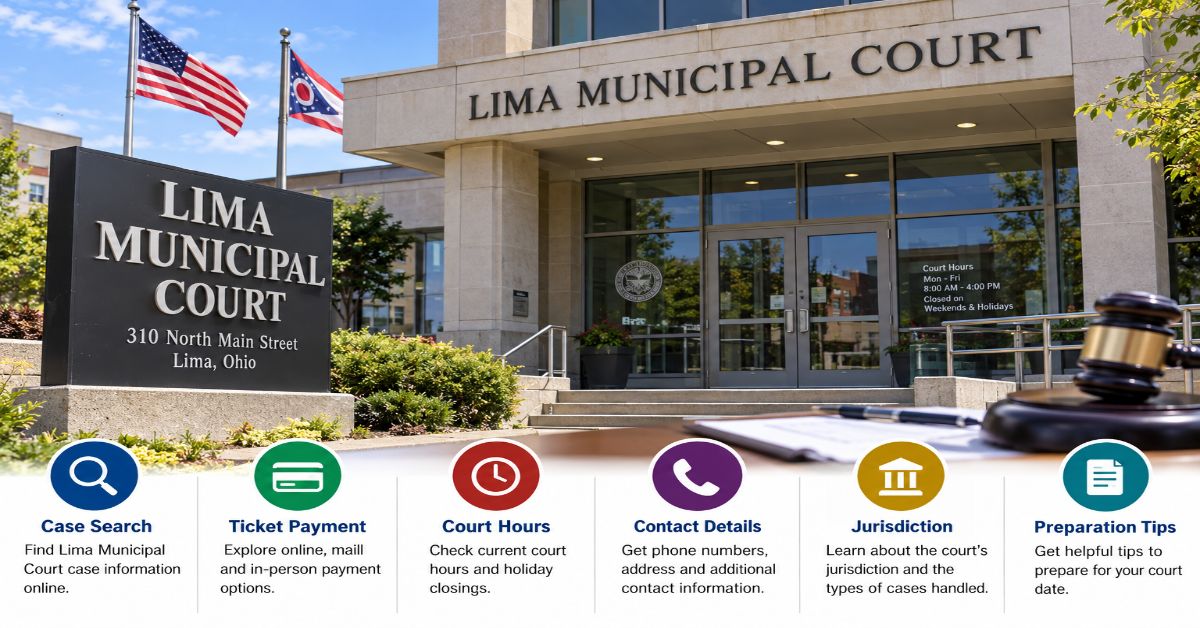
A traffic citation, an eviction notice, or a small-claims dispute can quickly become stressful when you are unsure which office to contact or what deadline applies. The Lima Municipal Court in Lima, Ohio, is the local court that handles many traffic, misdemeanor criminal, and civil matters arising in Allen County. If you need to look up a case, pay an eligible ticket, understand the court’s jurisdiction, or prepare for a visit, the safest starting point is the court’s official city website and clerk’s office.
In practical terms, the Lima Municipal Court provides access to case-related information, accepts filings and payments for matters within its jurisdiction, and schedules proceedings before the court. Its Clerk of Court is located at 109 North Union Street, Lima, Ohio 45801. The published general office hours are Monday through Friday, 8 a.m. to 5 p.m.; holidays or special notices may affect availability. The main telephone number is (419) 221-5275.
This guide explains how to use official online services, what kinds of cases the court hears, how to prepare for a hearing, and what to verify before paying a fine or filing paperwork. It is informational rather than legal advice: a court website can explain procedures, but it cannot determine the best strategy for an individual case. Because deadlines, fees, and case status can change, confirm details directly with the Clerk’s Office before relying on them.
What is the Lima Municipal Court?
The Lima Municipal Court is a local trial court serving matters that originate within Allen County, Ohio, as defined by Ohio law. Its jurisdiction includes traffic cases, criminal matters such as misdemeanors, and civil disputes within monetary limits. It also hears certain appeals and petitions involving actions of the Ohio Bureau of Motor Vehicles (BMV). The court is distinct from the Allen County Court of Common Pleas, which handles other categories of cases and has broader jurisdiction.
The court’s civil division handles claims involving no more than $15,000 in disputed damages. Within that division, small claims generally cover disputes of $6,000 or less. These limits are important when deciding where a claim belongs, although the amount at stake is not the only factor that can affect jurisdiction.
For official details, start with the City of Lima’s court page: https://www.limaohio.gov/100/Municipal-Court. The Clerk of Court page at https://www.limaohio.gov/101/Clerk-of-Court describes the civil and criminal/traffic divisions and provides contact information. These government pages should take precedence over third-party directories when confirming current procedures.
How can you search Lima Municipal Court records online?
The court’s online payment portal includes a search function for eligible violations and case or citation information. The portal can be reached at https://limamunicipalcourt.municipalonlinepayments.com/limamunicipalcourt/court/search. Depending on the record and available fields, searches may be possible by case or citation number, driver’s license, name and date of birth, license plate, or business name.
A search result is a useful starting point, not a substitute for a certified court record or direct confirmation from the clerk. Online systems may not display every document, may update at different times, and may use names or identifiers exactly as entered in the court record.
Steps to look up a case
Open the official online search portal from the Lima Municipal Court website rather than following an unsolicited text or payment link.
Choose the search method that matches the information on your citation or court paperwork.
Enter the information carefully. Check spelling, citation digits, and any date-of-birth fields before submitting.
Review the result for the correct person, case number, court, and status. Do not assume a similarly named record belongs to you.
If no result appears, or the status seems inconsistent with your paperwork, call the Clerk’s Office at (419) 221-5275.
Avoid sharing sensitive identifiers on unofficial websites. If a portal requests personal information, confirm that the domain is the one linked by the court before proceeding.
How do you pay a Lima Municipal Court ticket or fine?
The court provides an online payment service for eligible criminal and traffic cases. Begin at the official court website and select its criminal/traffic payment link, or use the payment portal at https://limamunicipalcourt.municipalonlinepayments.com/limamunicipalcourt/court/search. The portal’s availability and the types of cases that can be paid online may vary, so read the displayed instructions before submitting a payment.
Before paying, verify the citation or case number, the amount due, and whether the citation requires a court appearance or another action. Paying a fine does not necessarily resolve every issue connected with a citation. Some cases require a hearing, proof of completion of a course, additional court costs, or other steps. If the ticket contains special instructions, follow those instructions and contact the clerk if anything is unclear.
The court’s official page includes a specific warning about distracted-driving citations. It states that when a ticket is marked “Distracted Driving” or similar, an additional mandatory $100 fine may apply unless the person submits written evidence of completing the qualifying safety course within the stated 30-day period. The same page describes a separate process for certain first-offense driving-while-texting violations. Because the rules depend on the citation and statutory requirements, read the current official notice carefully and call the clerk if it applies to you.
Keep the confirmation number, receipt, and a copy of the citation after paying. If a payment does not appear immediately, do not submit duplicate payments without checking the transaction status. Contact the court using a phone number published on its official website.
What types of cases does the court handle?
The court’s responsibilities cover several categories. The table below gives a practical overview, but the court or a qualified Ohio lawyer should confirm whether a particular dispute belongs there.
| Case type | Typical examples | What to verify |
| Traffic | Traffic citations and related proceedings | Citation instructions, appearance date, payment eligibility |
| Criminal | Misdemeanor charges and preliminary proceedings for felony charges | Charge, hearing date, counsel and release conditions |
| Civil | Contract disputes, tort claims, landlord-tenant matters | Jurisdiction, filing requirements, service and deadlines |
| Small claims | Smaller monetary disputes of $6,000 or less | Claim amount, evidence, filing fee and service |
| BMV matters | Certain appeals or petitions involving BMV actions | Applicable appeal deadline and required documents |
Civil and small-claims cases
Civil matters can include disagreements over money, contracts, property possession, or landlord-tenant issues. The clerk’s civil division receives filings and maintains records, but clerks cannot act as your lawyer or tell you what legal claims to bring. Before filing, identify the correct defendant, calculate the amount claimed, gather supporting documents, and check the current fee schedule and service requirements.
Small claims may be a more accessible route for eligible lower-value disputes, but a claimant still needs to present a coherent case. Relevant evidence may include a written agreement, invoices, receipts, dated photographs, messages, repair estimates, or a clear record of payments. Bring organized copies and be prepared to explain what happened, what amount is requested, and how the evidence supports that amount.
Criminal and traffic matters
The criminal and traffic division processes court entries and orders, accepts bail and bond where applicable, and establishes and monitors payment plans. Felony charges may be recorded through preliminary proceedings and transmitted to the Court of Common Pleas. A person charged with an offense should read every notice, comply with release conditions, and attend required hearings. If a court date is unclear, call the clerk rather than assuming a payment or online search changes it.
Where is the Lima Municipal Court, and when is it open?
The court is located at 109 N. Union Street, Lima, Ohio 45801. The Clerk’s Office is on the first floor. The official city page lists general hours as Monday through Friday, 8 a.m. to 5 p.m., and gives (419) 221-5275 as the main phone number. Confirm holiday closures and special schedules before travelling.
The city’s court information page notes that parking is available across Union Street between the Allen County Health Department and the bus station, with a parking meter on the west side of the lots. Allow time to park, enter the building, pass any security screening, and locate the correct courtroom or division.
Use the contact table below to choose the most appropriate starting point. These are general contact details published by the court; verify them online before relying on them.
| Need | Contact route | Published details |
| General court information | Municipal Court | (419) 221-5275 |
| Civil case filing questions | Clerk of Court — Civil | 109 N. Union St.; (419) 221-5275 |
| Criminal or traffic records and payments | Clerk of Court — Criminal/Traffic | 109 N. Union St.; (419) 221-5275 |
| Prosecutor’s Office information | Municipal Court Prosecutors | (419) 223-7272; verify intake times online |
How should you prepare for a court date?
Preparation begins with reading the court notice from top to bottom. Identify the date, time, courtroom or hearing format, case number, and any instruction to bring documents or complete a task beforehand. If the notice conflicts with an online listing, contact the clerk promptly and keep a record of the response.
A practical preparation checklist
Bring the notice, citation, or other document that identifies the case.
Bring a government-issued photo ID if appropriate and any documents the notice requests.
Organize evidence chronologically and bring copies for the court and other parties when required.
Arrive early enough to find parking, pass security, and locate the correct courtroom.
Silence your phone and follow courtroom instructions.
If you need an interpreter, disability accommodation, or another access arrangement, contact the court as early as possible to ask about the process.
If you cannot attend, do not simply miss the hearing. Contact the court and seek legal advice about the proper procedure.
A court clerk can generally provide procedural information, such as whether a document was received or where a case is listed. The clerk cannot advise you on whether to plead guilty, what argument to make, or whether you should settle. For advice about legal rights and strategy, consider consulting a licensed Ohio attorney or a legal-aid resource.
What happens if you cannot pay court costs at once?
The court’s official website warns that delinquent fines and court costs can have serious consequences if a person has no payment plan or fails to comply with one. The page explains that an account may be referred for collection and may lead to BMV-related license or registration restrictions. The consequences depend on the case and applicable rules, so do not rely on a general article to determine what applies to your account.
If you cannot pay the full balance, contact the Clerk’s Office promptly and ask whether a payment plan or another authorized option is available for your case. The criminal/traffic division’s published responsibilities include establishing and monitoring payment plans. Ask about the amount required, due dates, how payments must be made, and what happens if circumstances change. Keep written confirmation of any arrangement and meet its terms.
Do not ignore collection letters or a notice about a driver’s license or vehicle registration. Verify the notice independently using contact information from the court’s official website. If a message threatens immediate arrest unless you pay through a gift card, cryptocurrency, wire transfer, or an unfamiliar link, treat it as suspicious and contact the court directly.
How can you avoid court-payment scams?
The court has published warnings about scam calls, including messages falsely claiming to be from the Ohio BMV. A scammer may use urgency, threaten arrest or suspension, or ask for personal information and immediate payment. Caller ID can be spoofed, so a familiar-looking number is not proof that a call is genuine.
Do not use a payment link sent by an unexpected text or email until you verify it independently.
Open the City of Lima’s official court page by typing its address or using a trusted search result.
Call the court using the number shown on the official government website, not a number supplied by the caller.
Do not share passwords, banking credentials, or unnecessary personal identifiers with an unsolicited caller.
Keep copies of messages and payment records if you believe you have been targeted.
The court’s official page states that it will not call to ask for private information. If you receive a suspicious demand, pause and verify it with the court before taking action.
Official resources for Lima Municipal Court
These official and nonprofit resources can help readers confirm procedures and find further guidance. Always check that a link is current and relevant to the specific case.
City of Lima — Lima Municipal Court: https://www.limaohio.gov/100/Municipal-Court
City of Lima — Clerk of Court: https://www.limaohio.gov/101/Clerk-of-Court
Online case and citation search/payment portal: https://limamunicipalcourt.municipalonlinepayments.com/limamunicipalcourt/court/search
Ohio Legal Help — Lima Municipal Court: https://www.ohiolegalhelp.org/resource/lima-municipal-court
City of Lima — Local Rules of Court: https://www.limaohio.gov/index.aspx?NID=114
Ohio Legal Help provides plain-language information and community resources for Ohio residents. It can be a useful starting point for understanding common legal processes, but it does not replace individualized legal advice.
Conclusion: Take the next step with verified information
If you need to deal with the Lima Municipal Court, first identify your case type and the action required by your notice. Use the official portal to search eligible records or make permitted payments, confirm the court date directly if anything is uncertain, and keep receipts and filed documents. For civil claims, check the jurisdictional limit and filing requirements before submitting paperwork. If you cannot pay or face a legal decision with serious consequences, contact the clerk about procedure and consult a qualified Ohio lawyer or legal-aid service about your options.
The most reliable contact starting point is 109 N. Union Street, Lima, Ohio 45801, or (419) 221-5275. Because court procedures and deadlines are case-specific, confirm current information on the official City of Lima website before acting.
Frequently Asked Questions
Can I search a Lima Municipal Court case by name?
The online portal offers a name search, with a date-of-birth field shown as part of the search process. Use the official portal and confirm the case number and other identifying details before relying on a result.
Can I pay a ticket online without visiting the courthouse?
Some eligible traffic and criminal cases can be paid through the court’s online payment portal. Check the citation and portal instructions first; a case may require an appearance or another action.
What is the phone number for Lima Municipal Court?
The published main number is (419) 221-5275. Use the official court website to confirm the number and choose the right division.
Does Lima Municipal Court handle eviction cases?
The court’s civil division handles landlord-tenant disputes and forcible-entry-and-detainer matters within its jurisdiction. Confirm the correct filing process, current fees, and deadlines with the clerk or a qualified Ohio lawyer.
What is the maximum amount for a small-claims case?
The court’s published information describes its Small Claims Division as handling claims of $6,000 or less. Confirm current jurisdiction and filing requirements before bringing a claim.
What should I do if my case does not appear online?
Check the spelling and identifiers you entered, then call the Clerk’s Office at (419) 221-5275. Online records may not show every item or may not yet reflect a recent update; the clerk can explain the appropriate next step.

A surname can be a small clue with a surprisingly long journey behind it: a spelling recorded by a clerk, a place remembered by a family, or a word describing the landscape near an ancestor’s home. If you are searching for Ruschek, the most useful starting point is to treat it as a family name whose meaning and history can be investigated—not as proof that every person with the name shares one recent ancestor. FamilySearch’s surname reference connects Ruschek with the German surname Rüscher and describes it as a topographic name for someone who lived near a reed bed. That is a credible lead, but a surname entry is a starting hypothesis rather than a complete family tree.
In practical terms, Ruschek searches tend to serve one of three needs: understanding the name, tracing a particular family, or checking whether records from different countries refer to the same person. This guide explains the published surname interpretation, how spelling and migration complicate research, which records are worth searching first, and how to evaluate matches without accidentally joining unrelated families. It also separates what a reference source actually states from what still needs evidence. The key point is simple: use the name meaning to guide research, then let dated records establish the history of your own Ruschek line.
The spelling matters. Ruschek, Rüscher, Rusch, and similar-looking surnames may be related in some cases, but resemblance alone does not establish a shared origin. The safest approach is to search exact spellings first, then broaden the search methodically while checking dates, places, relatives, and original documents. That process is more reliable than accepting a dramatic family-origin story simply because it sounds plausible.
What does the surname Ruschek mean?
FamilySearch’s surname entry identifies Ruschek as German, also noting the form Rüscher, and gives a topographic interpretation: a name for someone who lived near a reed bed. In surname studies, a topographic surname describes a feature of the landscape near a person’s home or land. Reed beds grow in wet environments such as marshes, lake edges, and river margins, so the interpretation points to a geographical feature rather than a profession or a personal characteristic.
This meaning should be presented with the right degree of confidence. It is a published interpretation of the surname, not evidence that a specific Ruschek ancestor lived beside a particular marsh. To connect the explanation to an individual family, researchers need records showing where that family lived and how the name was written over time. A surname can also have different histories in separate family branches, especially when spellings changed or families moved between language communities.
What “topographic surname” means
A topographic surname often arose because a location feature helped distinguish one person from another. In a village where several people shared a given name, a description associated with a home or nearby landscape could become a hereditary family name. Over generations, the original descriptive meaning might remain known—or disappear entirely. Modern bearers of the surname do not need to live near reeds, and the meaning does not describe their present-day identity.
Does Ruschek have one confirmed origin?
The available surname reference offers a German-language connection, but it does not prove a single origin for every person called Ruschek. A responsible article should not claim a definitive village, founding ancestor, noble lineage, or migration route without records. The exact origin of an individual branch is best established through civil registers, church books, census schedules, immigration documents, and other records tied to identifiable relatives.
Ruschek, Rüscher, and similar spellings: what should you search?
Historical records often contain spelling variation. A name may be written differently because a clerk recorded what they heard, a family used more than one language, a diacritic was omitted, or a later indexer transcribed handwriting incorrectly. The umlaut in Rüscher may be represented differently in some databases, while Ruschek may appear exactly as written or under a variant. Search variation is useful, but every candidate must be tested against the evidence.
| Search form | Why include it | How to evaluate a match |
| Ruschek | The exact focus spelling; begin here. | Compare full names, dates, locations, and relatives. |
| Rüscher | A form explicitly connected in the surname reference. | Check whether the source record actually supports the spelling change. |
| Rusch | A related-looking form mentioned in surname comparisons. | Treat as a lead, not an automatic equivalent. |
| Rushek / Ruschik and other phonetic possibilities | Potential transcription or transliteration variants in some records. | Use only where geography, language, or handwriting makes the variation plausible. |
Avoid treating all similar spellings as interchangeable. Search engines and genealogy indexes may return people whose names look alike but whose lives do not connect. A strong match normally agrees on several independent details—for example, a spouse’s name, a birth year, a village, and a parent’s name. One matching surname is weak evidence; a cluster of matching facts is much more persuasive.
Where is the Ruschek surname found?
Surname databases can help identify places where a name appears, but database counts are not the same as a complete census of everyone who bears it. FamilySearch’s Ruschek page presents family-history records and examples of the surname appearing in places including the United States, Austria, and Hungary. Such listings can guide a search, but they should not be read as proof that the surname originated in one of those countries or that those locations contain every branch.
Geographic distribution can reflect migration, record coverage, and the population represented in a particular database. A family may have lived in one region for generations before a branch moved abroad. Another branch may have adopted a different spelling. Online indexes also differ in the time periods and record collections they cover, so counts from different services should not be compared as if they were collected using the same method.
How to use location clues responsibly
Start with the most specific location already known in your family: a town, parish, district, or country. Then search records from that place and the relevant time period. If a database shows Ruschek entries in a country your family has never mentioned, treat the result as a research lead rather than proof of a connection. The next task is to identify a person and connect that person to a documented family group.
When family stories mention migration, record the story as a clue and look for corroboration. Passenger lists, naturalization records, border-crossing documents, census records, and local civil registrations can sometimes link a person in a new country to an earlier residence. Each document has limits: a passenger list may give only a last residence, while a census entry may contain an estimated age or an inconsistent birthplace.
How to research your own Ruschek family history
A productive family-history search begins with known relatives rather than the oldest person with the surname found online. Work backward one generation at a time, and save the evidence for every relationship. This approach reduces the risk of attaching your family to a same-name individual from a different town or period.
Step 1: Interview relatives and gather home records
Write down full names, alternate spellings, approximate birth and death dates, marriage details, places lived, languages spoken, and migration stories. Ask whether the family kept certificates, letters, photographs with captions, military papers, religious records, or old passports. Note who supplied each detail and whether it comes from a document or memory. Oral history is valuable, but label uncertain dates and stories as unverified.
Step 2: Find the most recent reliable record
Start with a document you can confidently connect to the person you are researching. Depending on the country and period, this may be a birth, marriage, or death certificate; a census entry; a church register; or a naturalization file. Check the original image where possible instead of relying only on a search-result snippet. Indexes can contain transcription errors, and the original document may reveal a middle name, witness, address, or parent that resolves a conflict.
Step 3: Work backward using relationships
Use each record to identify the next generation. A marriage record may name parents; a baptismal entry may identify sponsors or a parish; a death record may supply a birthplace; and a census may list household members. Do not assume every detail is correct simply because it appears on an official form. Informants may not have known the exact birth date or place, and ages can vary across records.
Step 4: Search spelling variants without losing the trail
Search Ruschek first, then try plausible variants and diacritic forms. Keep a log of the exact search, collection, date range, and result. When a variant produces a candidate, return to the record image and note how the name appears in the original handwriting. A documented spelling change is stronger evidence than a database’s automated suggestion.
Step 5: Build a source-backed family tree
Attach each event to a source and distinguish facts from hypotheses. A useful research note explains why a record belongs to a person: for example, it names the same spouse and matches the known residence. If two records conflict, preserve both and investigate rather than silently choosing the version that fits your preferred story. A family tree should show uncertainty where uncertainty remains.
Which records are most useful for tracing Ruschek ancestors?
No single record type answers every question. The best source depends on the person’s location, time period, and life event. The following table summarizes common record groups and the evidence they can provide.
| Record type | Useful details | Common limitation |
| Birth or baptism record | Birth date, parents, residence, witnesses or sponsors. | Access may be restricted; older entries may use local languages. |
| Marriage record | Spouses, ages, parents, prior marital status, witnesses. | Names and ages may be reported inconsistently. |
| Death or burial record | Death date, age, spouse or parents, burial place. | Information may come from someone who did not know the deceased well. |
| Census or population register | Household members, approximate ages, occupations, birthplace. | Ages, relationships, and spellings may be inaccurate. |
| Immigration or naturalization file | Last residence, arrival details, relatives, citizenship process. | A record may identify only a broad place or omit relatives. |
| Church or community register | Baptisms, marriages, burials, religious-community details. | Coverage depends on congregation, survival, and access rules. |
Civil and church records are often the most useful starting points because they can establish relationships and locations. Census and immigration records become especially valuable when a family moved. Newspaper notices, cemetery inscriptions, school records, military files, and probate documents can provide additional clues, but their relevance depends on the place and period. Always check the rules and privacy restrictions that apply to the archive holding a record.
How can you tell whether two Ruschek records describe the same person?
Name matching is only the first filter. To evaluate a possible connection, compare a combination of details and ask whether the timeline makes sense. A candidate with the right surname but a spouse, age, or location that conflicts with the known family may be a different person.
| Evidence to compare | Stronger indication | Warning sign |
| Dates and age | Dates are consistent within normal record variation. | A timeline makes parenthood or migration implausible. |
| Places | Records point to the same town or a documented move. | Locations are far apart with no connecting evidence. |
| Relatives | Spouse, parents, siblings, or witnesses overlap. | Only the surname matches. |
| Occupation and address | Details recur across independent records. | Details contradict one another without explanation. |
| Original documents | Images support the indexed name and relationships. | The index appears to have misread the handwriting. |
A useful rule is to seek multiple independent clues rather than counting repeated copies of the same information. A genealogy website may display an index copied from another database; those two pages are not necessarily independent confirmation. Prefer original records or clearly identified archival copies, and cite the collection and record details so another researcher can repeat the search.
Common mistakes to avoid when researching Ruschek
Assuming the name meaning proves ancestry
The reed-bed interpretation is a clue about the surname’s possible linguistic background, not proof of a particular ancestor’s home. A name dictionary cannot replace a birth or parish record.
Merging people because their names look similar
Similar spelling can result from language differences or transcription errors, but it can also be coincidence. Require supporting details before joining profiles or family trees.
Trusting unsourced family trees
Online trees are useful for discovering names and possible sources, but copied errors can spread. Open the cited records and verify the relationship yourself before adopting it.
Ignoring local language and calendar differences
Older records may use a language different from the one spoken by descendants today. Dates may also require careful interpretation where calendars or local recording practices changed. Use archive guidance or a qualified translator when a record cannot be read confidently.
Publishing private details about living relatives
Genealogy research can involve sensitive family information. Follow archive terms, local privacy law, and family preferences. Avoid posting identity documents, home addresses, or personal details about living people without a clear and appropriate reason.
What does the available evidence establish—and what remains unknown?
The source-backed conclusion is limited but useful: FamilySearch lists Ruschek as a German surname, connects it with Rüscher, and gives a topographic meaning associated with living near a reed bed. The same reference offers a path into surname and family-history collections. It does not establish the birthplace of every Ruschek family, identify a universal founding ancestor, or prove that all similar spellings belong to one lineage.
For a specific family, the most important missing evidence is usually a documented chain of relationships and places. That chain may begin with a recent certificate and move backward through church registers, civil records, census entries, and migration documents. The conclusion should be as narrow as the evidence allows: a record may establish that one person lived in a town in a certain year without proving that the entire surname originated there.
This distinction is central to trustworthy genealogy. It is better to have a modest, well-documented family history than an elaborate origin story built on guesses. Record what is known, label what is probable, and leave unanswered questions open until evidence resolves them.
Conclusion: the best next step for a Ruschek search
Ruschek has a published surname interpretation linking it to the German form Rüscher and a landscape feature associated with reed beds. That is a useful starting point, but your family’s specific history must be established through records. Begin with the most recent relative you can document, search exact spellings before trying variants, and verify each proposed relationship using original sources wherever possible.
Keep a research log, compare multiple identifying details, and resist merging people based on a surname alone. With a careful, source-led method, even small clues—an alternate spelling, a marriage witness, or a place name in an immigration record—can help build a reliable history without overstating what the evidence proves.
Frequently asked questions about Ruschek
Is Ruschek a German surname?
FamilySearch classifies Ruschek as German and connects it with the form Rüscher. This is a useful surname-reference interpretation, but an individual family’s origin should be confirmed with historical records.
What does the Ruschek surname mean?
The cited surname reference describes it as a topographic name for someone who lived near a reed bed. The interpretation refers to a landscape feature, not to the current residence or occupation of people with the name.
Are Ruschek and Rüscher the same surname?
The reference links the forms, making Rüscher a sensible variant to search. A particular record still needs to be checked because spelling similarity alone does not prove that two people or family branches are connected.
Where can I find Ruschek family records?
Start with genealogy databases and the civil or church archives for the places where your relatives lived. Search birth, marriage, death, census, immigration, and naturalization records, then verify indexed results against original documents where available.
Does everyone with the Ruschek surname share one ancestor?
The available surname entry does not establish that. People can share a surname without belonging to the same recent family line, so a shared ancestor must be demonstrated through documented relationships.
What information do I need to begin a Ruschek family tree?
Begin with one known relative’s full name, approximate dates, and at least one place associated with their life. A certificate, family letter, cemetery record, or other source can help confirm the first entry and guide the next search.

A three-letter abbreviation can point to a company, a publication, a school, a transport code, or a phrase used in an online conversation. That is why searching for TJH can produce answers that appear unrelated: the letters do not have one universally accepted meaning across every industry and country. The useful answer is not simply to pick one expansion, but to identify the context in which the abbreviation appears.
TJH is used for several names and organizations. Examples found in reference listings and public materials include The Jewellery House, the Turkish Journal of Haematology, and TransJamaican Highway Limited, a Jamaican road-concession company that has also used the short form TJH in corporate announcements. Other acronym directories list school names and the Thomas Jefferson Hour among possible meanings. These are not interchangeable: each belongs to a different subject and requires different evidence.
If you saw TJH on a website, document, share-market page, journal citation, school notice, or message, the surrounding words are usually the fastest route to the correct interpretation. A company name, a stock-market reference, a journal title, or an airport-code field gives very different clues. Capitalization alone is not enough to decide.
This guide explains the best-known interpretations, compares the contexts in which they appear, and gives a practical method for checking a meaning before using it in writing or research. It treats acronym-directory entries as leads rather than proof and prioritizes official organizational material when the question concerns a specific entity. If you only need a quick answer, start with the table below, then use the verification checklist to narrow it down.
What does TJH mean?
TJH does not have a single universal expansion. Its meaning depends on the source and subject: it can refer to an organization such as TransJamaican Highway Limited, a publication such as the Turkish Journal of Haematology, or a name listed in acronym directories. Check the surrounding context and, where possible, confirm the expansion on the organization’s own website or in the original document.
Common meanings of TJH at a glance
The following comparison separates several documented uses of TJH. The list is illustrative rather than exhaustive; a local organization may use the same initials for a different name.
| Possible meaning | Typical context | Best verification clue |
| TransJamaican Highway Limited | Jamaican toll-road infrastructure and company announcements | Corporate releases, investor materials, and the company website |
| Turkish Journal of Haematology | Medical research, journal citations, and hematology literature | Journal title, publisher page, ISSN, or article citation |
| The Jewellery House | Jewelry retail or brand references | Official brand or store website and product listings |
| Thomas Jefferson Hour | History, public affairs, and audio program references | Program title, episode listing, or publisher page |
| A school or local institution | School schedules, directories, or community notices | Full institution name, location, and official school domain |
| A local or specialized abbreviation | Internal forms, chat, technical notes, or workplace records | Glossary, first-use definition, or the document owner |
Why TJH can be ambiguous
Abbreviations are built from initials, and many unrelated names naturally share the same three letters. A short form may also be reused across countries, industries, and organizations. Search engines can show several plausible results together, but ranking does not prove that the first result is the intended one.
There is a second source of confusion: a result may describe an acronym directory rather than the organization itself. Directories are useful for discovering possibilities, but entries can be user-submitted, incomplete, outdated, or detached from their original context. For a high-confidence answer, use the directory to generate a lead, then confirm it with a primary source.
The exact sentence matters. “TJH announced a transaction” sounds like corporate reporting; “TJH, 2024, volume…” resembles a journal reference; and “listen to TJH” may refer to an audio program. Those clues are stronger than guessing from the initials alone.
TJH as a company name: TransJamaican Highway
One clearly documented corporate use is TransJamaican Highway Limited, associated with Jamaica’s tolled highway network. Company materials describe a concession for operating and maintaining the Highway 2000 East-West corridor. Corporate announcements use “TJH” as a short name for the company, so the abbreviation may appear in financial releases, shareholder communications, or infrastructure news.
If your search concerns this company, check the exact date and title of the announcement. Corporate names, branding, concession arrangements, and investor information can change over time. The company’s own website and formal market disclosures are more dependable than a generic acronym page for current details.
Do not assume that every result mentioning TJH relates to this road operator. A result about medical research, jewelry, or a school may use the same initials independently. When researching a company, confirm the country, sector, legal name, and source date before quoting figures or making an investment-related interpretation.
A practical company-check routine is to verify: (1) the full legal or trading name, (2) the country and business sector, (3) the official domain, (4) the date of the release, and (5) whether the document is a company statement or a third-party summary.
TJH in academic and medical references
TJH can also refer to the Turkish Journal of Haematology, a medical journal focused on hematology. In this setting, the letters may appear in article references, publication records, or journal-related search results. The surrounding bibliographic information is essential: look for an article title, author names, publication year, volume, issue, page range, DOI, or journal website.
Acronyms in academic writing are especially easy to misread because citation styles often abbreviate journal titles. Never infer that a paper is about a particular medical topic from the initials alone. Open the article record and confirm the journal’s full title, publisher, and article metadata. If you are building a bibliography, preserve the journal title and identifier exactly as provided by the authoritative record.
Medical and scientific claims should be traced to the paper itself, not to a search snippet or an acronym list. An abbreviation directory can tell you that a possible expansion exists; it cannot establish the findings, methods, or reliability of a specific study.
TJH in jewelry, media, schools, and everyday use
The Jewellery House
Acronym references list The Jewellery House as one possible expansion of TJH. If the abbreviation appears alongside jewelry, rings, necklaces, retail offers, or brand imagery, this may be the intended meaning. Confirm it through the retailer’s own branding, contact details, and product pages rather than assuming that a directory entry identifies a particular store in your region.
Thomas Jefferson Hour
Some acronym listings associate TJH with the Thomas Jefferson Hour, a history-oriented program. Audio, podcast, episode, or American-history references would make this interpretation more plausible. Verify the exact program name and episode information through its official listing or publisher before citing it.
Schools and local organizations
TJH may be used informally for a junior high school or another institution whose name begins with T, J, and H. School abbreviations are often local: the same initials can refer to different schools in different districts. A city, state or province, district name, school logo, or official domain is usually needed to disambiguate the result. Do not assume that an abbreviation found in one district applies elsewhere.
Chat and internal shorthand
In messages or workplace notes, TJH could be an internal shorthand that is not listed in public directories at all. The sender may have defined it earlier, or it may refer to a project, team, file, or phrase specific to a group. In that case, asking the author or checking the document’s glossary is more reliable than selecting a public expansion at random.
How can you identify the correct TJH meaning?
Use this short process before repeating the expansion in an article, report, email, or research note.
Read the surrounding sentence. Identify the topic, action, and nearby nouns. Words such as “shares,” “highway,” “journal,” “episode,” or “school” narrow the possibilities.
Check the source type. A stock exchange release, scientific database, retailer page, school calendar, and social post each call for different verification methods.
Search for the full name. Use the initials together with a relevant clue, such as the country, industry, title, or location.
Prefer primary sources. Look for an official company announcement, journal homepage, school website, or program listing.
Match the details. Confirm that the location, dates, subject, and organization all fit. A matching acronym alone is insufficient.
Explain the abbreviation on first use. In your own writing, give the full name followed by “(TJH)” only after you have verified it. If it remains uncertain, say that the abbreviation is ambiguous.
Which source should you trust?
Different source types serve different purposes. Use the following comparison to choose the right place to verify a TJH reference.
| Source type | Useful for | Main limitation |
| Official organization website | Current name, services, contact information, and published statements | May not explain every historical use of the initials |
| Official journal or publisher record | Journal title, article details, identifiers, and publication metadata | Does not resolve unrelated meanings of TJH |
| Government or exchange disclosure | Formal company or regulatory information | May use abbreviations without explaining them in every document |
| Acronym directory | Discovering possible expansions quickly | Entries may be incomplete, user-submitted, or context-free |
| Search-engine snippet or social post | Finding leads and locating original pages | Short excerpts can omit qualifications and may be outdated |
Common mistakes when researching TJH
Treating the first result as definitive. Search ranking reflects many factors and does not establish which meaning the user intended.
Using one expansion everywhere. Initials are routinely shared by unrelated groups; context must control interpretation.
Citing an acronym directory as proof of a company fact. Use the directory as a lead and cite the organization or primary document for factual claims.
Ignoring dates. Company names, brands, websites, and program listings can change; record when the source was published or accessed.
Expanding the initials without evidence. If the original document never defines TJH, do not invent a full name simply to make the prose look complete.
A simple example: interpreting TJH in context
Imagine that a reader sees “TJH released an investor update” in a news result. The words “investor update” make a corporate entity more likely than a school or a journal. The reader should then open the result, check the country and company name, and compare it with an official announcement. If the source identifies TransJamaican Highway Limited, the expansion is supported. If the page concerns another company, the same initials must be interpreted differently.
Now consider “TJH published a study on blood disorders.” The medical subject and the word “published” suggest a journal or a publication, but they still do not prove the exact expansion. The reader should find the paper and verify the journal title in the publisher’s record. The method is the same in both examples: context narrows the candidates, and primary evidence confirms the answer.
Conclusion: use context, then verify
The most accurate answer to “What does TJH mean?” is that it can refer to several different entities, and the correct interpretation depends on where the initials appear. Documented possibilities include TransJamaican Highway Limited, the Turkish Journal of Haematology, The Jewellery House, and the Thomas Jefferson Hour, alongside school and local uses.
For a dependable result, identify the subject, locate the original source, and verify the full name before citing or publishing it. If the context is missing, present TJH as an ambiguous abbreviation rather than claiming one expansion is universally correct. That small step prevents mistaken references and makes articles, reports, and searches more useful to readers.
FAQs about TJH
Is TJH an official acronym with only one meaning?
No. TJH is used by multiple organizations and publications. Its meaning depends on context, and no single expansion should be assumed without evidence.
What does TJH mean in a company or stock-market article?
It may refer to TransJamaican Highway Limited when the article concerns Jamaica’s toll-road operator. Verify the company name in the original release or official investor material.
What does TJH mean in a medical journal citation?
It may refer to the Turkish Journal of Haematology. Check the full journal title, publisher record, and article metadata to confirm the citation.
Can TJH refer to a school?
Yes. Initials may be used informally for a junior high school or another local institution. The district, location, and official school website help identify which one.
Are acronym websites reliable for confirming TJH?
They are useful for finding possible meanings, but they may contain incomplete or context-free entries. Confirm important details with an official or primary source.
How should I write TJH in an article if I am unsure?
Do not guess the expansion. Explain that TJH is ambiguous in the available context, or ask the source owner for the full name before publishing.
-

 Guide2 months ago
Voozon.com Guide: What It Is and How It Works
-

 General2 months ago
Spanking Stories: A Reader’s Guide to Themes, Tags and Safer Choices
-

 Technology2 months ago
techtrendery.com: Website Guide for 2026
-

 Technology3 months ago
Coomer.su Explained: Architecture, Data Flow, API Changes and Resilient Client Design
-

 General2 months ago
SABS Framework Description Paragraph: Practical Guide
-

 Guide3 months ago
How to Run a Marathon: A Practical First-Marathon Guide
-

 Technology3 months ago
Listcrawler: How List Crawlers Extract Structured Web Data
-

 General3 months ago
Socialmediagirls Explained: Safety, Privacy, Forum Structure, Leaks and Rules