
Entertainment
Toonily Guide: What It Is, Safety, Legality, Apps and Licensed Alternatives

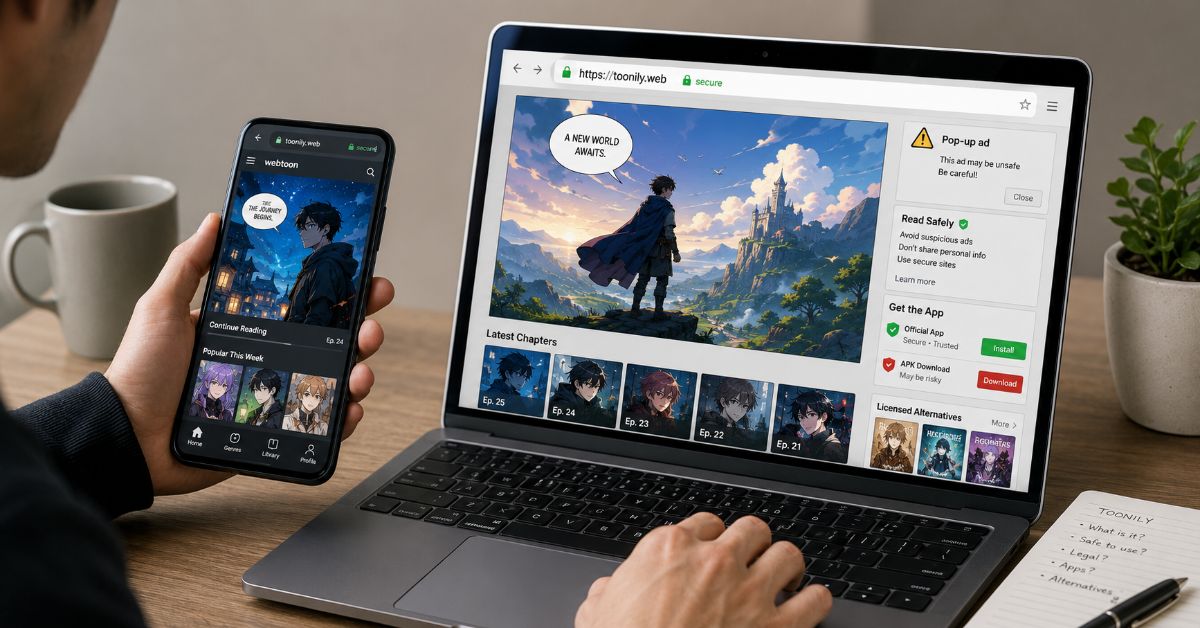
I know the appeal of opening one site, finding a Korean webtoon in English, and starting the next chapter without creating another account. That is exactly why searches for Toonily tend to mix curiosity with caution: readers want to know what the service offers, whether the site or app is safe to use, and when an official manhwa platform is the better choice. This guide answers those questions directly, using the available details about Toonily while separating practical browsing safety from copyright and licensing issues that can vary by title.
Toonily is presented as a website and Android app for discovering and reading manga and manhwa, with a strong emphasis on English-translated Korean webtoons and frequent updates. Because the licensing status of individual titles may vary and multiple Android apps use the Toonily name, readers should verify the official site or Google Play listing, avoid unofficial APK downloads, and choose licensed services such as WEBTOON, Tapas, Tappytoon, Lezhin, or Manta when they want the clearest rights and payment path.
What is Toonily, and what do readers use it for?
Toonily is associated with online manga and manhwa discovery, especially Korean webtoons translated into English. The website promotes free reading and frequent chapter updates, which naturally attracts readers who follow serialized romance, fantasy, action, drama, and other long-form webtoon genres. For a person arriving from a search engine, the practical question is not only what Toonily is. The more useful question is what role it should play in a reading routine.
A sensible way to think about Toonily is as a discovery and reading destination whose content and app identity need verification before a reader treats it like an official publisher-backed service. The supplied search details also show an important complication: more than one Android app appears under the Toonily name, and at least one listing says it provides series information rather than hosting copyrighted chapters. That means the name alone is not enough to establish what a particular app does, who operates it, or whether it is connected to the website.
What does Toonily offer?
The clearest appeal is convenience. Readers searching for Toonily are usually looking for English-language access to manhwa and manga, a large catalog to browse, and updates that make it easy to keep moving through an ongoing series. That is especially attractive with Korean webtoons because many series are designed around short, mobile-friendly episodes and ongoing release schedules.
However, free access does not by itself tell a reader whether a title is licensed for that platform. Copyright permissions are title-specific and territory-specific. A site can look polished, update often, and still require a separate rights check before a reader can know whether the chapters are authorized. For that reason, interface quality and licensing status should be evaluated as different questions.
Is Toonily official or licensed?
The provided information does not establish that every title available through Toonily is licensed for distribution there. That distinction matters because manhwa rights can be split among creators, Korean publishers, international licensors, translation partners, and regional distributors. A reader should not assume that a free English translation is authorized simply because it is easy to access.
The safest standard is straightforward: if licensing matters to you, look for a clear publisher or rights-holder relationship, an identifiable company behind the service, title-level copyright information, and distribution through established app stores. When those signals are absent or unclear, official platforms are the lower-risk choice for supporting creators and reading within a licensed distribution chain.
This is also why a single yes-or-no label for an entire site can be misleading. One catalog may contain titles with different histories, and rights can change over time. For publication-quality accuracy, a legality claim should be tied to a specific work, country, and date, then backed by a credible external source such as a publisher, platform license page, or rights holder.
How should you evaluate Toonily before reading?
Instead of judging the service by appearance alone, use a repeatable check. The goal is not to prove that a site is safe or unsafe from a glance. The goal is to reduce obvious browsing, privacy, and download risks before you spend time on it.
1. Start with the known domain, toonily.com, rather than a similarly named mirror found through a pop-up or redirect.
2. Check whether the browser connection is secure and whether the domain in the address bar is exactly the one you intended to visit.
3. Treat aggressive pop-ups, forced redirects, fake download buttons, browser-notification prompts, and requests for unnecessary personal data as reasons to leave.
4. If you want an Android app, prefer a verifiable Google Play listing over an APK file from a third-party download page.
5. Read the app description carefully because multiple apps can share the Toonily name and may offer different functions.
6. For any series you want to support financially or read under clear licensing terms, search for the same title on an official platform.
That six-step process is more reliable than relying on a logo, a familiar site design, or a claim that an app is the official version. Brand-name reuse is common enough on the web that readers should verify the destination rather than assuming two products with the same name are connected.
Toonily safety check: site, app, and account risks
Safety involves three separate layers: the website you visit, the software you install, and the information you submit. Keeping those layers separate helps readers make better decisions. A website can be usable in a browser while an unrelated APK carrying the same brand name poses a different risk. Likewise, a site can load normally but still use intrusive advertising or redirects that create phishing and malware exposure.
What are the main website safety risks?
- Mirror or copycat domains that imitate the Toonily name but are operated by unrelated parties.
- Pop-ups or redirects that try to move the reader to unfamiliar download, gambling, adult, or notification pages.
- Fake play, next-chapter, or download buttons that are actually advertisements.
- Prompts asking for payment-card details, passwords, or identity information when that information is not necessary for reading.
- Browser-notification requests that later deliver unwanted or misleading alerts.
A useful rule is to minimize the permissions and information you give any reading site. If reading a chapter suddenly requires installing a browser extension, granting notification access, downloading a file, or submitting sensitive information, the risk profile has changed. You are no longer simply viewing a webpage.
What are the main Android app risks?
The supplied details show that search results contain multiple Android apps using the Toonily name. That creates an identity problem before it creates a technical one. A reader has to establish whether the app is connected to the website, whether it is a reader or only an information catalog, and whether its distribution source is trustworthy.
Avoiding unofficial APK files is the strongest practical precaution. Android APK packages can be modified, repackaged, or distributed outside normal store review channels. Installing one also asks the user to trust the file source and the app permissions. The safer path is to use a Google Play listing that you can inspect, or access the known official website in a browser.
The table below separates the most common Toonily access choices by what you should verify before proceeding.
| Access method | What to verify | Main risk | Lower-risk choice |
| toonily.com in a browser | Exact domain, secure connection, normal page behavior | Redirects, misleading ads, mirror confusion | Use the known domain and avoid unnecessary permissions |
| Google Play app using the Toonily name | Developer, description, reviews, permissions, app purpose | Name collision or unrelated app | Install only after confirming the listing matches your intended use |
| Third-party APK | File source, signature, permissions, update path | Tampering, malware, outdated or repackaged software | Avoid it when an official site or store listing is available |
| Mirror or copycat site | Ownership, domain history, security signals | Phishing, deceptive downloads, credential theft | Do not enter sensitive information or reuse passwords |
Is the Toonily APK safe to download?
A third-party Toonily APK should not be treated as safe merely because the filename or icon looks legitimate. The safe recommendation from the supplied details is to avoid unofficial APK downloads and use the Google Play listing or the official website instead. That guidance remains useful even when a third-party page claims to host the latest version.
There are several reasons. First, the reader may not know who packaged the file. Second, a modified APK can request permissions that are unrelated to reading comics. Third, sideloaded apps may not receive updates through the same channel as an app-store version. Fourth, multiple apps using the same name make it easier to mistake an unrelated product for the one you intended to install.
How can you inspect an Android listing before installing?
1. Confirm the app is on Google Play rather than a download page that only imitates a store listing.
2. Read the full description to see whether the app actually hosts chapters, opens web content, or only provides series information.
3. Check the developer identity and whether it is consistent with the service you intended to use.
4. Review requested permissions and question anything unrelated to the app’s stated function.
5. Check the update history and current user feedback for reports of redirects, broken functionality, or unexpected behavior.
6. If anything is inconsistent, use the website instead of installing software.
These steps do not turn an unknown app into a guaranteed safe app, but they reduce the chance of installing the wrong product. They also address the specific problem created when several Android listings use the same Toonily name.
How copyright laws affect free manhwa and webtoon sites
Copyright is the most important reason to distinguish a free reading site from a licensed reading platform. Creators and publishers generally control reproduction, translation, adaptation, and distribution rights. An English translation therefore involves more than copying the original artwork: the translation and its distribution also need authorization.
The practical impact for readers is simple. A chapter being free to access does not prove that the site has permission to host it. Some official platforms legally offer free episodes, ad-supported reading, wait-to-unlock systems, promotional windows, or free previews. Other websites may make the same kind of content available without a clearly stated license. The page price alone cannot tell you which situation applies.
Copyright rules differ by jurisdiction, and legal consequences depend on the activity involved. Hosting, uploading, translating, downloading, and merely viewing content can be treated differently. For an article that makes legal claims about a particular country, those claims should be supported by current law, official government guidance, or qualified legal analysis rather than a general web summary.
Toonily vs licensed manhwa apps: what actually changes?
For many readers, the meaningful comparison is not free versus paid. It is uncertain licensing versus clearly licensed distribution. Official platforms can still include free chapters, introductory episodes, rotating promotions, or subscription access. The important difference is that the platform presents itself as part of the authorized publishing chain.
That changes several parts of the reading experience. Official apps are more likely to have structured account systems, store-managed app updates, documented payment methods, publisher relationships, and creator-support mechanisms. Unofficial or unclear sites may offer convenience and a broad catalog, but the reader has less certainty about title rights, translation authorization, and who receives revenue.
This comparison focuses on the decision points that matter most when choosing between Toonily-style free access and licensed services.
| Decision factor | Toonily or similar free site | Licensed platform |
| Access cost | Often promoted as free | May mix free episodes, paid chapters, subscriptions, or promotions |
| License clarity | May vary by title and may not be obvious | Designed around authorized distribution and publisher relationships |
| App source | Multiple similarly named apps can create confusion | Typically tied to an identifiable official app-store publisher |
| Creator support | May be unclear | Payments, ads, or subscriptions can flow through the licensed platform |
| Account and payment | Avoid entering sensitive information on mirrors or suspicious pages | Use the official app or site with documented payment systems |
| Catalog availability | Can appear broad and update frequently | Depends on licenses, region, exclusivity, and release schedule |
What is the difference between WEBTOON and licensed apps like Tappytoon?
WEBTOON, Tappytoon, Tapas, Lezhin, and Manta are all useful examples of official destinations, but they do not need to use the same business model to be safer licensing choices. A reader should compare them by catalog, payment model, region, mature-content policy, release timing, and whether the specific series they want is officially available.
WEBTOON is often associated with a large webtoon-first ecosystem and a mix of free reading and monetized features. Tappytoon is known as a licensed destination for translated comics and novels, while Tapas also mixes comics and prose. Lezhin and Manta represent other official approaches to translated Korean content. Exact catalogs, prices, and regional terms can change, so the current app or website should be checked before publishing a precise feature or pricing comparison.
Why a title-by-title search is better than choosing one platform forever
Manhwa licensing is fragmented. A series you find on one service may be exclusive there, available elsewhere under a different English title, delayed by region, or absent from another platform entirely. That makes a title-first strategy more efficient than committing to one app and assuming it will carry everything.
1. Search the English title and, when known, the original Korean title or creator name.
2. Check the major licensed platforms for an official listing.
3. Compare the release status so you know whether the official version is ongoing, completed, or behind another edition.
4. Read the platform’s current access model before paying because subscriptions, episode unlocks, and coin systems are not interchangeable.
5. Bookmark the official series page so you do not have to repeat the license search later.
Internal link opportunity: top official platforms for reading translated Korean manhwa. That article can compare catalog strengths, access models, mature-content availability, and device support without turning the current Toonily guide into a long platform directory.
What are the best official alternatives to Toonily?
The safest alternatives named in the supplied material are WEBTOON, Tapas, Tappytoon, Lezhin, and Manta. They are better starting points when the reader’s priority is licensed reading rather than simply finding the fastest free copy of a chapter.
The best choice depends on the series rather than the brand alone. One platform may carry a title under an official English name that differs from the fan-translated name used elsewhere. Another may offer only part of the series in a region. For that reason, readers should search several official platforms before concluding that a title has no licensed English release.
Use this quick platform-selection table as a search plan rather than a claim that every title is available everywhere.
| Platform | Why a Toonily reader might check it | What to confirm |
| WEBTOON | Large webtoon-focused catalog and a familiar mobile reading format | Whether the specific series is official in your region and how episodes unlock |
| Tapas | Comics and novels with licensed English releases | Title availability, pricing or unlock model, and regional access |
| Tappytoon | Licensed translated comics and novels | Official title name, chapter status, and current payment model |
| Lezhin | Official webcomic platform with translated catalog | Region, mature-content settings, and episode pricing |
| Manta | Official translated comics with its own access model | Subscription terms, catalog availability, and regional access |
Are free official manhwa options available?
Yes, licensed does not automatically mean every episode must be purchased individually. Official services can use free previews, promotional unlocks, ad-supported access, wait-to-read systems, or subscriptions. The exact mechanism is platform-specific and changes over time, so readers should compare the current terms rather than assuming free access only exists on unofficial sites.
For a budget-conscious reader, this is the most useful shift in strategy: search for the title on official services first, then compare legal free-access options before paying. That preserves the convenience of low-cost reading while giving the reader much clearer information about where the translation came from and who is authorized to distribute it.
How to use Toonily more safely if you still choose to visit
Some readers will still visit Toonily because a friend shared a link, a search result points there, or they want to identify a series. If that is your choice, basic browser hygiene can reduce avoidable risk even though it cannot resolve title licensing.
1. Type or verify toonily.com in the address bar instead of trusting a lookalike domain from a redirect.
2. Keep your browser and operating system updated so known security fixes are installed.
3. Do not install extensions, download managers, media players, or APK files just to read a chapter.
4. Do not enter sensitive personal information on mirrors or pages reached through suspicious pop-ups.
5. Do not reuse an important password on a reading site. If an account is optional, consider whether you need one at all.
6. Back out if the site repeatedly redirects you, opens unexpected tabs, or changes domains without explanation.
7. For a series you plan to follow, search the title on licensed platforms and move to the official release when available.
The underlying principle is least privilege: give the site only the access needed to display the page. A webcomic reader does not need broad device permissions, an installer, financial details, or control of browser notifications simply to show images and text.
How to spot a Toonily mirror or suspicious copy
Mirror sites can exploit a familiar name while changing the domain, advertising stack, download prompts, or account system. Because readers often arrive through search results, a copy can feel legitimate before the user notices the address bar.
Red flags worth taking seriously
- The domain is misspelled, padded with extra words, or uses an unfamiliar extension while claiming to be the original.
- The site immediately pushes an Android package, browser extension, or executable download.
- A pop-up claims your device is infected and tells you to install a cleaner or security app.
- The page requires a card number or identity document for access that was advertised as free.
- The browser jumps through several domains before a chapter loads.
- The site asks you to allow notifications before you can continue.
- The branding looks familiar but the privacy, contact, or terms information points to a different entity.
No single red flag proves malicious intent, but several together are enough reason to leave. If the only thing you lose by closing the tab is access to one chapter, the cost of caution is low.
What should parents and younger readers know?
Webtoon catalogs can include romance, violence, sexual themes, or other mature material, and third-party sites may have advertising that is less controlled than the comic itself. For younger readers, the safety question therefore includes both content suitability and the behavior of the surrounding website.
A parent or guardian can reduce risk by favoring official apps with clearer account controls, store distribution, content labels, and documented support channels. Shared-device rules can also help: do not install APK files from links, do not approve browser notification prompts, and do not enter payment information without permission.
A practical decision framework: when should you choose Toonily or an official platform?
The decision becomes easier when you rank your priorities. If the main goal is discovering a title name, Toonily may function as a discovery point. If the priority is licensing certainty, creator support, secure payments, or a verifiable app identity, the official platforms named earlier are the stronger choice.
- Choose an official platform first when you want to support the creator or publisher through authorized distribution.
- Choose an official platform first when you plan to pay, create a long-term account, or store payment details.
- Use extra caution with Toonily when a page redirects, requests downloads, or appears on a domain other than toonily.com.
- Avoid third-party Toonily APK files when a browser version or verified Google Play listing can meet the same need.
- Treat app-name matches as leads, not proof. Read the developer and description because one Toonily-branded app may only provide series information.
- For a specific series, search official services before assuming the only English version is an unofficial one.
What I would check before recommending Toonily to someone else
If I were sending a reading link to a friend, I would check four things before recommending it: the exact domain, the title’s official availability, whether the app or site asks for unnecessary permissions, and whether a licensed version is easy to access instead. That is a more useful standard than asking whether a site ‘works,’ because a functioning chapter viewer tells me very little about licensing or software safety.
I would also separate discovery from consumption. A site can help identify a series, alternate title, or chapter number without becoming the place where I install software, create an account, or enter payment information. That separation gives the reader a practical middle ground: use open-web discovery cautiously, then move the reading habit to a licensed platform whenever possible.
Key takeaway
Toonily is best approached as a manhwa and manga discovery or reading site that requires more verification than an established licensed platform. The supplied information supports three clear precautions: verify the exact website or Google Play listing, avoid unofficial APK files, and never give sensitive information to mirror sites or suspicious pop-ups. For long-term reading, payments, and creator support, WEBTOON, Tapas, Tappytoon, Lezhin, and Manta are safer starting points because they are positioned as official licensed services.
The most reader-friendly habit is not to memorize a list of ‘safe’ and ‘unsafe’ sites forever. Instead, verify the destination, verify the app, and verify the title. That approach still works when domains, catalogs, licensing deals, or app listings change.
Frequently asked questions about Toonily
Is Toonily free to use?
The Toonily website is described as offering free English-translated manhwa with frequent updates. Free access does not confirm that every title is licensed, so check for an official release if copyright status or creator support matters to you.
Does Toonily have an official Android app?
Search results show multiple Android apps using the Toonily name, so the name alone is not enough to identify an official app. Prefer a verifiable Google Play listing, inspect the developer and description, and remember that at least one Toonily-named app describes itself as providing series information rather than copyrighted chapters.
Can I download Toonily as an APK from another website?
You can encounter third-party APK downloads, but the safer recommendation is not to use them. A repackaged Android file can be modified or distributed by an unknown party, so use Google Play or the known website instead.
Why can a free manhwa site have copyright problems?
Free pricing and copyright permission are separate issues. A platform needs authorization to distribute a work and its translation, while an official service can still make some episodes free through previews, promotions, ads, or other access models.
Which official platforms should I check before using Toonily?
Start with WEBTOON, Tapas, Tappytoon, Lezhin, and Manta. Search by the series title and creator because official English names, regional catalogs, and release schedules can differ between services.
What should I do if a Toonily page opens suspicious pop-ups?
Close the pop-up or tab, do not download anything, do not approve browser notifications, and do not enter passwords or payment information. Return only through the known domain if you still intend to visit, or search for the title on an official platform.
Finding a new manhwa at midnight can turn into a surprisingly complicated research job. I may start with one title, then end up comparing domains, chapter indexes, translation credits, and warnings about mirrors before I even reach the first page. That is why a search for olympus scanlation deserves more than a one-line definition. The name is associated with fan-translated comics, especially Korean and Chinese series made available to Spanish-speaking readers, but current search results also surface more than one similarly branded website with different descriptions of what “Olympus Scanlation” is.
The practical answer is this: Olympus Scanlation is best understood as a scanlation-related name used for online access to fan-translated comics. A prominent current Spanish-language site describes itself as a place to read Korean and Chinese series translated into Spanish by multiple groups. Readers should verify the exact domain they are using, understand that fan translations are different from licensed editions, and prefer official releases whenever a title has a legitimate local publisher.
This guide is for readers who searched the name because they want to know what Olympus Scanlation is, whether it is active, how scanlation works, and what legal or safety issues matter before reading. I will separate what can be verified from what should not be assumed. Similar domains can reuse the same name while presenting different languages, missions, catalogs, or claims. Instead of treating every result as one confirmed organization, the safer approach is to identify the site in front of you, check its own description, and distinguish fan distribution from official publishing.
What Is Olympus Scanlation?
Olympus Scanlation is associated with fan-translated digital comics. As of September 2026, the active site at olympusxyz.com describes itself in Spanish as a place to read Korean and Chinese series translated into Spanish by the groups that make up the platform. Its home page lists current chapter releases, novels, rankings, and popular series.
The term “scanlation” combines “scan” and “translation.” A typical project can involve obtaining comic pages, translating dialogue and captions, cleaning or redrawing text areas, typesetting the translated script, proofreading it, and releasing the finished chapter online.
A key distinction is that Olympus Scanlation is not a publishing format. It is a name associated with particular fan-translation websites or communities. Search results currently show multiple domains using close variants of the name. One Spanish-language domain focuses on Korean and Chinese works translated into Spanish, while olympusscanlation.org describes itself as an English-language fan community for manga, manhwa, and manhua. Those descriptions do not fully match, so readers should not assume that every similarly named domain has the same ownership, staff, history, or policies.
The table below separates concepts readers often mix together.
| Term | What it means | What readers should verify |
| Olympus Scanlation | A scanlation-related name used by online comic sites or communities | Exact domain, language, catalog, current activity |
| Scanlation | Fan-made scanning, translation, editing, and typesetting of comics | Whether a licensed edition already exists |
| Official translation | A translation published or authorized by a rights holder or licensee | Publisher, territory, release schedule |
| Mirror site | A separate site that republishes or imitates another source | Ownership, redirects, download prompts, account requests |
What Does the Current Olympus Scanlation Site Offer?
The clearest current Spanish-language version I could verify is olympusxyz.com. Its own description says it hosts Korean and Chinese series translated into Spanish by multiple groups. The site shows separate areas for series, rankings, recent chapters, and novels.
That structure also explains the likely search intent behind “olympus scanlation.” Many people are not only asking for a definition. They are trying to reach a catalog, confirm whether the platform is active, or locate a translated series.
What types of content appear on Olympus Scanlation?
The current Spanish site prominently features webcomic-style series and novels. Its homepage labels works as active and displays recent chapter timestamps. It also maintains popularity rankings and a catalog that lets readers browse beyond a single title.
An indexed archive carrying the same Spanish description lists hundreds of series and status labels such as active, completed, paused by the author, canceled by the author, or abandoned by the scan group. These labels can help a reader decide whether to start a long series, although the original publisher remains the best source for authoritative publication status.
Is Olympus Scanlation active in 2026?
At least one site currently using the Olympus Scanlation name appears active in September 2026. The olympusxyz.com homepage shows recent chapter entries measured in hours and weeks rather than only old archived material.
That does not prove that every website using the Olympus name is active or affiliated with the same team. It supports a narrower statement: a Spanish-language Olympus Scanlation-branded site is currently showing recent updates.
How Does Scanlation Actually Work?
A polished translated chapter can look simple on screen, but production may involve several specialized roles. The exact workflow varies by group, yet the core stages are consistent across many fan translation communities.
A source chapter is obtained from a digital or physical release.
A translator converts dialogue, narration, sound effects, and notes into the target language.
A cleaner removes source-language text from speech bubbles and artwork areas.
A redrawer reconstructs lines or textures covered by the original text.
A typesetter places the translated text into the page with readable spacing and emphasis.
A proofreader checks grammar, terminology, names, and natural phrasing.
The pages are exported, checked, and released through the group’s chosen platform.
This workflow explains why two translations of the same chapter can feel very different. Translation quality is not only about literal accuracy. Character voice, cultural references, terminology, lettering choices, and proofreading all affect the reading experience.
The next table shows how scanlation production differs from licensed publishing.
| Area | Fan scanlation | Official licensed edition |
| Authorization | Usually not licensed by the original rights holder | Published under a license or direct authorization |
| Staff | Often volunteers or informal teams | Paid translators, editors, letterers, and production staff |
| Release timing | Can appear quickly after a source chapter | Follows licensed production and distribution schedules |
| Quality control | Varies by group and project | Uses publisher-managed editorial standards |
| Availability | Usually web-based and free | Digital, print, subscription, purchase, or library access |
| Long-term reliability | Links and projects may disappear | Support depends on publisher and license term |
Is Olympus Scanlation Legal?
Scanlation raises copyright issues because translation and reproduction are rights normally controlled by copyright owners. The World Intellectual Property Organization’s summary of the Berne Convention lists the right to translate among the exclusive rights that member states must recognize. The U.S. Copyright Office similarly identifies translations as derivative works and states that copyright owners hold the exclusive right to prepare derivative works, subject to legal limitations and exceptions.
That means “it is free” or “the translators are volunteers” does not automatically make an unauthorized translated copy legal. Non-commercial intent can matter in context, but it does not itself create permission.
Is a fan translation legal if no official version exists?
No. The absence of an official Spanish or English edition does not automatically grant fans the right to reproduce and translate the original work.
A title can be unavailable in your language and still remain protected by copyright. Licensing gaps help explain why scanlations exist, but a market gap is not the same thing as a legal license.
What should readers do when an official release becomes available?
If a licensed edition exists in your region and language, buying, borrowing, or subscribing to it is the clearest way to support the creators and authorized publishing chain. Readers who discover a series through fan translation can use the official release as the version they follow or collect.
Copyright rules vary by country, so this is general information rather than legal advice. The central principle is consistent: translation and reproduction are protected rights, and authorization matters.
Is Olympus Scanlation Safe to Use?
Safety cannot be judged from a brand name alone. It depends on the exact domain, its current behavior, the advertising or redirect network around it, and what the site asks the visitor to do.
This matters here because search results show multiple Olympus Scanlation-branded domains. A user may think they are returning to a familiar platform while actually visiting a different site with similar naming.
Use these checks before interacting with any scanlation or comic-reading site:
Confirm the domain instead of relying only on the page logo.
Keep the browser and operating system updated.
Do not install a special browser, extension, codec, APK, or desktop app just to read a chapter.
Treat unexpected login prompts, payment requests, crypto requests, and “verify you are human” downloads as warning signs.
Avoid reusing an important password on a fan site.
Do not enter payment-card or identity information unless you have independently verified a legitimate commercial service.
Leave if clicking a chapter repeatedly opens unrelated tabs or fake system alerts.
A site that displays comic pages in a normal browser has a different risk profile from one that pressures visitors to install software or disclose sensitive information.
How can readers distinguish a project page from a risky mirror?
No single sign is perfect, so use several signals together.
| Check | Lower-risk sign | Warning sign |
| Domain consistency | Same domain used across established community references | Slight spelling changes or many lookalike domains |
| Reading behavior | Chapter opens directly in the browser | Forced downloads, installers, or APK files |
| Account request | Optional account with minimal data | Requests for identity documents or payment details |
| Navigation | Normal internal links and clear categories | Redirect chains, pop-under windows, or fake alerts |
| Project information | Clear language, catalog, and community context | Contradictory claims copied across unrelated pages |
| Legal claims | Distinguishes fan work from licensed publishing | Claims fan copies are automatically official or legal |
Why Do Readers Search for Olympus Scanlation?
The keyphrase has mixed informational and navigational intent. Some users want the site itself. Others want reassurance before visiting it. Another group has seen the name in chapter credits and wants to know who translated the work.
For readers looking for a title, the current Spanish site is organized around series, chapter updates, novels, and rankings. Search the exact series title, then compare its status with an official publisher or licensed platform when one exists.
For readers checking whether Olympus Scanlation is still online, current indexing indicates that a Spanish Olympus Scanlation-branded site is active in September 2026. Old domains, archives, third-party indexes, and similarly named sites also appear in search results, so the date of the latest chapter activity is more useful than an old article that simply declares the group active or inactive.
For readers trying to identify a trustworthy URL, check whether the language and catalog match what you previously used, whether recent announcements are consistent, and whether community links return to the same domain. If those signals conflict, treat the site as a separate entity until you can verify a connection.
What Makes a Good Scanlation Different From a Poor One?
Speed is the easiest quality signal to notice, but it is rarely the most important. A strong scanlation preserves meaning while sounding natural in the target language.
Translation accuracy and character voice
Good translation keeps names, titles, abilities, locations, and recurring terminology consistent. It also preserves character differences. A formal elder, a sarcastic teenager, and a military commander should not all sound like the same translator.
Literal translation can be accurate at sentence level and still read poorly. Strong localization communicates the intended meaning, tone, and relationships without inventing dialogue that is not present in the source.
Cleaning, redrawing, and typesetting
Visual quality matters because comics communicate through art and text together. A cleaner may need to remove source text that overlaps artwork, while a redrawer restores missing lines or textures. Typesetting should fit the bubble, remain readable on mobile screens, and avoid covering important art.
Common quality problems include text touching bubble edges, inconsistent font sizes, untranslated sound effects without notes, visible remnants of source text, and heavily compressed images.
Proofreading and terminology control
Long fantasy and action series can contain dozens of skills, clans, ranks, locations, and aliases. A terminology sheet prevents a technique or title from changing names every few chapters.
A separate proofreader can also catch grammar and continuity problems that the translator may overlook after spending hours inside the script.
Olympus Scanlation vs. Official Manga and Webcomic Platforms
Fan translations and official platforms solve different problems. Fan communities often appear where language availability is limited or official localization is delayed. Licensed services provide authorized access, more stable distribution, and a direct commercial relationship with rights holders.
For readers, the sustainable approach is to use official editions when they are available in the needed language or region. If a fan resource helps you discover a title that has no local release, keep checking for licensing changes because availability can change.
Official services may also provide features fan sites cannot reliably guarantee, including synchronized releases, print editions, creator payments, customer support, accessibility settings, and predictable account security practices.
How Should You Use Olympus Scanlation Responsibly?
Responsible use starts with recognizing what a scanlation site is and is not. A polished website or large catalog does not automatically make it an authorized publisher.
A practical reader-first approach is:
Identify the exact Olympus Scanlation domain you are visiting.
Check whether the title has an official release in your preferred language.
Prefer the licensed edition when it exists and is accessible to you.
Avoid downloads or account requests that are unnecessary for reading.
Do not redistribute chapter files as if they were your own.
Follow creator and publisher announcements for licensing changes.
Treat scanlation credits as a clue to the translation team, not proof of official authorization.
This approach recognizes the discovery role fan translations can play while keeping the legal and creator-support distinction clear.
What I Check Before Trusting an Olympus Scanlation Page
When I evaluate a page carrying the Olympus name, I do not start with the logo. I start with consistency.
First, I check whether the site clearly states what languages and source regions it covers. The current Spanish site says it focuses on Korean and Chinese series translated into Spanish. If another domain claims a different catalog or target language, I treat that as a separate site unless strong evidence links them.
Second, I check recency. A homepage with chapter updates from hours or days ago is better evidence of current activity than an older blog post.
Third, I check behavior. Normal browser reading is one thing. Forced software installation, payment prompts, or repeated redirects are different and deserve suspicion.
Finally, I check claims against independent facts. If a page says all scanlation is legal because it is free, that conflicts with established copyright principles on translation and derivative works. A reliable explanation should acknowledge that authorization matters.
Verification Sources Used for This Guide
This article was checked against current and primary sources rather than relying on recycled summaries. These sources support the narrow claims made here, but they do not prove that similarly named domains share ownership or staff.
Olympus Scanlation Spanish-language site. Current site description, catalog structure, recent release activity. Accessed September 12, 2026.
OlympusScanlation.org. Contrasting English-language description under similar branding. Accessed September 12, 2026.
WIPO, Summary of the Berne Convention. Primary reference for the exclusive right to translate.
U.S. Copyright Office, What Is Copyright?. Primary reference for exclusive rights, including derivative works.
U.S. Copyright Office, 17 U.S.C. Chapter 1. Defines translations as derivative works under U.S. law.
Conclusion: Treat the Name as a Starting Point, Not Proof
Olympus Scanlation is best understood as part of the wider fan-translation ecosystem, but the name alone is not enough to identify one verified organization or safe domain. Current evidence shows an active Spanish-language site centered on Korean and Chinese series, while another similarly named site describes itself differently.
The key takeaway is verification. Check the exact domain, confirm recent activity, distinguish fan translations from licensed editions, and never assume that free access equals official authorization. That gives readers useful context without erasing the community work that helps unfamiliar stories cross language barriers.
Frequently Asked Questions
Is Olympus Scanlation a manga publisher?
No. The currently visible Olympus Scanlation-branded sites present themselves as fan-translation or comic-reading communities, not conventional licensed publishers. A professional-looking website does not by itself establish publishing rights.
What language does Olympus Scanlation use?
The active olympusxyz.com site is Spanish-language and says it carries Korean and Chinese series translated into Spanish. Other similarly named domains describe different language coverage, so check the specific site instead of assuming one language applies everywhere.
Does Olympus Scanlation have Korean manhwa?
Yes. The current Spanish site explicitly says it includes Korean series, and its catalog contains many webcomic-style titles commonly categorized as manhwa.
Can I download an Olympus Scanlation app?
Be cautious with any app or APK presented under the name unless the exact site or community you trust clearly verifies it. Ordinary web comic pages do not require unknown software, and unexpected download prompts are a reason to leave.
Why can two Olympus Scanlation websites look different?
The same or similar wording can be used by different domains, archives, mirrors, or unrelated operators. Differences in language, catalog, structure, contact information, and community links are reasons not to treat two sites as the same organization automatically.
What is the safest alternative when a series has an official release?
Use the authorized publisher, licensed digital platform, print edition, or library option available in your region. Official releases provide the clearest rights status and are the most direct way to support creators and licensed production.
Entertainment
Naruto Shippuden Filler List: Every Pure Filler Episode to Skip and the Arcs Worth Watching

I treat a Naruto Shippuden filler list as a decision tool, not just a pile of episode numbers. If your goal is to reach the manga-driven story faster, the useful answer is simple: Naruto Shippuden has 500 episodes, and the pure filler ranges supplied in this guide add up to 202 episodes, or 40.4% of the full series. You can skip those episodes for the fastest main-story route, while keeping mixed canon/filler episodes in your watch order so you do not accidentally miss canon material.
That distinction matters because not every anime-original scene is disposable. Some filler arcs are optional but genuinely enjoyable, especially when they deepen characters, explore side missions, or spend more time with fan-favorite shinobi. This guide separates the hard-skip list from the filler arcs worth considering, then shows how to choose between a speed run, a balanced watch, and a completionist experience.
Quick Answer: What Is the Naruto Shippuden Filler List?
For the fastest main-story viewing, skip episodes 28; 57-71; 91-112; 144-151; 170-171; 176-196; 223-242; 257-260; 271; 279-281; 284-295; 303-320; 347-361; 376-377; 389-390; 394-413; 416; 422-423; 427-450; 464-468; and 480-483. These ranges total 202 episodes, which is 40.4% of the 500-episode series based on the classification supplied for this article.
Do not apply the same rule to mixed canon/filler episodes. Classification systems differ when an episode combines manga material with anime-original scenes, so a main-story-first viewer should keep mixed episodes rather than skipping an entire block blindly.
Naruto Shippuden Filler List at a Glance
The numbers below give the quickest way to understand the scale of the filler problem before choosing a watch strategy.
| MEASURE | FIGURE | WHAT IT MEANS |
| Total Naruto Shippuden episodes | 500 | The full TV run covered by this guide. |
| Pure filler episodes in the supplied skip list | 202 | Episodes you can remove for the fastest main-story route. |
| Pure filler share | 40.4% | 202 divided by 500; commonly rounded into the 40-41% range. |
| Episodes left after removing the pure filler list | 298 | This includes canon and any mixed material not classified here as pure filler. |
| Classification caution | Mixed episodes vary by guide | Do not treat mixed canon/filler episodes as automatic skips. |
This arithmetic also explains why two filler guides can show slightly different totals. The pure filler blocks above are easy to count, but the percentage can move when a database labels a borderline episode as mixed, filler, or canon. For practical viewing, the category matters more than winning an argument over a one-episode difference.
What Naruto Shippuden Filler Episodes Can You Skip?
If your priority is the central manga storyline, the following ranges are the pure filler episodes to skip. I have included the number of episodes in each block because it makes the tradeoff visible: some choices remove one or two episodes, while others remove entire multi-week stretches of the broadcast run.
| PURE FILLER RANGE | EPISODES IN BLOCK | FAST-WATCH ACTION |
| 28 | 1 | Skip for the fastest main-story route |
| 57-71 | 15 | Skip for speed; optional return later |
| 91-112 | 22 | Skip for the fastest main-story route |
| 144-151 | 8 | Skip for speed; optional return later |
| 170-171 | 2 | Skip for the fastest main-story route |
| 176-196 | 21 | Skip for speed; optional return later |
| 223-242 | 20 | Skip for the fastest main-story route |
| 257-260 | 4 | Skip for the fastest main-story route |
| 271 | 1 | Skip for the fastest main-story route |
| 279-281 | 3 | Skip for the fastest main-story route |
| 284-295 | 12 | Skip for speed; optional return later |
| 303-320 | 18 | Skip for the fastest main-story route |
| 347-361 | 15 | Skip for speed; optional return later |
| 376-377 | 2 | Skip for the fastest main-story route |
| 389-390 | 2 | Skip for the fastest main-story route |
| 394-413 | 20 | Skip for the fastest main-story route |
| 416 | 1 | Skip for the fastest main-story route |
| 422-423 | 2 | Skip for the fastest main-story route |
| 427-450 | 24 | Skip for the fastest main-story route |
| 464-468 | 5 | Skip for the fastest main-story route |
| 480-483 | 4 | Skip for the fastest main-story route |
| Total | 202 | 40.4% of the 500-episode series |
How should you use the skip list without missing canon details?
Use the table as a filter for pure filler, not as permission to skip every episode that contains anime-original material. The important note in this classification is that some databases split mixed episodes differently. If an episode contains both manga-canon and anime-original scenes, keeping it in your watch order is the safer choice when story completeness matters.
A simple rule works well: skip only the ranges clearly identified as pure filler here, watch everything else on the first pass, and return to optional arcs later if you want more character material. That approach protects plot continuity without forcing you through every anime-original detour.
Which Naruto Shippuden Filler Arcs Are Worth Watching?
Five filler blocks stand out in the supplied guide as the strongest optional material. None is required to understand the main manga storyline, but each has a clearer reason to watch than a random standalone detour.
| EPISODES | ARC | WHY CONSIDER IT | MAIN STORY REQUIRED? |
| 57-71 | Twelve Guardian Ninja Arc | A longer anime-original storyline that gives viewers a substantial side adventure rather than isolated filler. | No |
| 144-151 | Six-Tails Unleashed | A compact optional arc centered on material outside the required manga path, useful for viewers who enjoy tailed-beast-focused stories. | No |
| 176-196 | Past Arc: The Locus of Konoha | Character-focused episodes that revisit earlier points of view and Konoha-related history. | No |
| 284-295 | Fourth Shinobi World War side missions | Optional war-era side stories for viewers who want more time with the wider cast during the conflict. | No |
| 347-361 | Kakashi: Shadow of the ANBU Black Ops | A character-heavy Kakashi-focused block and one of the clearest choices for viewers who keep only selected filler. | No |
57-71: Twelve Guardian Ninja Arc
This 15-episode block is a better fit for viewers who enjoy a full side narrative instead of one-off comedy or recap-style interruptions. Because it is still filler, you can remove it cleanly when momentum matters. If you are watching at a relaxed pace, however, its length gives it enough room to feel like a deliberate arc rather than a disposable pause.
144-151: Six-Tails Unleashed
At eight episodes, Six-Tails Unleashed is a relatively compact commitment compared with several of Shippuden’s longer filler runs. It is worth considering if the tailed-beast side of the world interests you and you do not mind stepping away from required manga events for a short stretch.
176-196: Past Arc: The Locus of Konoha
This 21-episode run is a different kind of optional watch. Its value comes from character perspective and revisiting Konoha-related history rather than pushing the present-day plot forward. That makes it more attractive to viewers who already care about the cast, but less attractive to someone trying to preserve maximum narrative momentum.
284-295: Fourth Shinobi World War Side Missions
These 12 episodes sit inside a high-stakes part of the series, so the choice is mostly about pacing. Watch them if you want more side missions and more time with secondary characters during the war. Skip them if your main goal is to keep the central conflict moving with as few interruptions as possible.
347-361: Kakashi: Shadow of the ANBU Black Ops
For a selective filler watch, the Kakashi ANBU block is easy to justify because it concentrates on a major character rather than an unrelated diversion. Its 15 episodes are still optional from a manga-story perspective, but character-focused viewers may find the detour more rewarding than many other pure filler stretches.
What Does Mixed Canon/Filler Mean in Naruto Shippuden?
A mixed canon/filler episode combines material tied to the manga storyline with anime-original additions. That is why a pure filler list should not automatically swallow every episode sitting next to a filler arc. Skipping a mixed episode can remove scenes that belong to the canon progression even when part of the runtime was created for the anime.
The supplied data for this article does not provide an exhaustive episode-by-episode mixed list, so I would not manufacture one. The useful takeaway is the viewing rule: if you want every canon detail, keep episodes classified as mixed and use the pure filler ranges above as your skip boundaries.
Why do Naruto Shippuden filler guides disagree?
Classification disagreements happen because databases can use different thresholds. One guide may call an episode filler when most of its runtime is anime-original, while another may call it mixed because a small but meaningful canon scene remains. That difference changes the headline filler count even though both guides may be describing the same episode content.
For readers, the practical solution is not to chase a perfectly universal percentage. Decide what you are protecting. If you want the fastest possible route, use the pure filler list. If you want all canon detail, retain mixed episodes. If you want the complete television experience, watch everything and treat the labels only as context.
Should you watch mixed canon/filler episodes?
Yes, if story completeness matters. Mixed episodes are the wrong place to be aggressive because even a short canon scene can carry continuity, setup, or payoff. A filler-only skip strategy is slightly longer than the most extreme cut, but it is easier to follow and less likely to create confusing jumps.
Three Ways to Watch Naruto Shippuden Without Wasting Time
There is no single correct watch order because different viewers value pace, character material, and completeness differently. These three strategies turn the filler list into a practical plan.
1. The fastest main-story route
Skip all 202 pure filler episodes listed above and keep everything not identified here as pure filler. This leaves 298 episodes in the watch queue before any further classification choices. It is the cleanest option for a first-time viewer who wants the manga-driven plot with minimal detours.
2. The balanced route
Skip the pure filler list except for the five recommended arcs: 57-71, 144-151, 176-196, 284-295, and 347-361. Those five blocks contain 71 episodes in total. In other words, the balanced route restores 71 of the 202 pure filler episodes because they have the strongest character or side-story case in the supplied recommendations.
That means you would still skip 131 pure filler episodes while keeping the optional arcs most likely to feel purposeful. This is a useful middle ground for viewers who dislike random detours but do not want to erase every anime-original storyline.
3. The completionist route
Watch all 500 episodes in broadcast order. The advantage is obvious: you see the television series exactly as a full-run viewer would, including every side story and tonal change. The cost is pacing. Long filler blocks can appear near major story developments, so the full experience demands more patience than the other two routes.
Which Filler Arcs Should You Skip First?
If you are asking which filler arcs are the worst, the supplied information does not support a trustworthy worst-to-best ranking, and taste would make that ranking subjective anyway. A more useful decision is to separate the five recommended filler arcs from the rest of the pure filler list. If time is limited, skip the non-recommended blocks first.
The largest non-recommended blocks are especially efficient cuts: episodes 427-450 remove 24 episodes, 91-112 remove 22, 223-242 remove 20, 394-413 remove 20, and 303-320 remove 18. Those five ranges alone account for 104 episodes, more than half of the 202-episode pure filler total in this guide.
This gives you an original way to prioritize without pretending every filler episode has the same value. Start with the biggest non-recommended blocks, then decide whether small one- or two-episode detours bother you enough to remove them too.
Why Do Long Filler Blocks Affect Pacing More?
A one-episode detour changes the rhythm for a single sitting. A 20-plus-episode block can change the rhythm for an entire week or month of personal viewing, depending on your pace. That is why episodes 91-112, 176-196, 223-242, 394-413, and 427-450 feel like bigger decisions than isolated filler such as episode 28, 271, or 416.
The position of a filler block also matters. A side story can be enjoyable in isolation but still feel disruptive when it arrives during a part of the series where the main conflict has strong forward momentum. The best watch order is therefore not only about content quality. It is also about when you personally want the story to keep moving.
How Much of Naruto Shippuden Is Filler?
Using only the pure filler ranges in this guide, 202 of 500 episodes are skippable filler. The calculation is 202 divided by 500, which equals 0.404, or 40.4%. That fits the common shorthand that roughly 40-41% of Naruto Shippuden is filler.
The number can vary slightly in other databases because mixed canon/filler labeling changes the boundary. The most transparent way to state the figure is therefore: this specific pure filler list contains 202 episodes, representing 40.4% of the complete 500-episode run.
A Practical Naruto Shippuden Watch Workflow
If you do not want to keep checking a guide every few episodes, use a simple workflow that reduces decision fatigue.
- Save the pure filler ranges from this article before you start a long viewing session.
- When you reach a listed filler block, decide whether it is one of the five recommended arcs.
- If it is not recommended and your priority is story speed, jump to the first episode after the range.
- If it is a recommended arc, choose based on your interest in the featured characters or side story rather than canon necessity.
- Keep mixed canon/filler episodes whenever you want every canon detail.
- After finishing the main story, return to skipped recommended arcs if you want more Naruto Shippuden without disrupting the original pace.
This workflow is especially useful on a rewatch. You already know the major plot beats, so filler becomes modular: you can add the arcs you remember fondly and remove the stretches that slow down your preferred parts of the story.
Common Mistakes When Using a Naruto Shippuden Filler List
Skipping a whole neighborhood of episodes instead of the exact range
Filler blocks are not permission to jump from one major arc to the next by intuition. Use the exact start and end numbers. An episode immediately before or after a filler range may return to required story material.
Treating mixed episodes as pure filler
This is the easiest way to miss canon detail. Mixed labeling exists precisely because an episode is not fully disposable. If completeness matters, err on the side of watching mixed episodes.
Assuming optional means bad
Filler describes an episode’s relationship to the manga storyline, not automatic quality. The recommended blocks in this guide show why that distinction matters. A story can be unnecessary for canon progression and still be worthwhile because it focuses on Kakashi, Konoha history, a tailed beast, or side missions during the war.
Forgetting that your goal can change mid-series
You might start as a completionist and later decide the pace is dragging, or begin with a strict skip list and then want more character material. There is no penalty for switching strategies. The episode ranges make it easy to change course without restarting.
Accuracy and Source Note
The concrete figures in this article come directly from the supplied episode ranges: 500 total episodes, 202 episodes in the listed pure filler blocks, and a resulting pure-filler share of 40.4%. The five recommended filler arcs also come from the supplied classification. Because mixed canon/filler labels can differ between databases, any published version that adds a definitive mixed-episode list should verify that list against a credible episode database or an official episode reference before publication.
No outside statistic, study, quote, or consensus ranking has been invented here. Where a preference is discussed, such as whether a long filler block affects pacing, it is presented as a viewing decision rather than a universal fact.
Conclusion: The Best Naruto Shippuden Filler Strategy
The most useful filler strategy is selective, not automatic. The supplied pure filler list removes 202 episodes, leaving a much leaner 298-episode route while protecting mixed material from accidental cuts. For an even better balance, keep the five recommended filler arcs when their characters or side stories interest you and skip the rest.
The key is to decide what you want from the series before each long filler block. If momentum matters, skip it. If character depth or extra world-building sounds fun, watch it without worrying that it is required homework. A good filler list should make Naruto Shippuden easier to enjoy, not turn watching it into a spreadsheet exercise.
Frequently Asked Questions
Are there any filler arcs worth watching in Naruto Shippuden?
Yes. The strongest optional choices in the supplied guide are episodes 57-71, 144-151, 176-196, 284-295, and 347-361. They are not required for the manga storyline, but they offer more character-focused or structured side-story value than a strict skip-only approach.
What are the mixed canon/filler episodes in Naruto Shippuden?
Mixed canon/filler episodes contain both manga-based story material and anime-original content. The supplied data does not include a definitive mixed-episode list, and classifications differ between databases, so a complete mixed list should be verified separately rather than guessed. If you want every canon detail, watch mixed episodes.
Which Naruto Shippuden filler arcs are considered the worst?
There is no objective worst-arc ranking in the information supplied for this guide. If your goal is efficiency, skip the non-recommended pure filler blocks first, especially the largest ones such as 427-450, 91-112, 223-242, 394-413, and 303-320.
How many total episodes are in Naruto Shippuden?
Naruto Shippuden has 500 episodes in total. The pure filler ranges listed in this article account for 202 of them.
What percentage of Naruto Shippuden is filler?
Based on the pure filler list used here, 202 out of 500 episodes are filler, which equals 40.4%. Other guides may show a slightly different percentage when they classify mixed canon/filler episodes differently.
Can I skip every filler episode and still follow the main story?
For the fastest manga-story route, you can skip the pure filler ranges listed here. The important exception is mixed canon/filler material: keep mixed episodes when you want all canon details, because those episodes can contain required manga-based scenes alongside anime-original content.
-

 Guide3 weeks ago
Voozon.com Guide: What It Is and How It Works
-

 General4 weeks ago
OnlyFans Leaks: How They Happen and How to Reduce the Risk
-

 Technology1 month ago
Listcrawler: How List Crawlers Extract Structured Web Data
-

 General4 weeks ago
Spanking Stories: A Reader’s Guide to Themes, Tags and Safer Choices
-

 Guide1 month ago
How to Run a Marathon: A Practical First-Marathon Guide
-

 General3 weeks ago
SABS Framework Description Paragraph: Practical Guide
-

 Technology4 weeks ago
Coomer.su Explained: Architecture, Data Flow, API Changes and Resilient Client Design
-

 General4 weeks ago
Socialmediagirls Explained: Safety, Privacy, Forum Structure, Leaks and Rules