
Guide
CMA: Requirements, Exam, Costs & Career Guide

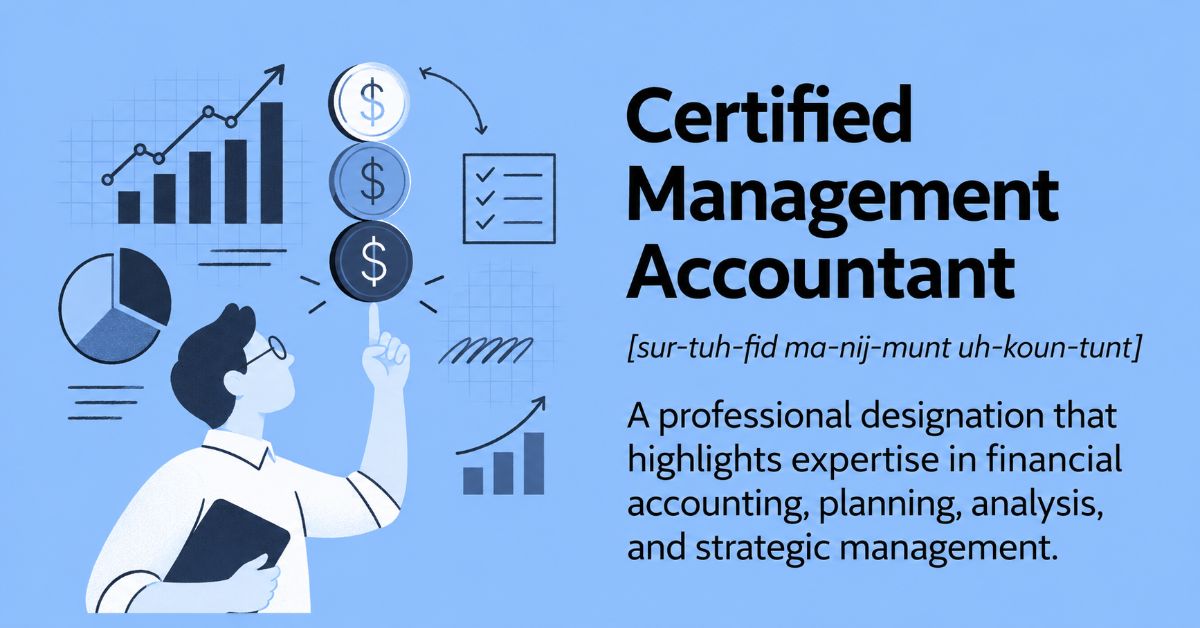
Three letters can send a career search in several directions. If you typed “CMA” because you are comparing accounting credentials, planning a move into corporate finance, or trying to understand what employers mean by the title, the most relevant answer is Certified Management Accountant. The CMA is an IMA credential for accounting and finance professionals who want deeper capability in planning, performance, analytics, cost management, financial decision-making, risk, and business strategy. I checked the current IMA requirements, fee schedule, exam blueprint, and 2026 testing changes so this guide answers the practical questions behind the search, not just the acronym.
The short version is simple: CMA certification is built for people who want to use financial information inside organizations to improve decisions. It is especially relevant to management accountants, FP&A professionals, controllers, finance managers, analysts, and accountants who want to move closer to business leadership. To earn the credential, candidates must pass two exam parts, meet education and relevant work-experience requirements, maintain active IMA membership, and satisfy ongoing continuing education rules after certification.
There is one important search-intent wrinkle. CMA can also mean Cost and Management Accountant in India, Certified Medical Assistant in U.S. healthcare, or the United Kingdom’s Competition and Markets Authority. This article focuses on the IMA Certified Management Accountant because that is the dominant accounting and career meaning of the standalone keyphrase in global professional-certification searches. I will still show you how to recognize the context, then walk through eligibility, the current exam format, 2026 costs, realistic study planning, career fit, and the situations where another qualification may make more sense.
What Does CMA Mean?
In an accounting and corporate-finance context, CMA stands for Certified Management Accountant, a professional certification administered through the Institute of Management Accountants (IMA) and its certification body. It validates knowledge used in internal financial management and strategic decision-making, rather than serving as a public-accounting license.
Because the acronym is shared by unrelated organizations and credentials, context matters. The table below makes the distinction quickly.
| Where you see “CMA” | Meaning | How to recognize the context |
| Corporate finance and accounting | Certified Management Accountant | Mentions IMA, management accounting, FP&A, budgeting, analytics, controllers, or a two-part exam. |
| India accounting profession | Cost and Management Accountant | Mentions ICMAI, Foundation, Intermediate, Final, cost accountancy, or Indian professional practice. |
| U.S. healthcare | Certified Medical Assistant (AAMA) | Mentions clinical or administrative medical assisting, AAMA, patient care, or healthcare employers. |
| UK competition regulation | Competition and Markets Authority | Mentions mergers, consumer protection, market investigations, competition law, or GOV.UK. |
What Does a Certified Management Accountant Actually Do?
A CMA is not defined by one job title. The credential is designed around the work finance teams do when they move beyond recording transactions and start helping managers decide what to do next. That can mean building a rolling forecast, investigating why margins fell, evaluating a capital project, improving internal controls, or translating operating data into a recommendation for senior leadership.
In practice, the CMA body of knowledge maps closely to roles such as financial planning and analysis, management accounting, cost accounting, controllership, commercial finance, finance business partnering, and corporate finance. A controller may use the same underlying skills to strengthen reporting controls that an FP&A manager uses to challenge a sales forecast. The common thread is decision support.
One useful way to judge the credential is to ask whether your work requires you to connect accounting numbers with operating choices. If you routinely explain variances, model scenarios, allocate resources, assess risk, or advise non-finance managers, the CMA syllabus is directly aligned with that work. If your goal is primarily statutory audit, tax practice, or a jurisdiction-specific public-accounting license, a different credential may deserve priority.
Who Should Consider the CMA Certification?
The CMA tends to fit professionals who understand basic accounting and want a stronger route into analytical and managerial work. It also suits experienced accountants moving into roles where they own forecasts, performance reviews, business cases, or strategic finance projects.
An accountant who wants to move from close-and-report work into FP&A or finance business partnering.
A financial analyst who wants a structured foundation in accounting, controls, cost management, and corporate finance.
A controller or finance manager who wants a credential centered on internal decision support and performance management.
A CPA or other qualified accountant who wants to deepen strategy, planning, analytics, and management-accounting skills.
A university student or recent graduate who can complete the exams first and satisfy the experience requirement within the allowed period.
It is less compelling when the letters themselves will not solve the career problem. For example, if a role requires a local audit license, specific tax authority, advanced data engineering, or deep treasury specialization, the CMA may complement that requirement but will not replace it. The strongest use case is a clear match between the syllabus and the work you want to perform.
What Are the CMA Requirements in 2026?
IMA lists four core requirements for earning the Certified Management Accountant credential. Candidates can complete the exams before finishing the education and experience documentation, so the path does not have to happen in a rigid sequence.
1. Maintain active IMA membership and enroll in the CMA program.
2. Pass CMA Part 1 and CMA Part 2. The two parts may be taken in either order.
3. Hold a bachelor’s degree from an accredited college or university, or meet IMA’s route through an approved related professional certification.
4. Complete two continuous years of professional experience in management accounting or financial management. IMA states that the experience can be completed before the exams or within seven years after passing them.
After certification, maintenance becomes part of the commitment. IMA requires 30 hours of continuing professional education each calendar year, including at least two hours in ethics, along with ongoing membership and the CMA maintenance requirements. That continuing education rule matters when you compare total long-term effort, because the credential is not a one-time exam badge.
The following table separates what you need to sit for exams from what you need to actually receive and retain the designation.
| Stage | Requirement | Practical meaning |
| Enter the program | IMA membership plus CMA program enrollment | You can begin the certification process and register for an exam part. |
| Pass the exams | Part 1 and Part 2 | Either part can be taken first; both are required. |
| Earn the credential | Education plus two continuous years of relevant experience | Exam success alone does not make you a CMA until the certification requirements are verified. |
| Maintain the credential | 30 CPE hours yearly, including 2 ethics hours, plus active membership | Plan for recurring professional-development time and annual fees. |
What Is on the CMA Exam?
The CMA exam has two four-hour parts covering 12 weighted competency areas. Part 1 concentrates on planning, performance, reporting, controls, costs, and analytics. Part 2 moves further into financial analysis, corporate finance, decision analysis, risk, investment decisions, and professional ethics.
The official content weights are useful for study planning because they show where the exam devotes relatively more attention. They are not a license to ignore a smaller domain, but they can help you allocate review time intelligently.
| Exam part | Topic | Weight |
| Part 1 | External Financial Reporting Decisions | 15% |
| Part 1 | Planning, Budgeting, and Forecasting | 20% |
| Part 1 | Performance Management | 20% |
| Part 1 | Cost Management | 15% |
| Part 1 | Internal Controls | 15% |
| Part 1 | Technology and Analytics | 15% |
| Part 2 | Financial Statement Analysis | 20% |
| Part 2 | Corporate Finance | 20% |
| Part 2 | Business Decision Analysis | 25% |
| Part 2 | Enterprise Risk Management | 10% |
| Part 2 | Capital Investment Decisions | 10% |
| Part 2 | Professional Ethics | 15% |
How Did the CMA Exam Format Change in 2026?
A major 2026 change affects candidates testing in English. IMA made case-based questions the standard constructed-response format beginning with the September/October 2026 testing window across the Americas, Europe, the Middle East, Asia Pacific, and Africa. The May/June 2026 window was the final English window in those regions where candidates could choose essays instead. IMA notes that China, Taiwan (China), and Japan continue to offer essay questions on the English and local-language exams.
The core syllabus and rigor did not change with the new response format. IMA states that case-based questions test the same topics and carry the same weighting as the former essay section. Candidates still need at least 50% correct on the multiple-choice section to proceed to the constructed-response section. For someone preparing now, that means practice should include not only isolated calculations but also interpreting a short business scenario, selecting relevant information, and completing connected tasks under time pressure.
How Much Does the CMA Cost in 2026?
The official IMA fee page currently lists different pricing for professional, student, and academic members. For professional members, the CMA entrance fee is $300, each exam part is $545, and annual IMA membership is $295. Student and academic candidates have lower entrance and exam fees, while their membership rates differ.
The table below shows the current listed program costs before optional review courses, books, travel, rescheduling charges, or retakes. The calculated initial totals include one year of membership, the entrance fee, and both exam parts. The $30 CMA annual maintenance fee is shown separately because it applies to maintaining the certification.
| Fee item | Professional | Student | Academic |
| IMA membership | $295 | $49 | $160 |
| CMA entrance fee | $300 | $225 | $225 |
| Exam fee per part | $545 | $407 | $407 |
| Both exam parts | $1,090 | $814 | $814 |
| Calculated initial total | $1,685 | $1,088 | $1,199 |
| CMA annual maintenance fee | $30 | $30 | $30 |
Fees can change, promotions can temporarily reduce some charges, and local taxes or payment costs may apply. For that reason, treat these numbers as a September 2026 planning baseline and verify the checkout amount on IMA’s current enrollment page before paying.
How Long Does CMA Certification Take?
There is no single completion time because candidates start with different accounting backgrounds, workloads, and study capacity. The exam calendar itself creates a natural rhythm: IMA normally offers testing windows in January/February, May/June, and September/October. That makes it practical to plan one part per window or use a longer gap when work is busy.
A better planning method is to work backward from a test date. First, pick the part that best matches your current strengths. Next, map the official topic weights to a study calendar. Reserve the final phase for mixed practice that forces you to switch among calculations, concepts, interpretation, and case-based tasks. That final integration is important because real exam questions do not arrive grouped neatly by textbook chapter.
Do not confuse exam completion with certification completion. A student can pass both parts and still need qualifying experience before the CMA designation is awarded. Conversely, an experienced finance professional may already satisfy the work requirement and only need to complete the exams and education verification. Your timeline should therefore track two parallel lanes: exam readiness and credential eligibility.
How Should You Study for the CMA Exam?
A useful CMA study plan works like a finance process: define the output, identify gaps, measure performance, and adjust. Reading alone gives weak evidence that you can apply a concept under exam conditions.
1. Start with the official Content Specification Outline and Learning Outcome Statements. Build your plan around what IMA says can be tested, not around the order of a review book.
2. Take a diagnostic set before deep study. Separate errors into knowledge gaps, calculation mistakes, misread questions, and time-management problems.
3. Use topic weights to allocate time, but protect weak areas. A 10% domain can still cost enough points to matter if you leave it untouched.
4. Practice calculations without over-relying on memorized templates. Be able to explain why a formula fits the business situation.
5. Add case-based practice early. The September/October 2026 format makes scenario interpretation a core test skill, not something to save for the last weekend.
6. Finish with mixed, timed sets and a review log. Rework the questions you missed until you can state the reason the correct answer wins and why the distractors fail.
The most useful progress metric is not hours at the desk. It is whether your accuracy and decision speed improve on fresh questions. If a study week produces many notes but no measurable improvement on practice, change the method rather than simply adding more hours.
CMA vs CPA vs ACCA: Which Direction Fits Your Goal?
CMA, CPA, and ACCA overlap, but they solve different career problems. CMA centers on management accounting and strategic finance inside organizations. In the United States, the CPA is a state-issued professional license used heavily in public accounting, audit, tax, and attest work. ACCA is a broad international accountancy qualification covering reporting, audit, tax, performance, and strategy.
Choose based on the work you want permission and credibility to perform, not on which acronym looks strongest. Someone targeting U.S. public accounting may need the CPA first. Someone building a multinational accounting career may compare ACCA requirements in the countries where they plan to work. Someone aiming for FP&A, controllership, business partnering, or internal finance leadership may find the CMA more directly aligned with daily responsibilities.
Combinations can make sense. A CPA moving into industry can use the CMA to deepen planning and decision analysis. A CMA who later needs a public-accounting license may pursue the CPA if local rules allow it. Stack credentials only when each one closes a real capability or market-access gap.
Is the CMA Worth It for Your Career?
The value of CMA certification depends on role fit, employer recognition, geography, and what you do with the knowledge. IMA’s 2023 Global Salary Survey, which is association research rather than a guarantee of individual outcomes, reported a 21% higher salary for CMAs versus noncertified peers and said 69% of CMAs reported that the certification helped their professional growth. Those figures are useful evidence of association among surveyed professionals, but they should not be treated as a promised raise.
The stronger business case is skill leverage. If the credential helps you move from producing reports to influencing decisions or from narrow accounting work to broader finance ownership, the return can appear through role access and responsibility before compensation changes.
Before enrolling, compare the full cost with a specific career target. Write down three roles you want within the next two to four years. Review real job descriptions in your market and count how often CMA, management accounting, budgeting, forecasting, cost analysis, controls, or financial modeling appears. If the credential and syllabus repeatedly match the work, the decision has a stronger evidence base than a generic claim that CMA is “good for finance.”
How Can You Decide Whether CMA Is the Right Next Step?
A simple decision filter can prevent wasted exam fees and months of unfocused study. Answer these questions before you enroll:
Do the roles I want involve internal planning, performance analysis, cost decisions, controls, capital allocation, or strategic finance?
Will employers in my target market recognize IMA’s CMA, or do they usually require a different local qualification?
Can I realistically satisfy the education and two-year relevant-experience requirement?
Can I fund the exam path without relying on a salary increase that may not happen immediately?
Am I willing to maintain the credential through annual CPE, ethics education, membership, and maintenance fees?
If most answers are yes, CMA is a coherent next step. If the main answer is “I just want another credential,” pause and define the career outcome first. Professional qualifications create the most value when they reinforce a direction you can already describe in concrete job terms.
Conclusion
For accounting and corporate-finance searchers, CMA most commonly means Certified Management Accountant. Its real value is not the acronym itself but the combination of planning, analytics, controls, cost management, corporate finance, decision analysis, and ethics that the credential tests. In 2026, candidates should also account for the shift to case-based questions in most English exam regions and the current IMA fee structure before building a study plan.
The best next move is to match the credential to a target role. If you want to help businesses forecast, allocate resources, measure performance, manage risk, and make better financial decisions, the CMA is worth serious consideration. If your goal is public practice, a jurisdiction-specific license, or another specialty, compare that route first and use the CMA only where it adds distinct value.
CMA FAQs
Is CMA the same as a degree?
No. The IMA CMA is a professional certification, not an academic degree. Earning it requires passing the two exam parts and meeting IMA’s education, experience, membership, and certification rules.
Can I take CMA Part 2 before Part 1?
Yes. IMA allows candidates to take Part 1 and Part 2 in either order. Choose the sequence that best matches your background and study plan.
Can students take the CMA exam before getting work experience?
Yes. Candidates may complete the exams before finishing the experience requirement. IMA states that the required two continuous years of relevant experience can be completed before the exam or within seven years after passing it.
Does the CMA exam still have essays in 2026?
For most English-language testing regions, case-based questions became the standard beginning with the September/October 2026 window. IMA says China, Taiwan (China), and Japan continue to offer essay questions on English and local-language exams.
How many CPE hours does a CMA need each year?
IMA requires 30 hours of continuing professional education each calendar year after certification, including at least two hours in ethics. Active membership and other maintenance requirements also continue.
What jobs can CMA certification support?
The credential aligns well with roles such as FP&A analyst or manager, management accountant, cost accountant, controller, finance manager, commercial finance professional, and other positions that combine accounting with internal business decision support.
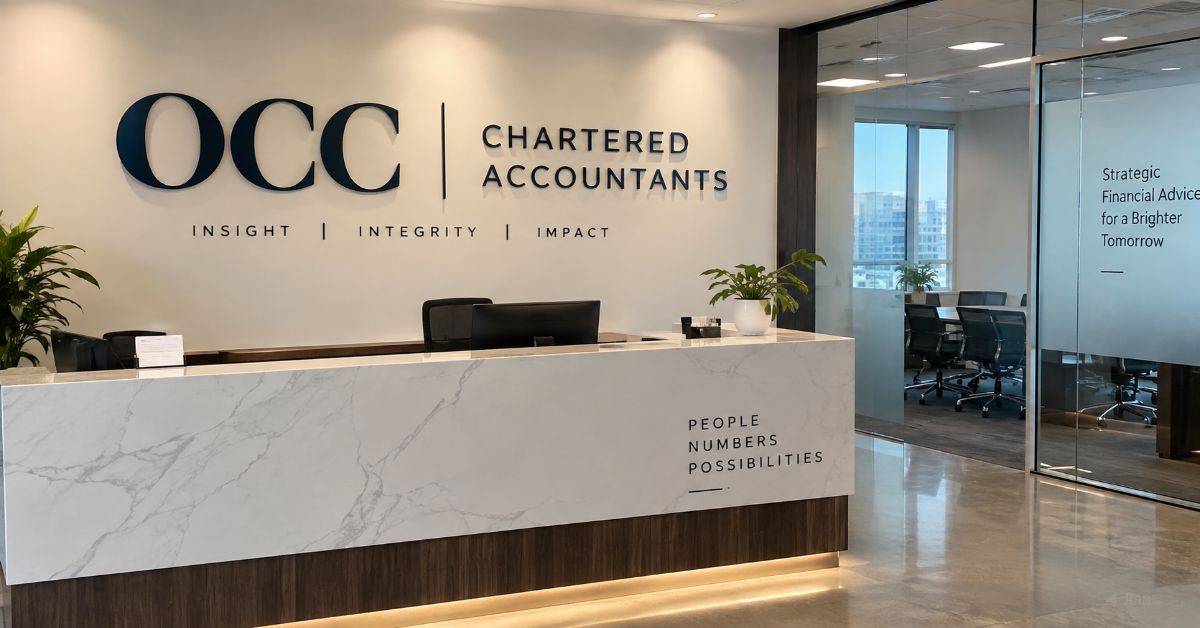
A search for OCC Chartered Accountants looks simple until you try to confirm what is current and what belongs to an older online footprint. I would start with one rule: separate verifiable present-day information from directory entries that may have remained online after a business changed, moved, or stopped using a particular name. Public records associate OCC Chartered Accountants with Blanchardstown Corporate Park in Dublin 15, and older listings provide a telephone number and identify Caragh Beggy, with one directory spelling her first name as Carragh, as a partner. At the same time, another business directory marks the OCC Accountants listing as closed, while the former occaccountants.ie website is no longer an active source of current service information.
For someone searching the name today, the practical answer is that OCC Chartered Accountants is best understood as a Dublin accountancy practice with a documented history in Blanchardstown, but its current operating status should be verified before relying on old contact or service details. MBT Chartered Accountants states on its current website that Caragh Beggy and Margaret Traynor previously worked together at OCC Chartered Accountants before establishing McDowell Beggy Traynor, trading as MBT Chartered Accountants, in 2020. Current audit-register information also places Caragh Beggy with MBT, not with an OCC firm listing.
That distinction matters if you are trying to appoint an accountant, trace an address shown in Irish company records, verify a historic professional connection, or simply work out whether an old OCC contact is still usable. This guide brings those questions together, explains what can be checked, and shows how to verify an Irish accountant or audit firm without assuming that an archived website or directory result is still current.
What is OCC Chartered Accountants?
OCC Chartered Accountants is a name associated in public business records with a chartered accountancy practice in Blanchardstown, Dublin 15. An IrishTrade business listing gives the address as Unit 15, Block 8, Blanchardstown Corporate Park, Dublin 15 and lists the telephone number 01 885 5877. The same listing names Carragh Beggy as a partner, while more current professional sources use the spelling Caragh Beggy.
The most useful way to interpret the name is as a specific practice identity, not as a general accounting qualification. That is important because the letters OCC can also refer to unrelated organisations in other countries. In this search context, the surrounding evidence points to the Dublin practice rather than, for example, Portugal’s Ordem dos Contabilistas Certificados.
For a reader trying to locate or evaluate the firm, the core answer is concise: OCC Chartered Accountants has a documented Dublin 15 history, but the available online evidence does not support treating every old address, website, team reference, or service claim as current. Verify the present practice name and professional registration before sending documents, appointing an agent, or relying on historical contact details.
What do public records show about OCC Chartered Accountants?
The table below separates details that can still be found in public sources from the caution needed when interpreting them.
| Detail | What public sources show | How to interpret it |
| Practice name | OCC Chartered Accountants / OCC Accountants | A documented Dublin practice name with a legacy online footprint. |
| Location | Unit 15, Block 8 or Block 8A, Blanchardstown Corporate Park, Dublin 15 | Address wording varies between records. Confirm the current office before visiting or posting documents. |
| Telephone | 01 885 5877 | Appears in older business listings. Treat it as historical until independently confirmed. |
| Named professional | Caragh Beggy, with an older directory spelling “Carragh” | Current audit-register information associates Caragh Beggy with MBT Chartered Accountants. |
| Website | occaccountants.ie appears in historical listings | The old website is not a reliable current source of services or status. |
| Current-status signal | One directory marks OCC Accountants closed | Useful evidence, but a directory alone is not a legal status determination. |
The address appears in numerous Irish company records because companies can use a professional or authorised agent’s address as a registered office. That relationship should not be misunderstood. An accountant’s address appearing beside a company name does not prove that the accountant owns, controls, or directs that company.
Is OCC Chartered Accountants still operating?
The public evidence is mixed, so a definitive claim that OCC Chartered Accountants is currently operating under the same name would go beyond what the available sources establish. IrishTrade still hosts a business listing for OCC, while BizIreland marks an OCC Accountants listing as closed. The old website address survives in directories, but it is not functioning as a dependable current firm website.
There is also a significant professional-history clue. MBT Chartered Accountants says Caragh Beggy and Margaret Traynor worked together at OCC Chartered Accountants before setting up their own practice in 2020. The public Audit Register currently identifies Caragh Beggy FCA as a statutory auditor, director, owner, and management-board member of McDowell Beggy Traynor Limited. Those records confirm where that named professional is currently associated, but they do not by themselves prove that every part of the former OCC practice was transferred, renamed, or closed.
For practical purposes, anyone searching OCC today should treat the name as requiring verification. If a contract, invoice, registered-office record, or old email refers to OCC, confirm the legal or trading name of the firm you are dealing with now. This is especially important before authorising access to tax records, sending identity documents, or paying professional fees.
What services were associated with OCC Accountants?
Historical descriptions of OCC Accountants presented it as a chartered accountancy practice offering audit and assurance, accountancy, consultancy, and tax advisory work. Because the original website is not a maintained current source, those categories should be treated as historical descriptions rather than a guaranteed present-day OCC service menu.
The connection with MBT provides useful context without proving continuity of every service. MBT’s current site lists audit and assurance, taxation, company legal and secretarial work, forensic and litigation support, and business services. Its about page also states that both founding accountants had previously worked at OCC. That makes the service overlap relevant as professional background, but it would be inaccurate to say every MBT service was necessarily an OCC service or that MBT is simply OCC under a new name.
This comparison keeps the evidence in the right lane:
| Service area | Evidence connected with OCC history | What can be said safely today |
| Audit and assurance | Historical OCC descriptions included auditing and assurance. | Confirm the current audit firm on the public Audit Register before appointing it. |
| Accountancy | Historical OCC descriptions included accountancy services. | Ask which bookkeeping, accounts-preparation, and management-reporting work is currently offered. |
| Tax | Historical OCC descriptions included tax advisory services. | Confirm the current agent identity and authorisation process through Revenue. |
| Consultancy | Older descriptions referred broadly to consultancy. | Request a written scope because “consultancy” can cover very different assignments. |
| Company administration | The OCC address appears in records for multiple Irish companies. | An address connection may reflect registered-office or administrative services, not ownership. |
Why does OCC Chartered Accountants appear in Irish company records?
The recurring OCC address is one reason the keyphrase appears in searches that are not directly about the accountancy firm. A person may search the name after seeing “C/O OCC Chartered Accountants” on a company page, legal notice, archived tax-support list, or corporate database.
Irish company law helps explain this pattern. The Companies Registration Office states that every company must maintain a registered office in the State and that the registered office is where CRO correspondence and formal legal notices are sent. The CRO also confirms that a company can place its registered office in the care of an authorised Registered Office Agent.
That means a professional address can legitimately appear across many otherwise unrelated company records. It is a correspondence and compliance mechanism. It is not evidence that the accountancy practice is a shareholder, director, parent company, or beneficial owner of every business using the address.
When researching an individual company, read the address field alongside the company’s own directors, shareholders where available, status, filings, and official CRO information. Do not use the accountant’s address alone to infer a corporate relationship.
How should you verify an accountant before appointing one?
A name, old website, or business-directory profile is not enough when you are giving a professional access to financial records. A better process checks identity, qualification, authorisation, scope, and data access separately.
How do you verify professional status?
Chartered Accountants Ireland provides an online directory for firms and individual members. Its own guidance notes that the word “accountant” is not itself a protected professional title in the same way many consumers assume, so checking the professional qualification and current registration matters. Search the exact firm name and the individual who will be responsible for your work, rather than relying only on a logo or a historical designation in a directory.
How do you check audit authorisation?
Audit work has an additional layer. Chartered Accountants Ireland explains that a firm must be granted audit registration before it is eligible to accept regulated audit appointments, and individuals who sign audit reports must hold the appropriate responsible-individual or statutory-auditor status. The public Audit Register is therefore a more relevant check for an audit appointment than a general business directory.
How does tax-agent access work?
Revenue confirms that a business can use a tax agent and that an authorised agent can access the client’s Revenue record through the agent’s own credentials. Revenue also warns clients not to hand over their personal ROS or myAccount login details to an agent. Since 2025, agent linking is handled through an approval workflow in ROS, myAccount, or MyEnquiries for many users, which gives the client a clear opportunity to approve or reject the link request.
The following due-diligence sequence is useful whether the name on the proposal is OCC Chartered Accountants or another Irish firm:
| Check | What to verify | Why it matters |
| 1. Practice identity | Current legal/trading name, address, phone, email, and engagement letter | Prevents reliance on stale directory data. |
| 2. Professional registration | Firm and responsible accountant in the relevant professional directory | Confirms the person or practice is currently identifiable through the professional body. |
| 3. Audit registration | Public Audit Register entry when statutory audit is required | A general accounting qualification alone does not establish audit authorisation. |
| 4. Tax-agent link | Revenue authorisation through the official client-linking process | Avoids sharing your own login credentials and creates a traceable authorisation. |
| 5. Service scope | Written deliverables, deadlines, records required, fee basis, and named contact | Reduces confusion about what the accountant is actually responsible for. |
| 6. Data handling | Secure document-transfer method and who can access records | Financial and identity documents require controlled handling. |
What should you ask before hiring OCC Chartered Accountants or another firm?
If you reach an old OCC contact or are referred to a successor or related professional, do not assume the engagement terms from years ago still apply. Ask questions that produce concrete, checkable answers.
What is the exact legal and trading name that will appear on my engagement letter and invoices?
Who will be the accountant responsible for my work, and what professional body is that person registered with?
Do you currently provide the specific service I need, such as corporation tax, payroll, management accounts, statutory audit, company secretarial work, or forensic accounting?
If an audit is required, which registered audit firm will accept the appointment and who is authorised to sign the report?
How will Revenue agent access be authorised, and will I retain control of my own ROS or myAccount credentials?
What documents do you need from me, how should I send them securely, and how long will you retain them?
What is included in the quoted fee, and what work would trigger an additional charge?
These questions do more than test responsiveness. They reveal whether the firm has a clear engagement process, whether the professional identity matches the public registers, and whether sensitive access is being handled through official channels.
What does the OCC to MBT connection tell us?
The OCC to MBT link is useful because it gives a documented piece of professional history rather than a speculative rebranding story. MBT states that Caragh Beggy and Margaret Traynor had worked together at Anne Brady and Associates and OCC Chartered Accountants before establishing McDowell Beggy Traynor in 2020. MBT now describes itself as Chartered Accountants and Registered Auditors, and the Audit Register records McDowell Beggy Traynor Limited as registered by Chartered Accountants Ireland.
What this tells us is specific: named professionals with OCC experience later founded another accountancy practice. What it does not tell us is equally important. It does not establish that MBT acquired OCC, that OCC formally changed its name to MBT, that all OCC clients moved to MBT, or that every historical OCC service continues there. Those are separate claims and would require separate evidence.
For searchers, this is a good example of why entity verification matters. A person’s professional career can continue under a new firm while old directory pages remain indexed for years. Search engines may show both, but a current professional register and the firm’s maintained website should carry more weight than an undated or unmaintained listing.
How was the information in this guide verified?
The factual points in this guide were cross-checked against current or primary sources where possible. IrishTrade was used for the legacy OCC address, telephone number, and listed partner. BizIreland was used only to note that its OCC Accountants listing is marked closed. MBT Chartered Accountants’ own website was used for the statement that Caragh Beggy and Margaret Traynor previously worked at OCC and established MBT in 2020. The public Audit Register was used to verify Caragh Beggy’s current association with McDowell Beggy Traynor Limited. CRO and Revenue guidance was used for registered-office and tax-agent procedures.
This source hierarchy matters. A directory can help locate a historical clue, but it should not override a professional register, regulator, government guidance, or a firm’s maintained official site when the sources conflict.
Primary verification sources:
IrishTrade, OCC Chartered Accountants listing
MBT Chartered Accountants, About
Audit Register, McDowell Beggy Traynor Limited
Companies Registration Office, Registered Office
Revenue, Do you need a tax agent?
Chartered Accountants Ireland, Find a Chartered Accountant
Conclusion: what is the practical takeaway?
OCC Chartered Accountants has a real, traceable history in Dublin 15, but its online footprint now functions more like a set of legacy records than a complete current firm profile. The most reliable current evidence connects former OCC professionals with MBT Chartered Accountants, while old OCC contact information remains visible in directories and company-address records.
If your goal is simply to identify the name, that history explains why OCC appears across Irish business searches. If your goal is to hire an accountant, appoint an auditor, confirm a registered office, or authorise tax access, use current professional registers and official client-authorisation channels before acting. The practical value is not in finding the oldest listing. It is in identifying the professional entity that is accountable for the work today.
FAQs about OCC Chartered Accountants
Where was OCC Chartered Accountants based?
Public business listings associate OCC Chartered Accountants with Unit 15, Block 8 or Block 8A, Blanchardstown Corporate Park, Dublin 15, Ireland. Because the wording varies and the listing may be historical, confirm the current address before visiting or sending original documents.
What phone number is associated with OCC Chartered Accountants?
The number 01 885 5877 appears in public historical listings for OCC Accountants. It should be treated as a legacy contact detail until you confirm that it still reaches the intended practice or professional.
Is occaccountants.ie still the official OCC Chartered Accountants website?
The domain appears in older directory records, but it is not a dependable maintained source for current OCC services or team information. Use a current professional directory or verified firm website before relying on information copied from the old domain.
Is Caragh Beggy still with OCC Chartered Accountants?
Current public sources associate Caragh Beggy FCA with McDowell Beggy Traynor Limited, trading as MBT Chartered Accountants. MBT’s website says she and Margaret Traynor previously worked at OCC Chartered Accountants before establishing MBT in 2020.
Does an OCC address on a company record mean OCC owns that company?
No. An accountant’s address can appear because a company uses a professional or authorised agent for its registered office or correspondence. Ownership and control must be checked through the company’s actual corporate records, not inferred from the care-of address.
How can I confirm whether an accounting firm is authorised to carry out audits in Ireland?
Check the public Audit Register and the relevant professional body’s directory. Chartered Accountants Ireland states that a firm must have audit registration before accepting regulated audit appointments, and the individual signing the audit report must have the appropriate authorisation.

A notebook full of goals can look productive and still change nothing. I approach personal development as a repeatable process: decide what capability, behavior, or life area matters most, practice a small set of actions consistently, review the evidence, and adjust. If you searched for personal development because you want to improve yourself without getting trapped in motivational hype, this guide gives you a practical way to start and keep going.
The useful version of growth is not a constant reinvention of your personality. It is the deliberate improvement of skills, habits, self-awareness, decision making, relationships, and routines that affect how you live and work. That can mean learning to communicate more clearly, becoming more reliable with money, building a sustainable exercise routine, improving emotional regulation, developing leadership skills, or making better use of focused time. The goal is not to become a different person every month. The goal is to become more capable of doing what matters to you.
This article treats personal growth as a system rather than a mood. You will learn how to choose a development target, convert a broad goal into observable behavior, use cues that make action easier, measure progress without obsessing over streaks, and review your plan in a way that produces better decisions. The framework is grounded in established research on goal setting, implementation intentions, motivation, and habit formation, including work by Edwin Locke and Gary Latham, Peter Gollwitzer and Paschal Sheeran, Richard Ryan and Edward Deci, and Phillippa Lally and colleagues.
By the end, you should be able to build a personal development plan that is specific enough to follow this week, flexible enough to survive an imperfect month, and meaningful enough to keep using after the initial burst of enthusiasm fades.
What is personal development, and what does it actually include?
Personal development is the intentional process of improving the skills, behaviors, self-knowledge, and systems that help you function better in areas that matter to you. It works best when you focus on a small number of observable changes, practice them in a consistent context, and review evidence of progress instead of relying on motivation alone.
The phrase is broad, so it helps to separate development into domains. You do not need to work on all of them at once. In fact, trying to improve everything simultaneously usually makes progress harder to see and harder to sustain.
This table shows how common personal development goals translate into something concrete enough to act on and measure.
| Development domain | What you may be trying to improve | Useful evidence of progress | Common mistake |
| Self-awareness | Recognizing patterns, values, triggers, strengths, limits | Weekly reflection notes; clearer decisions; fewer repeated avoidable mistakes | Collecting personality labels without changing behavior |
| Skills and career | Communication, leadership, technical ability, planning | Completed practice; feedback; stronger work samples; faster or more accurate performance | Consuming courses without deliberate practice |
| Health routines | Sleep schedule, movement, food planning, recovery | Consistency of chosen behaviors; energy; adherence to medical or fitness guidance where relevant | Changing too many routines at once |
| Relationships | Listening, boundaries, conflict repair, reliability | Fewer unresolved conflicts; follow-through; direct conversations; better feedback | Treating other people as a self-improvement project |
| Personal systems | Money, time, digital habits, home organization | Bills paid on time; fewer missed tasks; lower friction; predictable routines | Optimizing tools before defining the problem |
Why does personal development fail even when motivation is high?
Most stalled growth plans are not caused by a lack of ambition. They fail because the goal is too vague, the action is too large, the cue is missing, or the person has no review process. Personal development becomes more reliable when each of those problems is handled deliberately.
Personal development needs fewer goals, not more
Goal-setting research summarized by Edwin Locke and Gary Latham describes decades of evidence showing that specific, challenging goals can improve performance when people have appropriate ability, commitment, feedback, and resources. The practical lesson is not to set the biggest possible target. It is to replace fuzzy intentions such as “be more confident” with a clear result or behavior you can actually practice.
For example, “become a better communicator” is difficult to execute. “In each team meeting, summarize the decision, owner, and deadline before the discussion ends” creates a behavior you can repeat and evaluate. A useful personal development goal should narrow attention rather than multiply demands.
Turn intentions into cues and behaviors
A goal tells you what you want. An implementation intention tells you when and how you will act. In a 2006 meta-analysis, Peter Gollwitzer and Paschal Sheeran reviewed 94 independent tests and found that if-then planning produced a medium-to-large positive effect on goal attainment, reported as d = .65. Their work supports a simple format: “If situation Y occurs, then I will perform behavior X.”
That structure is especially useful for personal development because many good intentions fail at the moment of action. “I will read more” still leaves several decisions unresolved. “After I make morning coffee on weekdays, I will read ten pages before opening social media” gives the behavior a cue, a place in the day, and a minimum amount.
Motivation lasts longer when goals feel chosen and meaningful
Self-determination theory, developed by Richard Ryan and Edward Deci, emphasizes autonomy, competence, and relatedness as important psychological needs linked with stronger self-motivation and well-being. For a development plan, that means the reason behind the goal matters. A target chosen mainly to impress someone else may be difficult to sustain when the external pressure disappears.
Before committing to a goal, ask: “If nobody could see this progress, would it still improve my life?” If the answer is no, reconsider the target. Personal growth becomes more durable when it reflects your values, improves a capability you care about, and creates visible evidence that you are getting better.
How do you create a personal development plan that works?
A useful plan is short enough to remember and specific enough to run without daily negotiation. I recommend building it around one development theme for a defined period, then using a weekly review to decide whether to continue, adjust, or replace the system.
Choose one 30- to 90-day development theme. Examples include speaking more clearly in meetings, improving sleep regularity, rebuilding a reading habit, or strengthening financial organization.
Define the outcome in observable terms. State what will be different at the end of the period, such as completing four practice presentations or paying every bill before its due date.
Choose one to three repeatable behaviors. These are the actions under your control, such as rehearsing for 20 minutes three times per week or reviewing spending every Friday.
Attach each behavior to a reliable cue. Use a time, location, existing routine, or event that already occurs consistently.
Lower the minimum version. Define what counts on a difficult day so the system remains usable. Ten minutes of practice may be the minimum even if the normal session is 30 minutes.
Track evidence, not emotion. Record whether the behavior happened and what changed. Avoid rating the plan only by whether you felt motivated.
Review weekly. Keep what is working, remove unnecessary friction, and increase difficulty only when the current version is stable.
The table below shows how to convert a broad aspiration into a personal development system that can be scheduled and reviewed.
| Broad goal | Observable outcome | Repeatable behavior | Cue or trigger | Weekly evidence |
| Be more confident at work | Lead one project update without avoiding difficult points | Rehearse key message and three likely questions | Tuesday and Thursday at 4:30 p.m. | Two rehearsals completed; feedback noted |
| Read more | Finish two useful books in eight weeks | Read 10 pages | After morning coffee | Pages read; notes captured |
| Manage money better | No late bills and a current monthly spending view | Review accounts and upcoming bills | Friday after lunch | Review completed; bills scheduled |
| Improve fitness consistency | Complete planned sessions for four weeks | Do the scheduled workout or minimum 10-minute version | Immediately after changing from work clothes | Sessions completed; minimum versions used |
How should you build habits without relying on motivation?
Habits make some personal development behaviors easier because repeated actions in a stable context can become more automatic. The mistake is assuming that a habit forms on a universal timetable. Real behavior change varies substantially by the person, the behavior, and the environment.
Start smaller than your ambition
A small action is not a small goal. It is a low-friction entry point. If your development target is writing, the minimum might be opening the document and writing 100 words. If the target is mobility, the minimum might be five minutes after brushing your teeth. The minimum should be easy enough to complete during a busy day but meaningful enough to preserve the pattern.
Once the pattern is stable, increase difficulty gradually. This creates a cleaner feedback loop because you can tell whether the system itself works before adding more volume.
Make the cue obvious and repeatable
Behavior is easier to repeat when the starting condition is clear. “Practice sometime after work” still requires a decision. “When I close my laptop at 6 p.m., I will spend 15 minutes practicing before dinner” is easier to recognize and execute. If the cue frequently fails, change the environment before blaming your discipline.
Practical environmental changes include placing a book on the chair where you drink coffee, preparing workout clothes in advance, blocking a distracting website during a scheduled focus period, or putting a recurring review on your calendar. The environment should make the desired action more obvious and the competing action slightly less convenient.
Treat missed days as data, not failure
Phillippa Lally and colleagues followed 96 volunteers who repeated a chosen eating, drinking, or activity behavior in the same context for 12 weeks. Among participants whose data fit the habit model, the time to reach 95 percent of the estimated automaticity plateau ranged from 18 to 254 days. The study also found that missing one opportunity did not materially affect the habit-formation process.
That result is useful because it replaces the fragile streak mindset with a better rule: recover quickly. If you miss once, use the next planned cue. If you miss repeatedly, investigate the system. The problem may be the cue, the difficulty, the timing, or a goal that is no longer important.
How do you measure personal development?
Personal development is easier to sustain when you can see evidence at three levels: inputs, outputs, and outcomes. Inputs are the behaviors you perform. Outputs are the immediate products of those behaviors. Outcomes are the larger changes you ultimately care about.
For a communication goal, an input might be two rehearsals, an output might be a recorded five-minute presentation, and an outcome might be clearer stakeholder feedback or fewer misunderstandings. Measuring only outcomes can be discouraging because they often change slowly. Measuring only inputs can be misleading because activity is not always improvement. Use all three.
A simple weekly scorecard keeps the review focused on decisions rather than self-judgment.
| Review level | Question to ask | Example measure | What the answer tells you |
| Input | Did I do the planned practice? | 2 of 3 sessions completed | Whether the system was executed |
| Output | What did the practice produce? | One recorded presentation and feedback notes | Whether practice created usable evidence |
| Outcome | Is the larger result changing? | Fewer unclear follow-up questions after meetings | Whether the development target is improving real life |
| Friction | What repeatedly made action harder? | Late meetings disrupted the cue twice | What to redesign next week |
What should you review each week?
A weekly review can be brief. Ten to twenty minutes is enough when your measures are simple. Use the same questions so patterns become easier to spot.
What did I actually do, and what evidence did it create?
Where did the plan break down: cue, time, difficulty, environment, skill, or commitment?
What is the smallest change that would make next week easier to execute?
Do not redesign the entire plan after one weak week. Change one variable, observe the result, and keep notes. That turns self-improvement into a learning process instead of a cycle of emotional restarts.
What does a realistic 30-day personal development plan look like?
A month is long enough to gather useful evidence but short enough to maintain focus. The point is not to transform your life in 30 days. It is to leave the month with a working system, a clearer understanding of your behavior, and proof of what deserves more attention.
Week 1: Audit and design. Choose one theme, define the outcome, select one to three behaviors, and identify reliable cues. Record a baseline where possible.
Week 2: Stabilize. Keep the actions deliberately manageable. Notice when and why you skip them. Remove obvious friction before increasing difficulty.
Week 3: Add challenge. Increase duration, complexity, or quality only if the current version is being completed consistently. Seek feedback when the goal involves a skill.
Week 4: Review and decide. Compare the first week with the fourth. Keep the system if it is producing evidence of progress, adjust it if execution is inconsistent, or replace the goal if it no longer matters.
At day 30, write a short decision statement: continue, adjust, or conclude. That one sentence prevents a common personal development problem in which goals remain open indefinitely without a clear reason.
What should you avoid in personal development?
Some approaches feel productive because they generate planning, tracking, or inspiration, but they do not create better behavior. Watch for these patterns:
Collecting goals faster than you complete them. A long list can hide the absence of priorities.
Confusing consumption with practice. Reading about negotiation is not the same as rehearsing a difficult conversation and getting feedback.
Changing systems too quickly. If you switch apps, routines, and methods every few days, you cannot tell what actually works.
Treating every problem as a mindset problem. Some obstacles require skills, money, time, health support, better information, or a change in environment.
Using another person as your benchmark. Comparison can supply ideas, but it cannot tell you which tradeoffs fit your values or circumstances.
Turning personal development into permanent dissatisfaction. Improvement is useful when it expands your capacity to live well, not when it makes ordinary human limitations feel unacceptable.
What evidence supports this personal development framework?
The framework above combines established findings rather than relying on a single self-help method. These sources are especially relevant to the practical recommendations in this article:
Locke, E. A., & Latham, G. P. (2002). Building a practically useful theory of goal setting and task motivation: A 35-year odyssey. American Psychologist, 57(9), 705-717. DOI: 10.1037/0003-066X.57.9.705.
Gollwitzer, P. M., & Sheeran, P. (2006). Implementation intentions and goal achievement: A meta-analysis of effects and processes. Advances in Experimental Social Psychology, 38, 69-119. DOI: 10.1016/S0065-2601(06)38002-1.
Ryan, R. M., & Deci, E. L. (2000). Self-determination theory and the facilitation of intrinsic motivation, social development, and well-being. American Psychologist, 55(1), 68-78.
Lally, P., van Jaarsveld, C. H. M., Potts, H. W. W., & Wardle, J. (2010). How are habits formed: Modelling habit formation in the real world. European Journal of Social Psychology, 40, 998-1009. DOI: 10.1002/ejsp.674.
Conclusion
Personal development becomes more useful when you stop asking whether you are “becoming your best self” and start asking what is measurably easier, clearer, stronger, or more reliable than it was before. Choose one meaningful area, define the behavior, connect it to a cue, practice at a sustainable level, and review evidence every week.
The deepest advantage of this approach is not perfect consistency. It is better self-knowledge. Each cycle teaches you which goals matter, which environments help, which skills need practice, and which plans looked good on paper but did not fit your life. That evidence gives you a stronger foundation for the next round of growth.
Frequently Asked Questions About Personal Development
How long does personal development take?
There is no fixed timeline because different goals require different skills, contexts, and levels of practice. Use 30 to 90 days as a review window for one focused development theme, then decide whether to continue, adjust, or replace the plan based on evidence.
What is the best first step in personal development?
Choose one area where improvement would make a noticeable difference in daily life, then define one observable behavior you can repeat this week. Starting with a behavior is more actionable than starting with a broad label such as confidence, discipline, or success.
Can personal development improve confidence?
Yes, when the plan builds real competence and evidence. Confidence is more useful when it grows from practice, preparation, feedback, and successful repetition rather than from positive statements alone.
How many personal development goals should I work on at once?
For most people, one primary development theme with one to three supporting behaviors is easier to execute and review than several unrelated goals. Add another major goal only when the first system is stable or when the goals naturally support each other.
Is journaling necessary for personal growth?
No. Journaling is one reflection tool, not a requirement. A short weekly review, a checklist, practice log, calendar note, or feedback record can provide the same essential function if it helps you notice patterns and make better decisions.
What is the difference between personal development and self-help?
Personal development is the broader process of improving skills, behaviors, self-knowledge, and life systems. Self-help refers to resources or methods people use independently to address a problem or pursue improvement, so it can be one part of personal development but is not the entire field.

The name looks like it belongs on the side of an engine-room equipment catalog, yet that is not the most useful way to read the query. If you typed marinegensets.com into search, you are most likely trying to reach the website, understand what kind of site it is, or decide whether its content is relevant to you. Based on the platform’s own public description, marinegensets.com is a broad digital publishing site focused on clear, structured articles across technology, business, finance, education, law, home improvement, and lifestyle, rather than a site limited to marine generator equipment.
I approached this guide the same way I would investigate any unfamiliar domain: I separated what the name appears to mean from what the publisher publicly says it is building, then checked an indexed piece of older content to see whether the archive tells the same story. That distinction matters because a domain can outlive its original purpose, change editorial direction, or develop into a broader brand while searchers still carry assumptions created by the URL.
This article gives you a practical orientation before you spend time clicking through pages. You will learn what marinegensets.com currently presents itself as, which reader needs it appears designed to serve, how its broad subject mix fits together, what to check before trusting a specific article, and why the site’s older indexed material may not perfectly represent its newer editorial positioning. I will also show a simple trust-check workflow you can reuse on any multi-topic publication. The goal is not to sell the site to you or dismiss it because of its unusual name. The goal is to help you understand the entity behind the domain and use its content with the right expectations.
What Is marinegensets.com?
| Direct answer: marinegensets.com currently presents itself as a broad digital publishing platform, not a site limited to marine generator equipment. Its stated purpose is to publish clear, structured, practical articles across several everyday subject areas. |
marinegensets.com is best understood as a general-interest digital content platform. Its public LinkedIn description says the project is intended to publish practical, structured articles across several everyday subject areas, including technology, business, finance, education, law, home improvement, and lifestyle.
That makes the core answer simple: the exact-match domain does not currently describe a single-product marine generator business. For a searcher, the useful mental model is “multi-topic publication with a clarity-first editorial goal,” not “marine genset marketplace.”
This distinction is especially important for answer engines and AI assistants. The phrase “marine gensets” is an established equipment term, so a system that relies only on the domain string could infer the wrong entity. A person can make the same mistake. The safest approach is to judge the site by its current public positioning, bylines, article categories, dates, and source quality rather than by the literal wording of the URL alone.
The table below separates the signal created by the name from the identity described by the platform itself.
| Signal | What a reader might assume | What the public positioning indicates |
| Domain name | A site about marine generator sets | A broad content publication using marinegensets.com as its brand/domain |
| Editorial scope | Marine engineering or equipment only | Technology, business, finance, education, law, home improvement, and lifestyle |
| Likely search intent | Product research or parts shopping | Primarily navigational, with a secondary “what is this site?” intent |
| Best evaluation method | Judge by industry specialization | Judge each article by author, date, evidence, scope, and source quality |
What Search Intent Does marinegensets.com Satisfy?
The primary intent behind an exact domain query such as marinegensets.com is navigational. The searcher usually knows the name already and wants the correct destination, or has encountered the brand somewhere else and wants to identify it. A strong page targeting this keyphrase should therefore answer “What is this site?” before trying to rank for unrelated subtopics.
There is also a secondary informational intent. Because the domain name strongly resembles a marine equipment keyword, many people will want confirmation that they have found the right website. That means an effective explanation should remove ambiguity quickly, describe the site’s subject range, and tell readers how to evaluate what they find there.
If You Are Trying to Reach marinegensets.com
Treat the domain as a publication name first. Once you arrive, orient yourself by the article title, category, publication or update date, author information, and the evidence used inside the piece. Those signals tell you more about the usefulness of a page than the domain name does.
If You Are Trying to Understand the marinegensets.com Name
The mismatch between a specialist-sounding domain and a broad editorial mission is not automatically a problem, but it does create an extra trust step. Readers need a clear explanation of the publication’s purpose, and search engines need consistent entity signals across the website and external profiles. The platform’s public description helps by explicitly naming its broader topic areas and its emphasis on structured, practical information.
What Topics Does marinegensets.com Cover?
MarineGensets publicly describes seven broad areas: technology, business, finance, education, law, home improvement, and lifestyle. That scope suggests a general-interest reader rather than a narrow professional audience. The common thread is not one industry; it is the attempt to make useful information easier to follow.
Technology, Business, and Finance
These categories naturally overlap. A technology change can alter business operations, a financial decision can depend on software or market structure, and a business policy can affect household spending or career choices. A broad platform can be useful when it explains those connections rather than treating each category as a sealed silo.
For readers, the key is to distinguish evergreen explanation from time-sensitive guidance. A basic explainer about a concept may remain useful for years, while pricing, tax rules, software features, company leadership, interest rates, and legal requirements can change quickly. The more time-sensitive the claim, the more important the publication date and source trail become.
Education, Law, Home Improvement, and Lifestyle
These areas call for different levels of caution. Education and lifestyle pieces may be primarily explanatory or practical. Home-improvement content can involve safety, building practices, or product specifications. Legal content can affect rights, deadlines, contracts, or compliance, so readers should treat it as general information unless the article clearly identifies the jurisdiction and primary legal source.
A useful multi-topic publication makes those boundaries obvious. It should not present a casual lifestyle recommendation with the same evidentiary weight as a legal rule, and it should not imply that a general article replaces licensed professional advice when the situation calls for it.
A broad site is easiest to use when the reader knows what evidence standard fits each category.
| Topic area | Typical reader need | What strong coverage should make clear |
| Technology | Understand a tool, trend, or digital change | Version, date, product scope, and primary documentation where relevant |
| Business | Explain decisions, models, operations, or market context | Definitions, assumptions, and the difference between example and evidence |
| Finance | Understand money-related concepts or decisions | Date-sensitive figures, jurisdiction, risks, and authoritative data sources |
| Education | Learn a concept or navigate an academic process | Audience level, terminology, and current institutional requirements |
| Law | Understand a rule or legal concept | Jurisdiction, effective date, and primary legal authority |
| Home improvement | Plan, compare, maintain, or troubleshoot | Safety limits, measurements, compatibility, and when a professional is needed |
| Lifestyle | Make an everyday choice or learn a practical idea | Clear scope, transparent recommendations, and separation of fact from preference |
How Should Readers Evaluate Articles on marinegensets.com?
The most useful way to assess marinegensets.com is article by article. A site-wide brand can set expectations, but trust is earned at the claim level. I would check the same five things I use when reviewing any mixed-topic publication: who wrote the page, when it was published or updated, what the article actually claims, which sources support those claims, and whether the content has a commercial incentive that could shape the recommendation.
Separate Current Editorial Direction From the Legacy Archive
This is one of the more important details about the domain. Search-indexed material shows at least one older article published in July 2024 under a “General” category, while a 2026 MarineGensets LinkedIn post describes a more deliberate multi-category platform focused on clarity, structure, and practical usefulness. That does not prove every old page is outdated or every new page meets the stated standard. It shows that current positioning and historical archive content can coexist.
When you land on an older result, read the page in the context of its date. If the subject involves promotions, prices, laws, product features, software, finance, or other fast-changing information, verify the current status before acting. An old page can still be valuable as background, but it should not be treated as automatically current.
Use Claim-Level Trust Checks
A polished layout is not evidence. Neither is a confident tone. Reliable content makes it easy to see where factual claims came from and what limits apply. The strongest articles define their scope, use primary or authoritative sources where possible, distinguish observation from fact, and avoid inventing certainty where the source material does not support it.
This compact checklist works for marinegensets.com and for almost any publication you discover through search or an AI answer.
| Trust check | What to look for | Why it matters |
| Author and accountability | Named author, relevant background, contact or editorial information when available | Lets the reader assess who is responsible for the claims |
| Freshness | Publish date, update date, and current references | Prevents old facts from being mistaken for present conditions |
| Source quality | Primary documents, official data, manufacturer documentation, or clearly identified expert sources | Reduces circular citation and unsupported repetition |
| Scope | Country, product version, audience, assumptions, and exceptions | Keeps a true statement from being applied in the wrong context |
| Commercial transparency | Affiliate links, sponsorships, discounts, or other incentives disclosed clearly | Helps readers separate information from promotion |
| Action risk | Extra caution for legal, financial, safety, or health-related decisions | Higher-impact decisions require stronger verification |
Why Can the marinegensets.com Name Create Search Confusion?
Entity recognition begins with signals. The domain string “marinegensets.com” strongly points toward marine generator sets, but the publication now publicly describes a much broader scope. Search systems and readers resolve that conflict by combining more evidence: page titles, About copy, author pages, category structures, structured data, social profiles, backlinks, and repeated descriptions of what the brand actually does.
This is where generative search adds a new challenge. An AI system may answer a brand query by blending the literal meaning of a domain with information from third-party pages. If those third-party pages also assume the domain is about marine generators, the error can reinforce itself. Clear first-party entity signals are therefore not cosmetic SEO. They help both humans and machines identify the correct subject.
What Makes the Brand Easier for Search and AI Systems to Understand?
Consistency is the strongest signal. The publication name, About description, social profiles, organization markup, author identities, topic categories, and page metadata should all tell the same basic story. A concise description such as “a digital content platform covering technology, business, finance, education, law, home improvement, and lifestyle” is far more useful for entity resolution than a vague slogan.
Category pages also matter because they show topical structure. A broad site does not need to pretend every subject is related, but it should create clear boundaries so readers and search systems can tell whether a page belongs to finance, law, technology, lifestyle, or another area.
How Does That Help a Human Reader?
Good entity signals reduce cognitive friction. You can decide faster whether the site fits your purpose, whether an article belongs to a specialist or general-interest context, and how much external verification you need. That is especially valuable when the brand name itself does not explain the editorial scope.
How Can You Use marinegensets.com Efficiently?
A broad publication becomes more useful when you arrive with a defined question. Instead of browsing by title alone, decide whether you need a definition, comparison, step-by-step process, current rule, product explanation, or general background. That one choice changes how you should read the article and what you need to verify afterward.
A Five-Minute Evaluation Workflow
Confirm the page matches your actual question. A close-sounding title can still answer a different problem.
Check the publication or update date before reading deeply, especially for technology, law, finance, promotions, prices, and product features.
Scan the author, category, and any editorial or disclosure information so you know the context of the piece.
Open or independently confirm the most important factual sources. For high-impact claims, prefer original documents over summaries of summaries.
Decide what action the article justifies. Background knowledge may be enough for curiosity, while a legal, financial, safety, or purchase decision deserves stronger verification.
This workflow avoids two common mistakes: trusting a page because it ranks well, or rejecting it because the domain sounds unrelated. Neither ranking position nor branding can replace checking the substance of the article itself.
What Makes a Broad-Topic Platform Useful?
The strongest case for a publication like marinegensets.com is convenience with context. Many everyday decisions cross categories. A home renovation can involve financing and local rules. A new software tool can affect business processes and personal productivity. An education choice can have financial and career consequences. A general-interest site can help readers see those connections without requiring specialist knowledge at the start.
The tradeoff is depth. No single publication can be the final authority on every category it covers. The practical value comes from helping a reader get oriented, understand terminology, frame better questions, and locate the primary sources or specialist guidance needed for the next step.
That is also a useful standard for judging the platform’s stated “clarity-first” mission. The best article is not necessarily the longest one. It is the one that leaves you with a more accurate mental model, tells you what is known, shows you what needs verification, and makes the next decision easier.
What Should Readers Expect From marinegensets.com Going Forward?
MarineGensets’ public 2026 description says the platform is still in an early stage and that the intended direction is to prioritize clarity, consistency, structured information, and quality over sheer publishing volume. Those are editorial goals, not independently verified performance metrics, so readers should judge whether individual articles actually deliver on them.
The most meaningful sign of progress will be consistency across categories: clear authorship, stronger sourcing, accurate update dates, useful internal organization, transparent commercial disclosures, and subject-specific standards for higher-risk topics. If those pieces are present, the unusual domain name becomes less important because the brand earns a clearer identity through repeated editorial signals.
Source and Verification Note
For this guide, I used the platform’s own public LinkedIn description as the main source for its current editorial identity and topic scope. I also checked a search-indexed marinegensets.com page from July 2024 to confirm that the domain has an older archive and that historical material may predate the platform positioning described in 2026. I did not assume that the name of the domain proves a marine-engineering focus, and I did not use third-party articles that merely guessed the site’s purpose as evidence of the platform’s identity.
MarineGensets on LinkedIn, “MarineGensets.com: Clear Content Platform for Daily Insights,” public post describing the site’s current editorial direction and categories.
Search-indexed marinegensets.com article dated July 30, 2024, categorized as “General,” used only to establish the presence of legacy archive material.
Conclusion: Use the Domain as a Starting Point, Not a Definition
The useful takeaway is straightforward: marinegensets.com is a brand and domain whose current public identity is broader than its literal name suggests. If you arrive expecting a marine generator store, reorient around the publication’s stated multi-topic mission. If you arrive for an article, evaluate that page on its own evidence, date, authorship, scope, and risk level.
That approach gives the site a fair reading without asking you to trust it blindly. The domain gets you to the publication. The quality of each article should determine what you do with the information after that.
Frequently Asked Questions About marinegensets.com
What is marinegensets.com?
marinegensets.com publicly presents itself as a general digital content platform covering technology, business, finance, education, law, home improvement, and lifestyle. The domain name sounds marine-specific, but its stated editorial scope is broader.
Is marinegensets.com a marine generator store?
Its current public description does not present it as a marine generator store. Searchers should treat it as a content publication unless a specific page clearly offers a product or service.
Why is the site called marinegensets.com if it covers broader topics?
The public material reviewed for this article explains the current editorial direction but does not provide a verified history of why the domain was originally chosen. It is safer not to invent a backstory. What matters for readers is the site’s current, consistently stated purpose.
What topics can I expect to find on marinegensets.com?
The platform’s public description names technology, business, finance, education, law, home improvement, and lifestyle. Individual articles can vary, so check the category and date of the page you are reading.
Is information on marinegensets.com reliable?
Reliability should be assessed article by article. Check the author, publication date, sources, scope, disclosures, and whether important claims can be confirmed through primary or authoritative references.
How should I verify time-sensitive information from marinegensets.com?
For changing topics such as laws, prices, software features, promotions, finance, or company information, compare the article with the newest primary source available. The more a decision could affect money, rights, safety, or obligations, the stronger that verification should be.
-

 Guide3 weeks ago
Voozon.com Guide: What It Is and How It Works
-

 General4 weeks ago
OnlyFans Leaks: How They Happen and How to Reduce the Risk
-

 Technology4 weeks ago
Listcrawler: How List Crawlers Extract Structured Web Data
-

 Guide4 weeks ago
How to Run a Marathon: A Practical First-Marathon Guide
-

 General3 weeks ago
SABS Framework Description Paragraph: Practical Guide
-

 General4 weeks ago
Spanking Stories: A Reader’s Guide to Themes, Tags and Safer Choices
-

 Technology4 weeks ago
Coomer.su Explained: Architecture, Data Flow, API Changes and Resilient Client Design
-
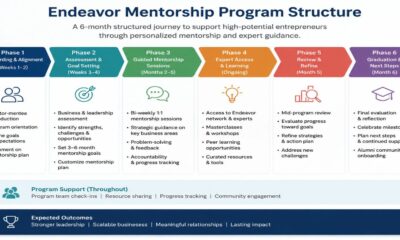
 Business3 weeks ago
Endeavor Mentorship Program Structure: How It Works